


Autism Parenting Emotional Burnout
If you’re parenting a child with level 2 or 3 autism, you probably know this feeling all too well:
- “Did I choose the right therapy?”
- “Should I have pushed harder… or backed off?”
- “Am I failing them?”
- “Will they ever be able to live independently?”
- “Can I survive this long term?”
Mom guilt and emotional burnout are real and they’re heavy. They sneak in at 2am after a meltdown or after you say something with too sharp a tone. They show up at the IEP meeting, at the grocery store, when friends post graduation photos or college acceptance letters.
We carry the weight of every choice, and every what if. But here’s the truth I’ve learned, walking this road for 27 years: Guilt is not a strategy. Structure is.
Why Autism Parenting Burns Us Out
Level 2–3 autism often means:
- Limited communication
- High support needs
- Behavioral challenges
- Constant supervision
- Uncertainty about the future
- Sensory overload management – Many parents become hypervigilant about environmental triggers, adding another layer of mental load
- Social isolation – When meltdowns happen in public or social events become impossible, parents often withdraw, increasing feelings of loneliness
- Financial strain – Therapies, specialized equipment, and potential loss of income from caregiving demands create additional stress
Unlike typical parenting, there’s no “aging out” of hands-on caregiving. And that reality paired with the relentless decision making creates a perfect storm of anxiety, burnout, and crushing guilt.
The truth? You are already doing more than most people could imagine. But doing everything without support or systems is a recipe for collapse.
You’re Not Alone in the Hard Moments
Let’s be honest about what this journey really looks like. Meltdowns can be physically and emotionally exhausting for both you and your child. Some days, you’ll watch your child struggle and feel your heart break all over again that grief is real and it’s okay to feel it.
There will be days where you’re just surviving, not thriving. Days when getting everyone fed and safe feels like a victory. Days when you question everything and wonder if you’re strong enough for this long road ahead.
You are. And it’s okay to have those hard days.
Remember: self-care isn’t selfish it’s necessary for sustainable caregiving. You can’t pour from an empty cup, and taking care of yourself is actually taking care of your child too.
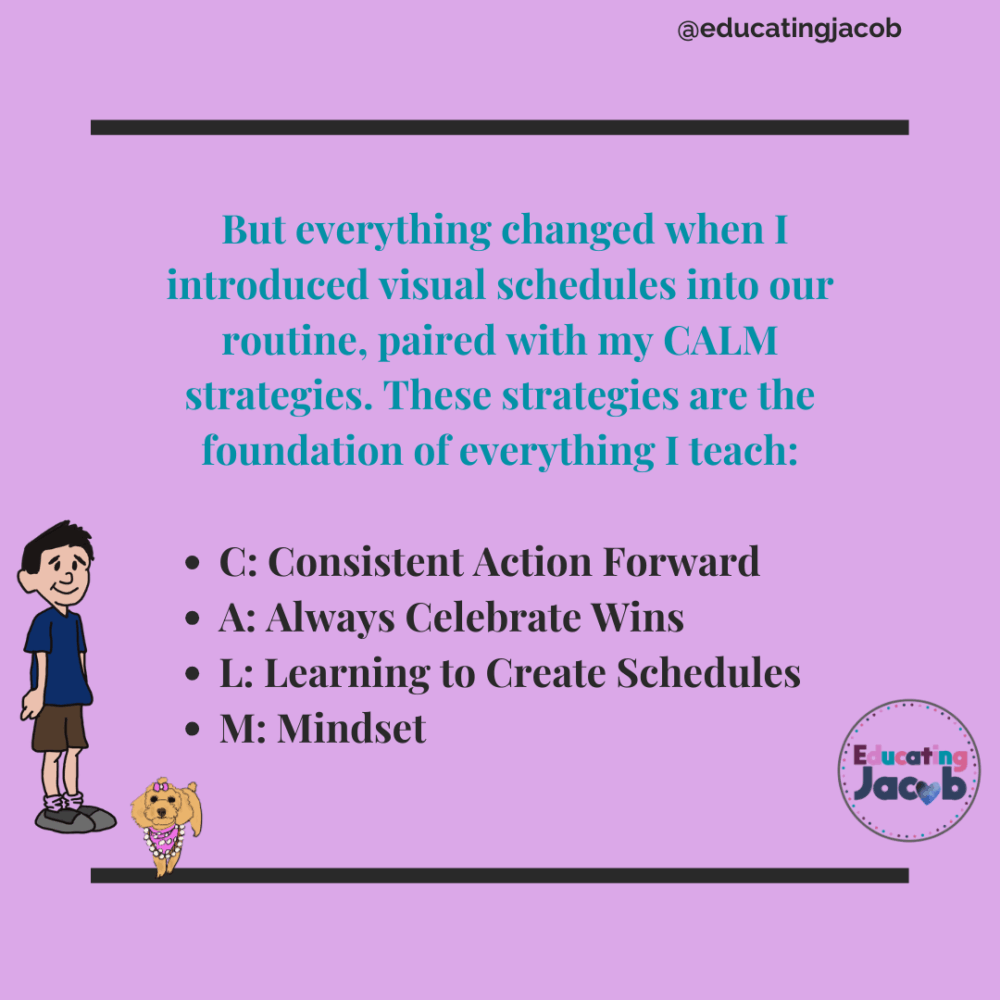
CALM: The Antidote to Emotional Overload
At Educating Jacob, we live by the CALM framework because it helps us reclaim peace in the middle of chaos. It’s not just for our kids—it’s for us, too.
💛 C – Consistent Action Forward
Guilt says: “You’re failing.” CALM says: “What small step can I take today?”
You don’t need to overhaul your life overnight. Start by implementing a visual schedule. Create a daily flow. Make one decision now that your future self will thank you for. Even prepping clothes in a labeled garment bag or setting up pill boxes can lighten your mental load. Beyond the Chaos: Scheduling 101 Class for Special Needs Children
Consider preparing for challenging moments: create a calm-down kit with sensory tools, have backup plans for outings that might not go as expected, or establish a simple evening routine that signals bedtime is coming.
Small, consistent actions create progress and calm.
🎉 A – Always Celebrate Wins
You may not have a big breakthrough this week—but did your child sit through a task without bolting? Did you avoid yelling even once? Did you get dressed and try again?
That’s a win. Celebrate it.
Guilt shrinks when we start noticing and naming progress. It’s not toxic positivity it’s intentional gratitude. And it’s powerful. Remember, progress isn’t always linear, setbacks don’t erase the growth that’s happened. https://hes-extraordinary.com/gfcf-diet-for-autism
🧩 L – Learning to Create Schedules
Structure isn’t just for your child it’s for you. Schedules help reduce anxiety, lower decision fatigue, and turn chaos into clarity. How a Visual Schedule for Autism Gave My Son Independence 📅✨
Even if your child resists at first, keep it visual. Keep it simple. Keep it flexible.
We’ve used everything from zippered bags, photos of routines, chore charts, to printed schedules taped on doors. Try transition warnings like “5 more minutes,” first/then boards for motivation, or social stories for particularly challenging activities.
These are tools of independence—not reminders of what’s “wrong.”
🧠 M – Mindset: Calm Over Chaos
Here’s the hard truth: You will always question yourself. But mindset reminds you that you’re not alone—and you’re not failing.
You’re parenting under extreme stress, and it’s okay to be tired. You are allowed to need help. You are not weak for grieving the hard days or the unknown future.
Start where you are. Use what you have. Ask God to meet you in the middle of your mess. This too shall pass, how we changed our mindset on autism island!

Guilt Will Not Raise Your Child. But You Will.
You are not a bad mom for feeling overwhelmed. You’re not a failure if your child struggles. You are not alone in wondering if you’ll make it.
But please don’t live in guilt. Step out of it—bit by bit—with tools that build real structure and peace.
✅ Create a daily visual schedule
✅ Use bins, labels, and pictures
✅ Give your child—and yourself—a path to success
✅ Connect with other autism parents through online communities or local support groups
✅ Remember that advocating for your child while caring for yourself isn’t contradictory—it’s essential
You’ve got this, mama. One day, one moment, one breath at a time.