Blog

  • What Answers the Problem of Moving Out of Chaos With Autism Spectrum?

    chaos with autism
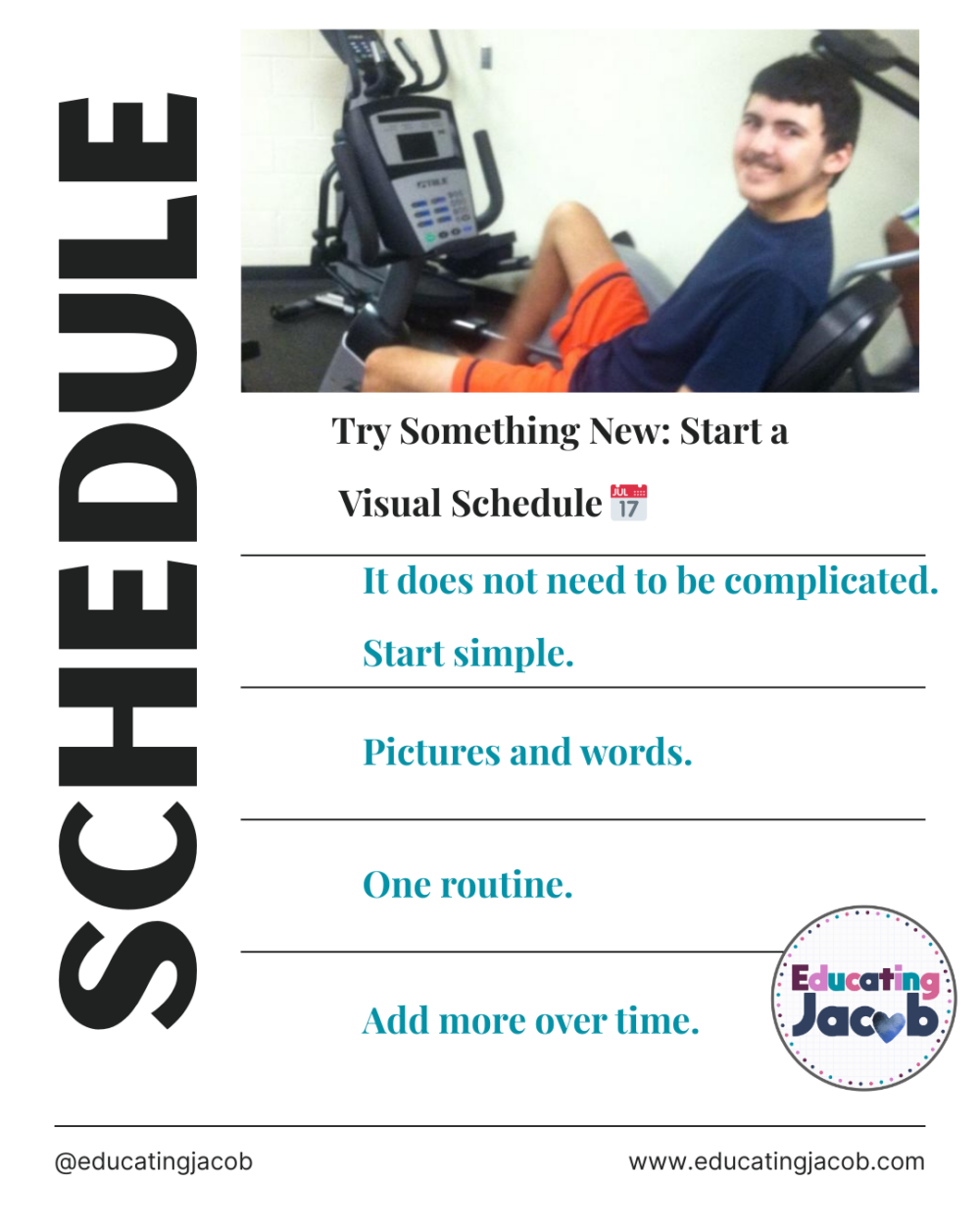
    Try Something New: Start a Visual Schedule 📅

    Moving Out of Chaos With Autism Spectrum

    If your home feels like it’s always on the edge of falling apart — the meltdowns, the unpredictability, the exhaustion that follows you into the grocery store, the school pickup line, and every single transition of the day — I want you to know something first: you are not failing your child.

    Chaos in autism is real. It’s not a parenting problem. It’s a communication gap. And the answer I finally found didn’t come in a therapy brochure or a cure. It came quietly, in a laminated picture strip hanging on our refrigerator.

    Why Autism Brings Chaos Into Every Corner of Your Life

    Autism spectrum disorder doesn’t stay home when your child leaves for school. It doesn’t pause at the grocery store or take a break at a birthday party. The chaos follows — and it follows your child too.

    Here’s what I’ve come to understand after years of living this as an autism mom and working in it as a special education teacher: the behaviors we see in our children are rarely just one thing. They’re a combination of so many layers — language and communication differences, sensory needs around clothing, food, and environment, medical and health considerations, and the very real anxiety that comes from a world that often feels unpredictable and overwhelming.

    I’m not going to pretend one tool fixes all of that. It doesn’t.

    But here’s what I have found: when we address the parenting and teaching side of the equation — when we give our children a way to understand what’s happening and what’s expected — so much of the chaos begins to settle. That’s the communication gap I’m talking about.

    Visual schedules, done well, aren’t just a picture strip on a wall. The way you build them matters. The activities you include can be hands-on and sensory-friendly. You can weave in sensory considerations — preferred textures, foods, calming choices. You can build in language supports. You can design a schedule that sees the whole child, not just the behavior you’re trying to change.

    That’s where we’re starting. Not because it’s the only piece — but because for most families, it’s the piece that makes everything else possible.

    The Exhausting Search for a Cure

    When Jacob was young, I spent so much time looking for answers in the wrong places.

    I read everything. I attended seminars. I tried treatments. I was searching for something that would fix the problem — and underneath that search was a quiet hope that maybe we could cure autism, or at minimum understand what had happened to my son.

    What I didn’t realize then was that while I was searching, Jacob was getting older. Time was passing. And we still had big problems. The chaos at home hadn’t eased. The meltdowns hadn’t stopped. And I was burning out.

    If you’re in that place right now — searching, hoping, exhausted — I want to be honest with you. I understand that search. I lived that search. And I also want to tell you what I wish someone had told me sooner.

    What Actually Helped: The Power of Visual Communication

    It wasn’t a cure that changed things. It was connection.

    Some of the most helpful professionals in Jacob’s life pointed me toward something practical: visual schedules and hands-on, visually clear activities. Things Jacob could look at and immediately understand. Items where he could see the pieces, recognize what needed to be done, and track his own progress.

    I want to be clear about what I understood going in: these weren’t going to cure autism. They weren’t going to answer my deeper questions about Jacob’s diagnosis. But they gave us something we desperately needed — moments of peace.

    How a Simple Visual Schedule Changed Our Home

    I started small. A visual schedule showing our morning routine. Breakfast, getting dressed, the walk to the bus stop. Nothing that took hours to make. Nothing complicated.

    But the results were anything but simple.

    Jacob started to understand what I was asking of him — not because my words suddenly made more sense, but because he could see it. He could see what was next. He could see when he’d have free time, when he’d get a preferred activity, when choices were coming.

    The meltdowns when transitioning between activities? They started to fade. Not because Jacob changed — but because the anxiety driving those meltdowns finally had an answer. He knew what was happening.

    For Jacob, the visual schedule became a communication tool. A way for us to connect without the friction of a sensory-heavy world getting in the way. For me, it gave back something I hadn’t had in a long time: time, and calm. Visual Schedules and autism, we’ve got you! Don’t figure this out alone!

    visual schedules and autism
    Replace Chaos with Calm, use Visual Schedules.

    The Small Things That Add Up to Big Peace

    Here’s something I’ve learned that no one tells you at the beginning: there isn’t one answer to chaos. There are dozens of small ones.

    Visual schedules were our foundation. But alongside them, I collected little tools — tiny redirects, phrases, routines — that filled in the gaps a schedule can’t reach.

    One of our favorites? Movie quotes.

    When Jacob’s emotions start to climb, sometimes the best thing I can do isn’t address the situation head-on. It’s redirect. And nothing redirects like a phrase from something he loves. Jacob has a favorite: “What in the World?”

    I honestly couldn’t tell you exactly how it started. But somewhere along the way, we discovered that those four words could flip a switch. Happy moment? “What in the World?” Sad or overwhelmed? “What in the World?” Something’s going sideways fast? “What in the World?” — and suddenly there’s a tiny crack of light where the tension used to be.

    It sounds small. It is small. That’s the point.

    On Autism Island, the small things are often the most powerful. A familiar phrase. A preferred activity slipped into the schedule at just the right moment. A visual cue that says you know what’s coming, and it’s okay. These aren’t workarounds. They’re the actual work.

    The CALM Framework I’ve built our life around isn’t a rigid system — it’s a peaceful structure and procedure that works for our whole family. Jacob. Me. My husband David. Our whole life on Autism Island runs on these foundations, and they make room for the small things too. The movie quotes. The redirects. The “What in the World?” moments that turn a potential meltdown into a shared laugh.

    Structure and joy aren’t opposites. In our home, they’re the same thing.

    From Chaos to CALM: What Visual Schedules Actually Give You

    Here’s what I’ve come to understand after years of using visual schedules both as an autism mom and as a special education teacher:

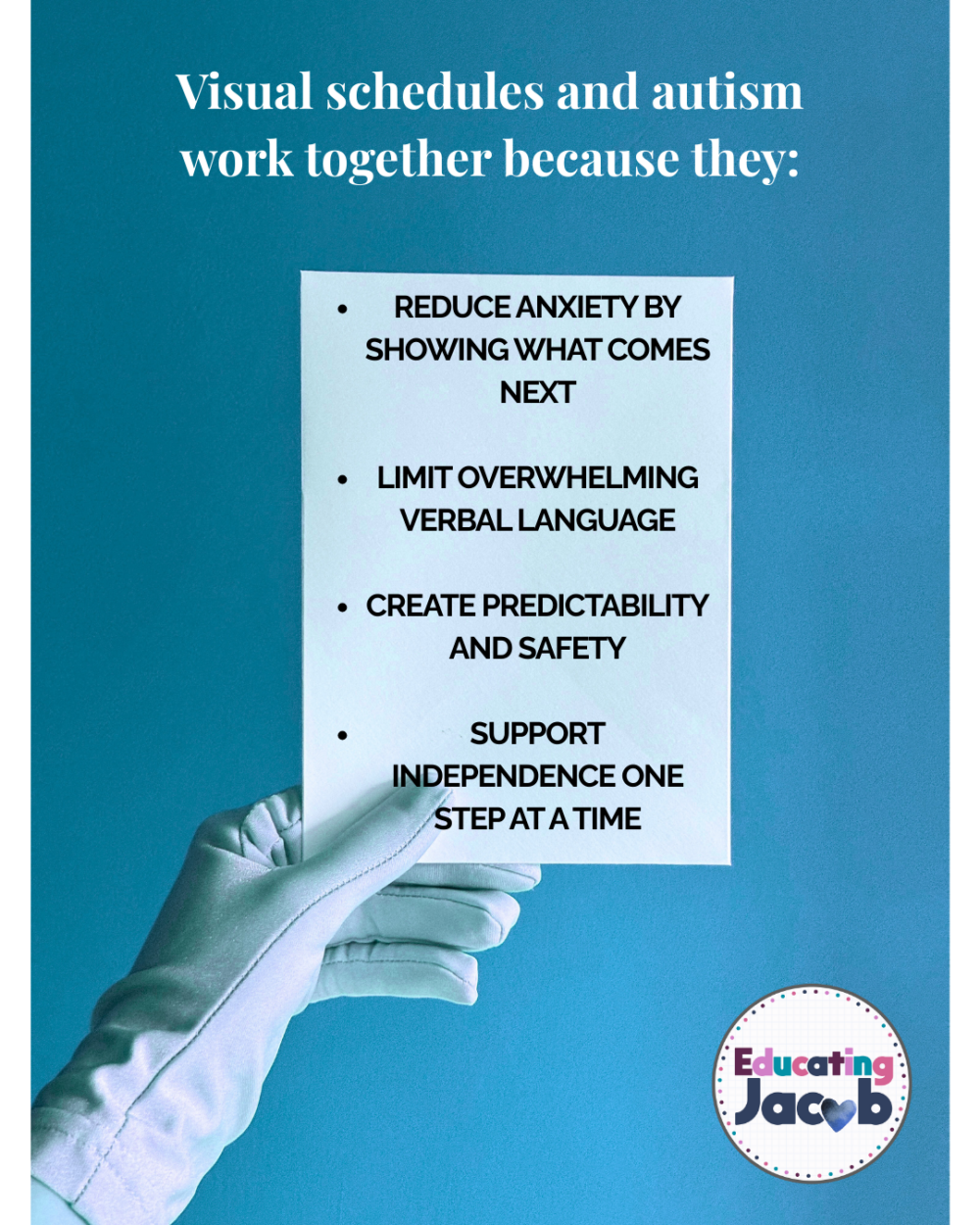
    Visual schedules work because they meet autistic children exactly where they are. They reduce the cognitive load of uncertainty. They hand children the one thing anxiety steals most — predictability. How to Let Go of the Guilt and Find Peace as an Autism Mom, CALM Hacks!

    When a child can look at their schedule and see:

    • What’s happening right now
    • What comes next
    • When they’ll get something fun or a preferred choice

    …the world becomes manageable. And when the world becomes manageable for them, it becomes more manageable for you.

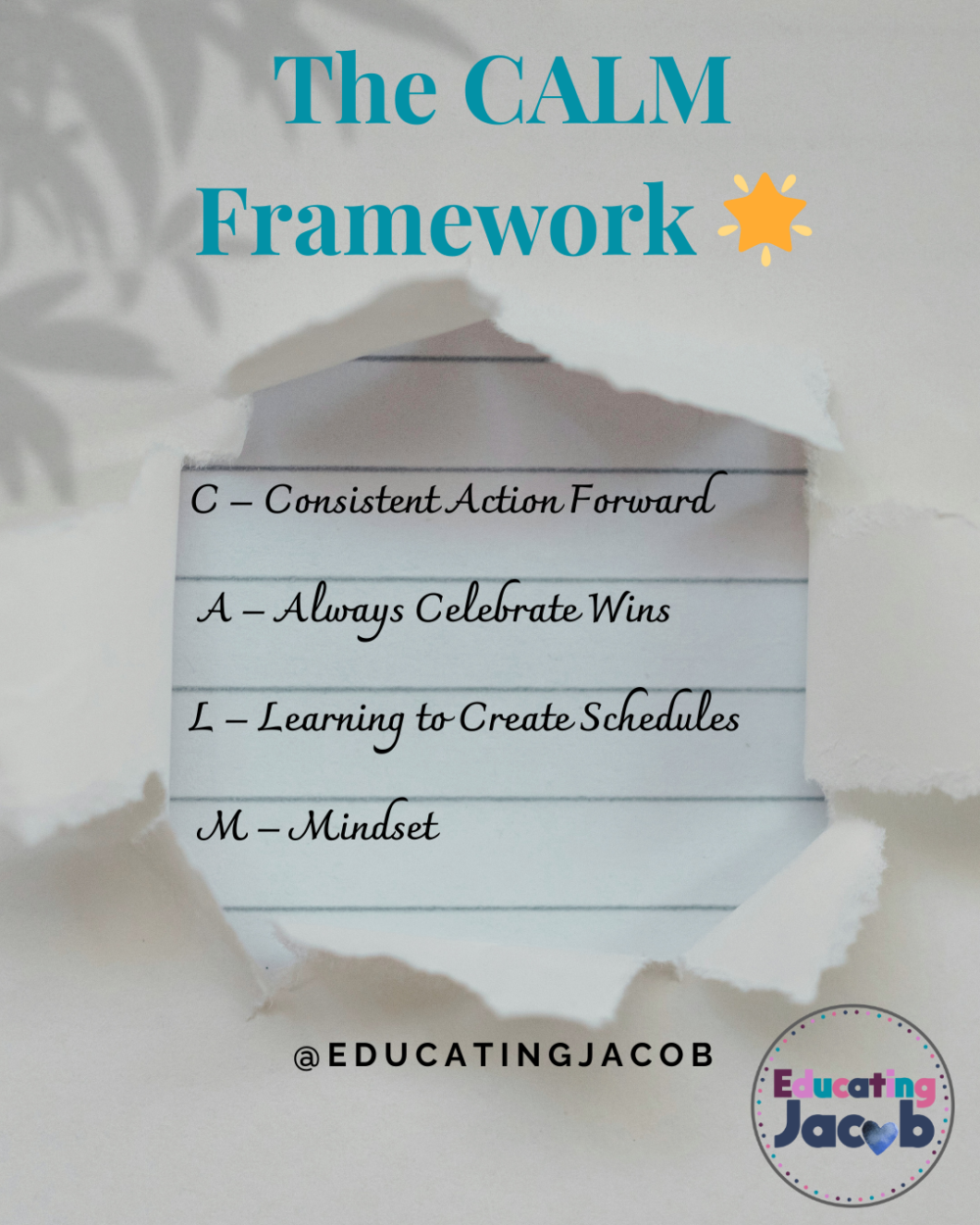
    This is the foundation of what I call the CALM Framework — the approach I’ve built everything in my work around. Visual schedules are the “L” — Learning to Create Schedules — and they are, for so many families, the first real turning point.

    You Don’t Have to Stay in the Chaos

    If you’re reading this and your home still feels like it’s in survival mode, I want you to hear this: there is a way through. Not a cure. Not a magic fix. But a practical, doable shift that changes how your child experiences the world — and how you experience your days.

    It starts with something as simple as pictures on a refrigerator.

    I created a free Visual Schedule Starter Kit specifically for autism parents who are new to this tool. It walks you through exactly how to get started without overwhelm, and it’s designed for real life — not a perfect Pinterest classroom.

    Grab your free eBook “less chaos with autism” here

    And if you want to connect with other autism parents who are figuring this out together, come join us in the Autism Thrive Tribe — our free Facebook community where we talk about exactly these kinds of practical strategies every week.

    A Final Word From One Autism Parent to Another

    Something simple brought peace, structure, and calm to the chaos we had been living. I didn’t expect it. I almost didn’t try it because I was so focused on finding a bigger answer.

    But this was the answer. Not the only answer — but the one that changed our daily life more than anything else I had tried.

    I hope it does the same for you.

    Melissa

    Read More

  • My Child Was Just Diagnosed with Autism: A Special Ed Teacher’s Honest Guide

    My Child Was Just Diagnosed with Autism


    autism diagnosis what to do next
    Just take those first steps as newly diagnosed parent!

    The doctor’s words landed like a stone in still water.

    “Autism spectrum disorder.”

    I was a pharmacy technician working in a hospital inpatient pharmacy. I counted pills. I filled orders. I knew medications. I knew nothing — absolutely nothing — about autism.

    I had spent months searching for answers, watching my son Jacob and knowing in my bones that something was different. Countless hours on dial-up internet. Doctor’s appointments. Conversations that went nowhere. Everyone could describe the behaviors that led to the diagnosis. No one gave me a simple plan to help him.

    So I went home that day with a child I loved more than my own life, a diagnosis I didn’t understand, and no roadmap whatsoever.

    If that is where you are right now — sitting with a diagnosis that just turned your world upside down, not knowing what to do first or second or tenth — I wrote this for you. Not as a researcher. Not from a textbook. From the inside of a story that is still being written, more than twenty years later.

    Jacob’s Diagnosis Changed Everything

    I want to tell you the full truth of what an autism diagnosis did to our family — not to frighten you, but because I think you need to know that the chaos you’re feeling right now is real, it is hard, and it does not mean you are failing.

    After Jacob’s diagnosis, I was scared and heartbroken and determined all at once. I researched everything. I tried things that didn’t work. I took Jacob to specialists. I asked questions in waiting rooms and support groups and school meetings. And somewhere in the middle of working full time and raising my kids, I made a decision: if no one was going to hand me the answers, I was going to find them myself.

    Life Changes after Autism Diagnosis

    I went back to school and earned a master’s degree in special education. Not before the diagnosis. After it. Because of it. Jacob’s needs became my education.

    But that wasn’t the only way his diagnosis changed our family.

    Jacob also has epilepsy. His first seizure came in prepuberty, and it almost killed him. He was eating when it hit. A neighbor — a volunteer firefighter — heard what was happening and ran to our house. He saved Jacob’s life that day.

    My husband David took that moment and made a decision. He had been working for Pepsi Cola. He became a firefighter — because he needed to be the one who could run toward an emergency, not wait for help to arrive.

    And Jacob’s older brother Nicholas? He watched his parents pour everything into fighting for Jacob year after year, and he started thinking about the future. About what happens when parents age. About who would be there for Jacob when David and I no longer could be. So he went back to school and earned a PhD in engineering — so he could teach, stay close to home, and be present for his brother for the long haul.

    One diagnosis. One child. And it changed the entire direction of our family.

    I don’t tell you this to overwhelm you. I tell you this because I want you to understand something important: the road you just stepped onto is going to demand everything from you — and it is going to reveal things in you and your family that you didn’t know were there. You are not just a parent navigating a diagnosis. You are becoming someone new. How a Visual Schedule for Autism Gave My Son Independence 📅✨

    First: Give Yourself 48 Hours

    Before I give you a single action step, I want to give you permission to not do anything for two days.

    I know that feels impossible. I know the urgency rising in your chest right now. But decisions made in the first 48 hours of shock are rarely your best decisions. And your child needs you present, not just busy. You Have to Stop Freaking Out! Mindset for Autism Parenting.

    For the next two days:

    • Tell a few trusted people what you’ve learned
    • Let yourself feel whatever you’re feeling without judgment — grief, relief, fear, love, anger, all of it
    • Hold your child the way you always have — they are exactly the same child they were before that appointment
    • Rest when you can

    The plan can start on day three. It will still be there.

      YOUR STEP-BY-STEP FIRST 30 DAYS  


    Sensory can wreak havoc on a child with moderate autism!
    A sound, a texture, a smell, a change in routine, a light that’s too bright or a sock that slips!

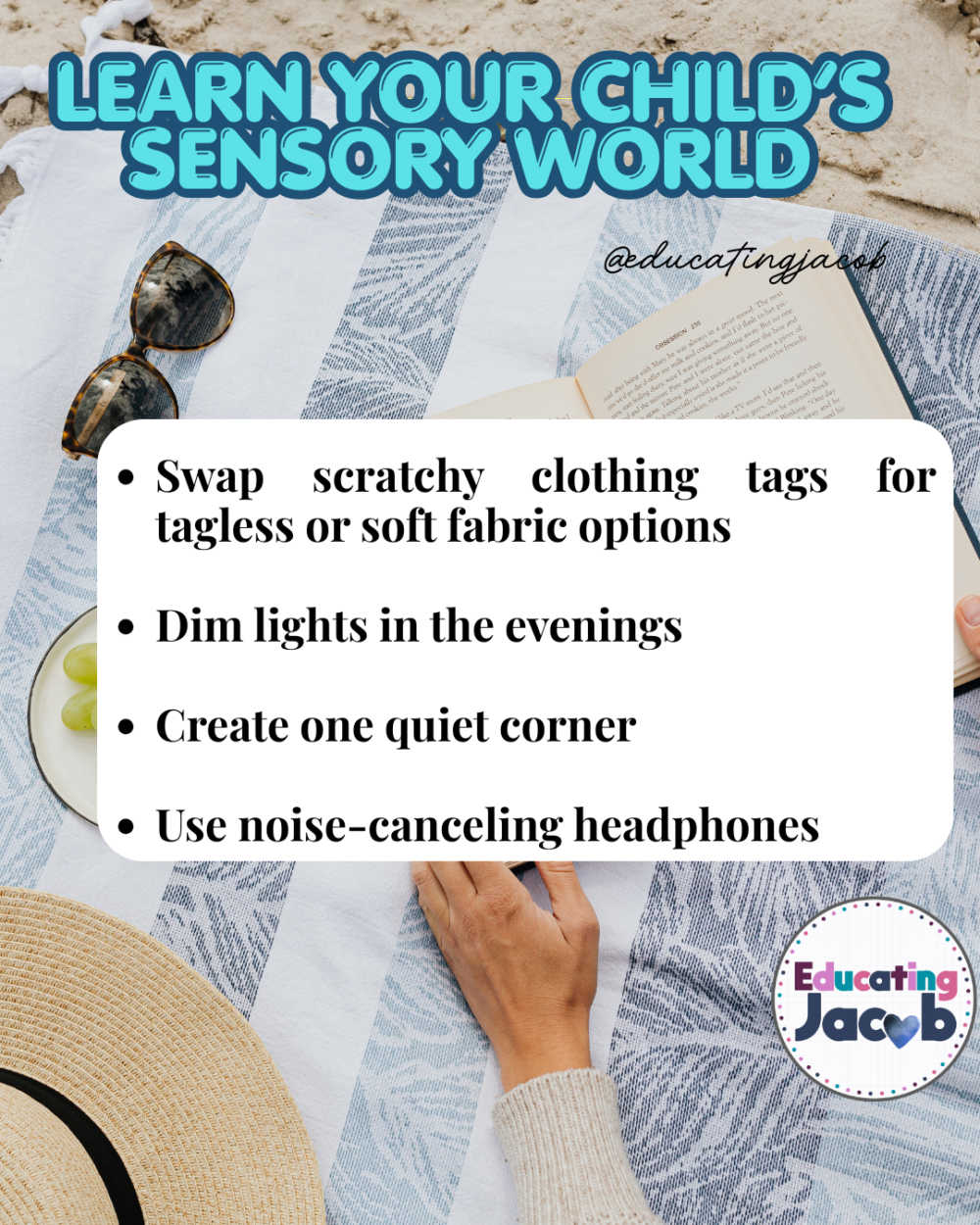
    Week One: Learn Your Child’s Sensory World

    Before you research therapies or call waitlists, spend the first week simply observing your child with new eyes. Children with autism experience the world through a sensory system that processes things differently. What looks like a meltdown “out of nowhere” almost always has a trigger.

    Keep a simple notepad. When a difficult moment happens, write down the time, where you were, and anything sensory in the environment. Do this for seven days. Patterns will emerge. https://www.keyautismservices.com/blog/clothes-for-children-with-autism

    Quick wins to try immediately:

    • Swap scratchy clothing tags for tagless or soft fabric options
    • Dim lights in the evenings if your child seems more dysregulated at night
    • Create one quiet corner in your home — minimal clutter, soft textures, dim light
    • Use noise-canceling headphones for grocery stores or loud environments


    autism diagnosis what to do next@educatingjacob
    Schedules = Independence!

    Week Two: Build Your First Visual Schedule

    This is the single most transformative tool I have ever used — in my home with Jacob (two decades), and over a decade of special education classrooms.

    A visual schedule answers the question that an autistic child’s brain asks constantly: What happens next? When Jacob didn’t have a schedule, our mornings were battles. He wasn’t being difficult — he was anxious. The schedule gave him safety and control that changed everything.

    How to build your first one:

    • Start with morning only — keep it to 5–7 steps maximum
    • Use pictures, photos, or hand-drawn images for each activity
    • Post it at your child’s eye level in a consistent location
    • Walk through it together every single morning
    • By week three, your child will begin moving through it independently

    Week Three: Make Three Phone Calls

    By week three, you’re ready to start building your professional team.

    Call 1 — Your Child’s School District: Federal law (IDEA) requires your school district to evaluate your child and provide appropriate services at no cost. Request a special education evaluation in writing. This starts the legally required clock. They might accept some of your outside testing and start in a special pre-K.

    Call 2 — Your Child’s Pediatrician: Ask for referrals to a developmental pediatrician, a speech-language pathologist, and an occupational therapist. Waitlists are long — start now.

    Call 3 — One Other Autism Parent: Find one parent who has been on this road longer than you. Not to compare children — just to hear someone say: I know. I’ve been here. You’re going to be okay.

    ❤  Join the FREE Autism Thrive Tribe on Facebook — community for parents who get it  ❤

    autism diagnosis what to do next
    You don’t need a perfect system. You need a place to start.

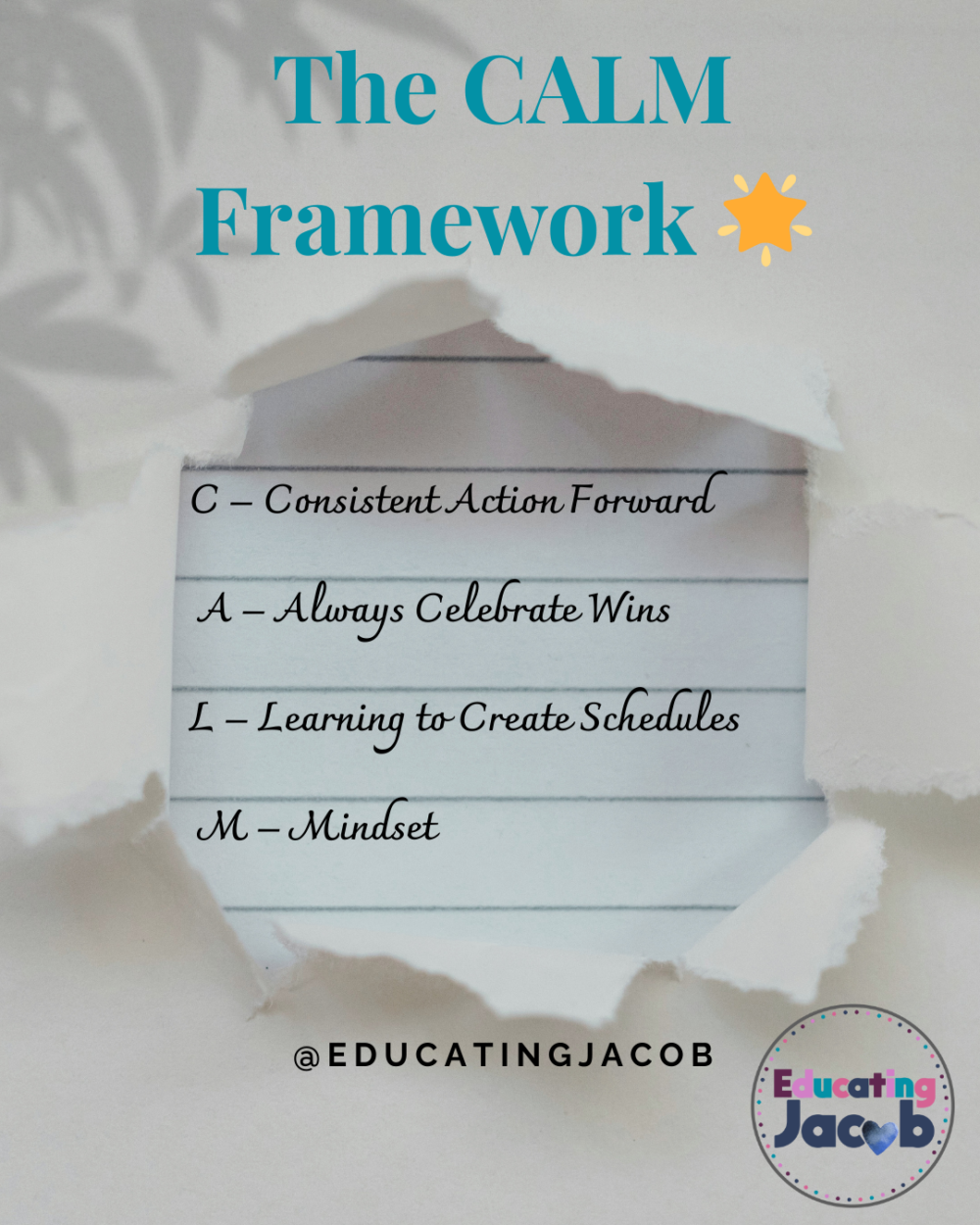
    Week Four: Learn the CALM Framework

    C — Consistent Action Forward: Autism parenting is a marathon, not a sprint. Consistency — in routines, responses, and expectations — is the most powerful tool you have. You don’t have to do everything right. You just have to keep going.

    A — Always Celebrate Wins: Your child said a new word. They wore a new food without melting down. They got through a transition. Celebrate all of it, out loud, every time. Acknowledgment builds confidence that no therapy can replicate. And celebrate your own wins too.

    L — Learning to Create Schedules: Visual schedules are not just for mornings. As you build confidence, expand them to afternoons, weekends, mealtimes — any part of the day that regularly produces friction.

    M — Mindset: This is the one that took me the longest to learn. The mindset shift that changed everything:

    • Step 1: Decide you can do it
    • Step 2: Make a plan and get to work
    • Step 3: Be persistent and consistent

    Not toxic positivity. Not pretending this isn’t hard. It is hard. Our family has suffered real, significant hardship. But choosing to believe that you can navigate this — that your child can grow, that your family can find its footing — that choice is what makes everything else possible.

    What I Want You to Know About the Long Road

    Jacob is in his twenties now. He lives at home with moderate support needs. He has his routines, his responsibilities, his sense of pride in completing his schedule each day.

    The road here was not smooth. There were seasons of real suffering — Jacob’s epilepsy nearly took him from us. There were years I didn’t know how we would manage. There were nights I had nothing left.

    But there is also this: David is a firefighter who runs toward emergencies. Nicholas has a PhD and comes home regularly because he built his life to be present for his brother. And I — a pharmacy technician who once sat in a parking lot with no idea what to do — became a special education teacher who now gets to walk alongside families like yours.

    Jacob’s diagnosis changed all of us. Not in spite of the hard, but through it. You are at the beginning of that same transformation. You don’t know yet what it will make of you and your family. But it will make something.

    Take the next step. Just the next one.

      YOUR 30-DAY CHECKLIST:

    WHAT TO DO AFTER AN AUTISM DIAGNOSIS  


    Days 1–2: Rest and Feel

    • Tell trusted people what you’ve learned
    • Allow yourself to grieve, process, and breathe
    • Hold your child — they are the same child they’ve always been


    Week 1: Learn Your Child’s Sensory World

    • Start a simple observation journal
    • Note triggers, patterns, times of day
    • Make 1–2 small sensory accommodations at home


    Week 2: Build Your First Visual Schedule

    • Download the free Visual Schedule Starter Kit
    • Create a morning routine schedule (5–7 steps)
    • Use it consistently for 7 days


    Week 3: Make Your Three Calls

    • Call school district — request special education evaluation in writing
    • Call pediatrician for speech, OT, and developmental pediatrics referrals
    • Find one other autism parent — join the Autism Thrive Tribe


    Week 4: Learn the CALM Framework

    Frequently Asked Questions

    What is the very first thing to do after an autism diagnosis?

    Give yourself 48 hours before making any major decisions. Then start with observation — spend one week learning your child’s sensory triggers. A simple visual schedule for your morning routine is the most impactful first practical step.

    How do I get services for my newly diagnosed autistic child?

    Contact your school district immediately and request a special education evaluation in writing. Under IDEA, they are required to evaluate your child and provide appropriate services at no cost. Also ask your pediatrician for referrals to speech therapy and OT — waitlists are long, so call early.

    What is a visual schedule and why does it help autism?

    A visual schedule is a simple sequence of pictures or words showing a child what activities are coming next. It reduces anxiety by providing predictability. Many families see significant reductions in meltdowns within the first few weeks of consistent use.

    What if my child also has epilepsy or other conditions alongside autism?

    Co-occurring conditions like epilepsy are common with autism. Work closely with a neurologist alongside your developmental team. Make sure all caregivers and school staff know seizure first aid. You are not alone — many autism families navigate multiple diagnoses simultaneously.

    How do I take care of myself while caring for my autistic child?

    Find your community before you hit a wall. Let people help even imperfectly. Caregiver burnout is real and it sneaks up slowly. Taking care of yourself is taking care of your child.


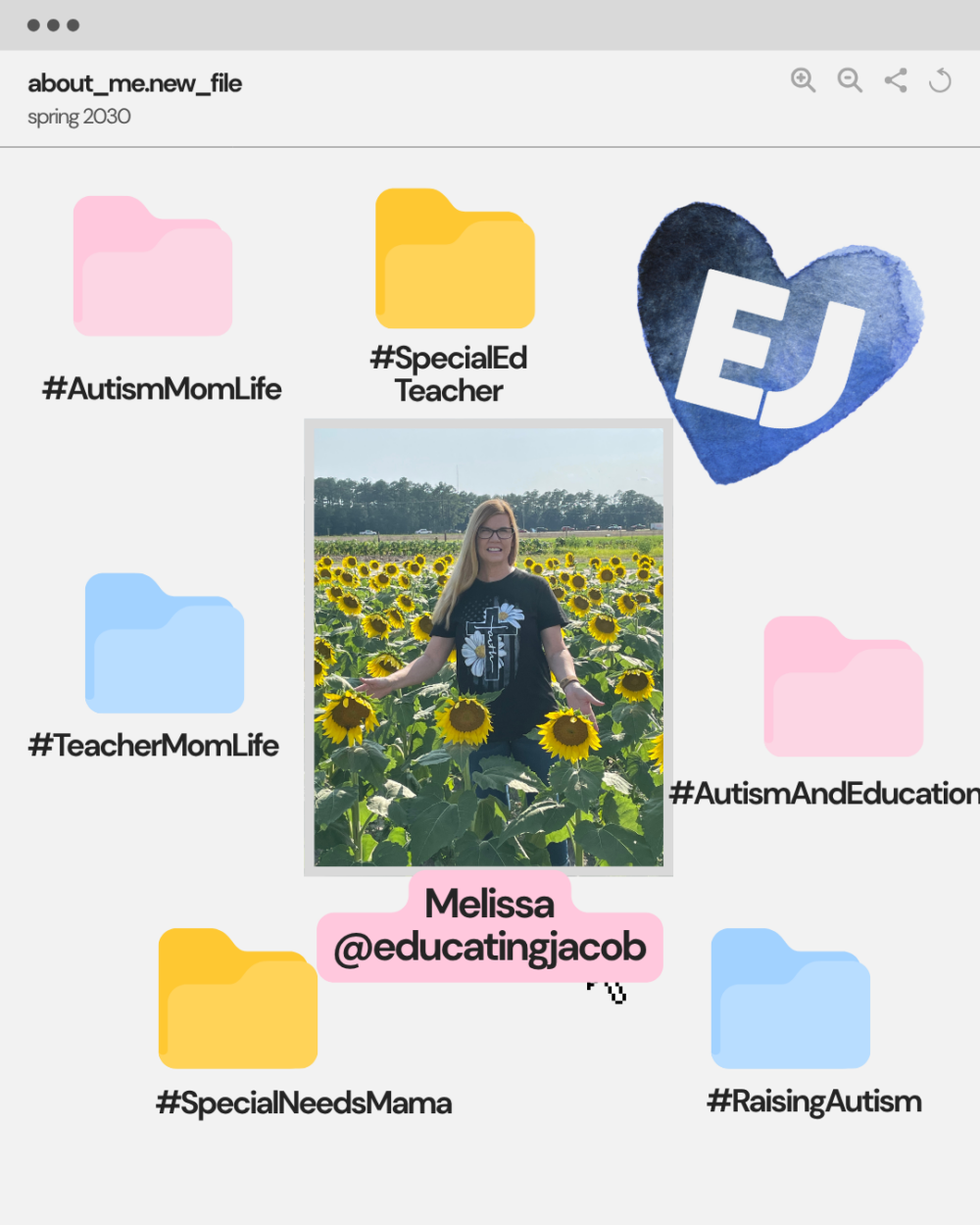
      Melissa is the founder of educatingjacob.com and a special education teacher with a master’s degree — a credential she earned after her son Jacob’s autism diagnosis, because she refused to stop searching for answers. She and her husband David, a firefighter, have spent over twenty years building a life around Jacob’s needs. Her mission is to be the guide for other families that she never had.


    “Because every child deserves to learn, and every parent deserves to hope.”

    Read More

  • Growing older and the long days of caring for child with autism.

    Growing-older-and-the-long-days-of-caring-for-child-with-autism
    Autism parents are experts at minimizing their own needs.

    Long Days of Caring for a Child with Autism

    I looked in the mirror and didn’t like what I saw.

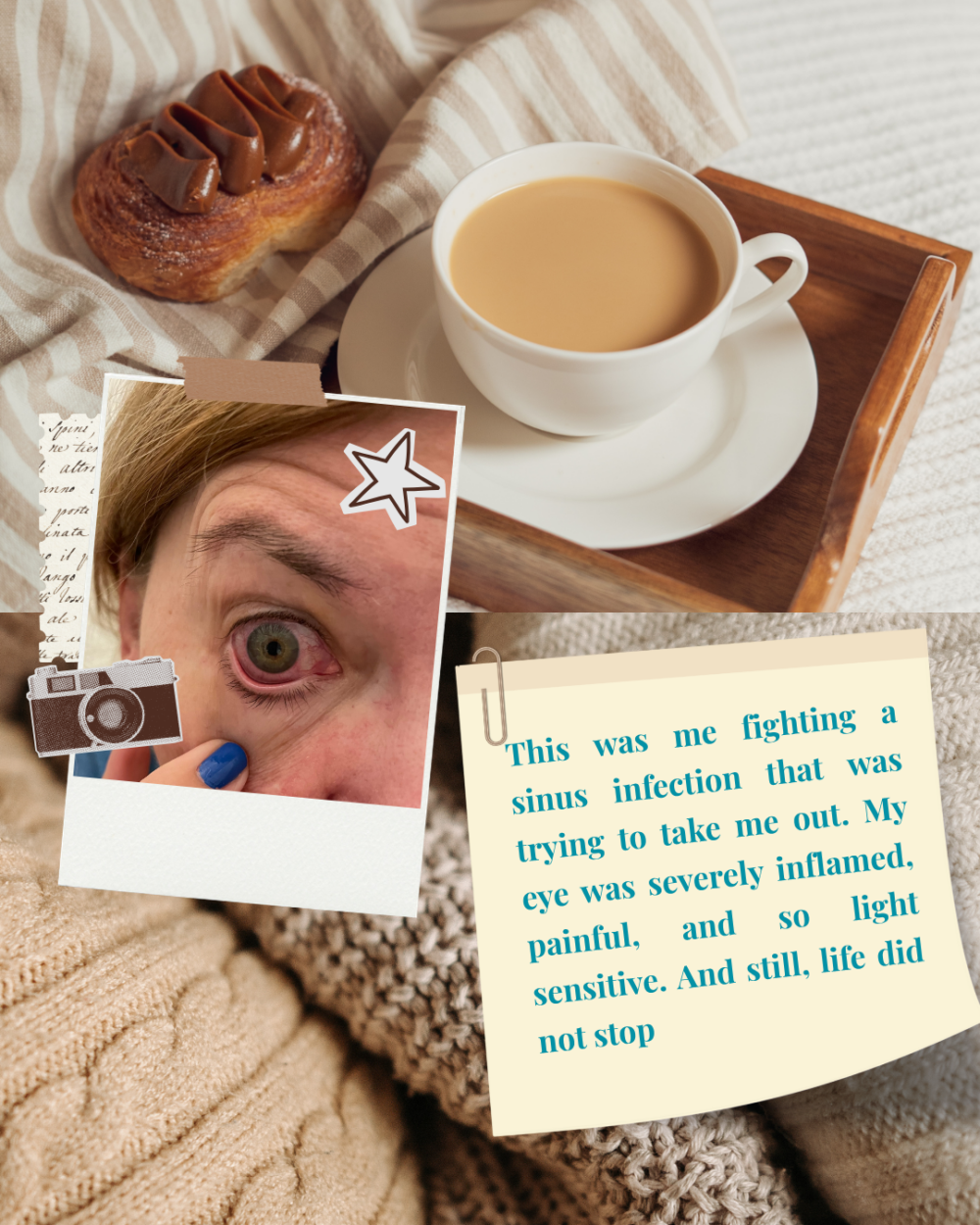
    Not the tired eyes — I’ve lived with those for years. Not the lines that weren’t there a decade ago. What stopped me cold was the corner of my eye, red in a way that could not be ignored. Not a little pink. Angry. Swollen. The kind of red that says you waited too long.

    And I had.

    I’d been feeling it coming for a week — the achiness, the pressure building in my head, the kind of fatigue that goes deeper than missing sleep. I knew what it probably was. I’ve had sinus infections before. I’m a special education teacher. I’m around kids all day. I knew.

    But I put it off, the way autism moms do.

    When Did We Stop Taking Care of Ourselves?

    It wasn’t a dramatic decision. There was no moment where I consciously chose to ignore my own health. It just happened the way it always does — there were students to prepare for, Jacob’s schedule to maintain, the rhythm of our household to hold together. Spring break ended. The alarm went off. I went back to work.

    I told myself it wasn’t that bad.

    That first day back, I chalked the exhaustion up to the adjustment of early mornings again. The pressure in my head? Probably just allergies. The ache in my body? Fifty-something is different than thirty-something, and I know that.

    But here’s what I’ve learned after years of this life: autism parents are experts at minimizing their own needs. We’ve had to be. When you are the person who holds the structure together — the schedules, the routines, the communication supports, the safety — you learn to function through things that would send other people straight to the doctor.

    We wear that like a badge sometimes. I know I have.

    The Day My Body Said Enough

    By day two after spring break, the red in my eye had spread. All of it. I was pulling my students throughout the school day, and I kept finding myself walking in the shade, squinting against the light, instinctively closing that eye when we went outside.

    I had started my antibiotics the night before. It was supposed to be getting better.

    It wasn’t.

    By lunch, I was hurting too much to stay. I went home, sent Jacob’s worker home since I was there, and told myself I just needed to rest in a dark room for a while. Jacob was fine. He’d had lunch. He could keep himself busy.

    I couldn’t really rest.

    I tried a cold compress. Then a warm bath. A cloth over my eyes. Nothing touched it. And then I made the mistake — or maybe the grace — of looking in the mirror again.

    My pupil was smaller than the other one.

    That’s when fear walked into the room.

    I called the eye doctor. And then I did something I almost never do. In 37 years of marriage, through everything, I called my husband David at work and asked him to come home.

    Not because I was sick. I’ve been sick before.

    Because Jacob needed to be safe while I went to get help. And for the first time, I couldn’t do both.

    David told me later that my call scared him more than the news about my eye. He said he knew something was really wrong because I never call. I never ask him to come home. I handle things. That’s just who I am.

    But my body had finally demanded to be handled too.

    The Truth About Growing Older as an Autism Parent

    Here is the thing no one likes to say out loud:

    Our bodies are changing. Our children’s needs are not.

    I’m not just talking about sinus infections and eye complications. I’m talking about the slower recovery. The lower reserves. The way a hard week hits differently at 55 than it did at 35. The way you can’t just push through on willpower alone anymore, even when the need is still just as real, just as constant, just as present at your door every single morning.

    Parents of neurotypical children — even parents who have walked genuinely hard roads — often reach a season where caregiving eases. Where their child calls them on the phone instead of needing their hands, their structure, their presence to stay safe. Where they become grandparents, spectators, supporters.

    Many of us will never have that season.

    Jacob is an adult. He lives with David and me, with supports in place, with Chloe by his side, with the routines we’ve spent years building together. He is loved. He is cared for. He has a good life.

    And his needs are still high. And they will continue to be.

    This is not a complaint. This is a fact that our community does not say loudly enough: we are aging into our caregiving, not out of it. And that comes with its own kind of grief — one that sits quietly beside all the love, not instead of it. When Migraines Hit: How This Autism Mom Survived the Day (And You Can Too)

    The Fear We Don’t Say Out Loud

    Let me say the thing we’re all thinking.

    We are afraid of the day we aren’t here anymore.

    We are afraid of what happens to our children when we are no longer the ones holding the structure together. Who will know their routines? Who will know what soothes them and what sets them off? Who will advocate for them the way we have? Who will love them the way only a parent can?

    This is not a hypothetical fear for our community. It is real, and it is urgent, and it shapes every day we live — the estate plans we try to make, the siblings we quietly hope will step in, the group homes we tour with a mixture of hope and dread, the conversations we don’t know how to finish.

    I’m not going to wrap this up in a neat bow, because it doesn’t have one. What I will say is this:

    You are not alone in this fear. Every autism parent I know carries it. The weight of it is real, and you are not weak for feeling it. You are human, and you love your child, and you are paying attention to what’s coming.

    That awareness, as hard as it is, is also an act of love.

    What the CALM Framework Has Taught Me About This Season

    After my eye appointment — it turned out to be iritis, inflammation of the eye, treatable but not something to mess with — I had some time to sit with what had happened. Not just the diagnosis, but the whole of it. The waiting. The calling David. The fear. Structure, Not Struggle: Calm Hack to Create Calm in Level 2 Autism Kids Daily

    Calm-and-routines-I-keep-@educatingjacob
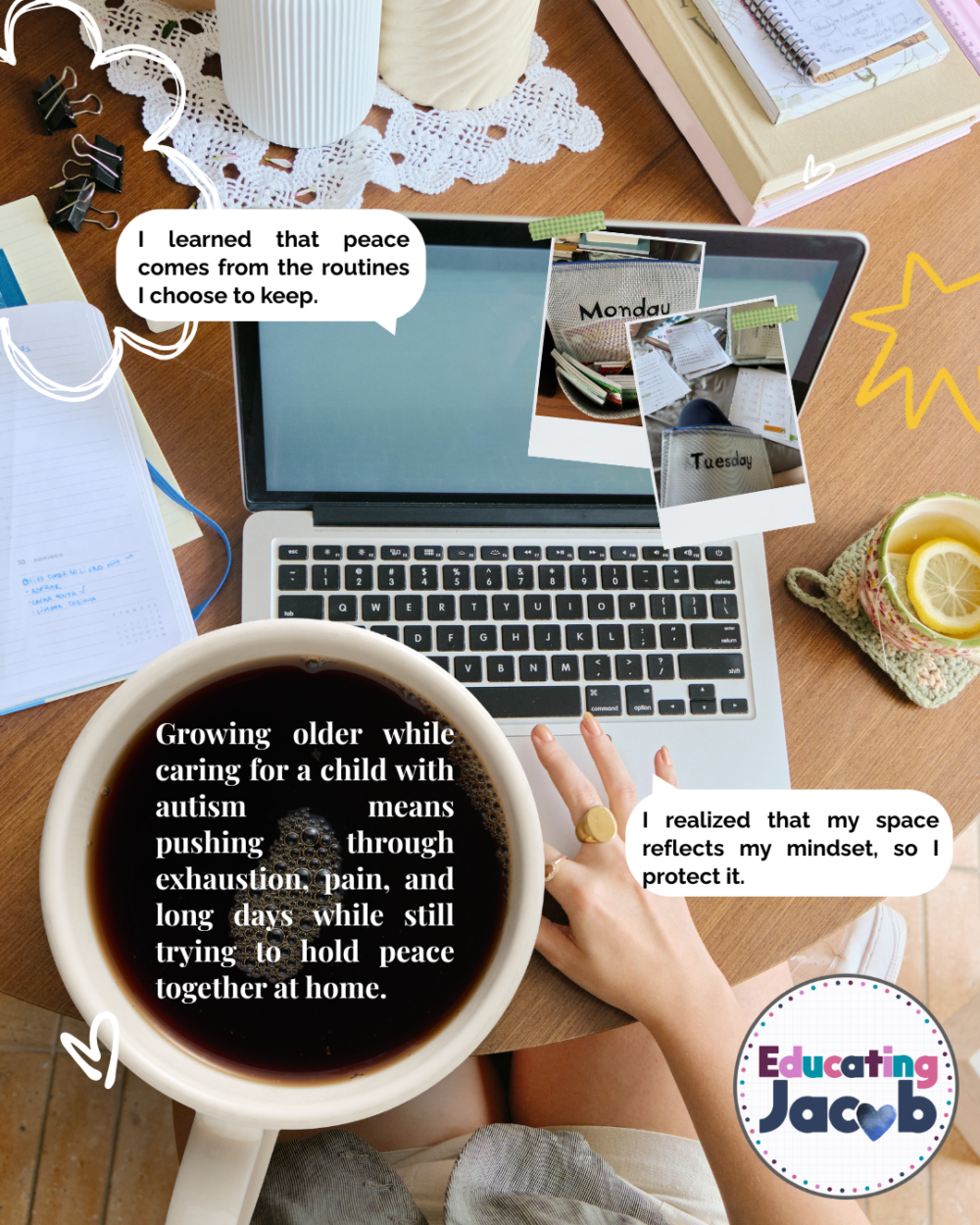
    Growing older while raising a child with autism teaches you to honor your limits, lean on your systems, and count survival as a win some days!

    The Mindset piece of the CALM Framework has always been the one I return to most. And the mindset shift I keep coming back to in this season of life is this: caring for myself is not separate from caring for Jacob. It is part of it.

    If I go down, everything goes down. That is not dramatic. That is just true.

    I think about Job a lot during the hard days — not as someone whose suffering had a hidden silver lining, but as someone who was met by God in the middle of it. Not rescued from it, not spared from it, but accompanied through it. That is what I hold onto. I don’t believe faith means the hard things don’t come. I believe it means we don’t face them alone.

    Consistent Action Forward

    The Consistent Action Forward principle applies here too. Not dramatic overhauls. Not a complete rethinking of your life. Small, sustainable actions that keep you in the game for the long haul:

    • Going to the doctor when you need to, not when you have no other choice
    • Asking for help before you’re at the breaking point
    • Building rhythms that include rest, not just productivity
    • Letting the people who love you actually show up for you

    And the Always Celebrate Wins piece? That phone call to David — the one that scared him, the one I almost didn’t make — that was a win. Asking for help is a win. Choosing yourself enough to get seen is a win. Don’t let anyone, including yourself, tell you otherwise. How We Live CALM At Home With Level 2 Autism, We Are Neuro-Spicy! 🌶️

    about-melissa-@educatingjacob
    Tabs always open in my life! 🙃

    You Are Still in the Middle of Something That Matters

    I’m back at work. My eye is healing. The antibiotics did their job. Life has resumed its rhythm, the way it always does.

    But I am different in a small, important way. I am a little more honest with myself about what I can carry and what I can’t. A little more willing to say I need help before my body says it for me.

    If you are in this season too — watching your energy reserves change, feeling the weight of long-term caregiving in your bones, carrying a fear about the future that you don’t always know how to name — I want you to know: I see you. This community sees you.

    We are not complaining. We are not giving up. We are being honest about what is real, and that honesty is the first step toward anything better.

    Have you started thinking about what caregiving looks like as you get older? I’d love to hear where you are in this conversation — drop a comment below or come share it with us in the Autism Thrive Tribe.

    Read More

  • Can a schedule help hyperactivity in toddlers? #Autism Challenges🧩

    In the world of autism, hyperactivity in toddlers poses unique challenges that require a deeper understanding. Hyperactivity is a common behavior observed in children with autism spectrum disorder (ASD) and can significantly impact their daily lives. From incessant fidgeting to perpetual restlessness, these children are constantly on the move, making it difficult for them to focus and engage in tasks.

    Can a schedule really rein in the whirlwind of hyper-activity in autism? You betcha! Meet Jacob and my students, craving the comforting embrace of predictability. With schedules, they steer their ships through anxiety’s stormy seas, mastering tasks like true captains. 🚢

    Managing hyperactivity in autistic toddlers

    Effectively managing hyperactivity in autistic toddlers requires a multifaceted approach that addresses the underlying factors contributing to this behavior. The following strategies can be implemented to support these children and their families:

    1. Structured routines and schedules: Establishing a predictable and consistent daily routine. This may include incorporating visual schedules, transition cues, and clear expectations for activities and transitions.
    1. Sensory integration techniques: deep pressure can help autistic toddlers with hyperactivity self-regulate and manage their sensory needs.
    1. Environmental modifications: Adapting the physical environment can significantly impact the behavior of autistic toddlers with hyperactivity. This may include minimizing distractions, providing a designated quiet space for calming activities, and ensuring the availability of appropriate fidget toys or sensory tools.
    1. Positive reinforcement and behavior management: Implement a positive reinforcement system. Consistent behavior management strategies, such as clear rules and consequences, can also be beneficial.
    1. Physical activity and exercise: Incorporating regular physical activity and exercise into the daily routine can help channel the toddler’s energy in a constructive manner. This may include activities like swimming, trampoline jumping, or structured play in a sensory-friendly environment.
    1. Caregiver support and education: Providing caregivers with education and training on managing hyperactivity in autism can empower them to implement effective strategies at home.
    Visual Schedules for young children
    Example of Jakes Schedule when he was younger.

    Knowing how to create a simple visual schedule will help reduce overwhelm and increase independence! Need to know more? check out this post: How can using schedules can change your child’s life?

    Autism and Calming Exercises

    Sometimes, a little physical activity can work wonders in calming down hyper-active toddlers with autism. Not only does it help expend their excess energy, but it also aids in nervous system regulation.🤸‍♂️

    – Jumping Jacks: A classic exercise that gets the heart pumping and the body moving. Encourage your child to join in the fun and jump along with them. It’s a great way to release pent-up energy and promote a sense of calm.

    – Figure 8 Movement: Have your child trace the shape of a figure 8 in the air with their hands or feet. This simple yet effective exercise helps integrate both sides of the brain, promoting better coordination and focus.🔄

    Incorporating these exercises into your child’s daily routine can provide much-needed sensory input and help them regulate their nervous system. Plus, they’re a fun way to bond and engage with your little one!

    The ADHD Conundrum

    Toddlers, pre-adolescents, and adults with autism often grapple with neurological regulation, leading to restlessness and hyperactivity. But fear not, fellow parents! Environmental factors like sound and lighting can also stir the hyperactivity pot. 🌪️

    Whether the lights need to be dimmed or noise cancelling headphones put on we can work through this and learn together. Jacob learned sight words by jumping on the rebounder while I flashed cards. He can tolerate the vacuum with head phones, just don’t give up.💡

    Signs and symptoms of hyperactivity in autism

    Recognizing the signs and symptoms of hyperactivity in autistic toddlers is essential for early intervention and effective management of this behavior. Some of the common signs and symptoms of hyperactivity in autism include:

    1. Excessive physical movement: Autistic toddlers with hyperactivity may exhibit constant fidgeting, restlessness, and an inability to sit still for extended periods. They may frequently jump, run, or climb, often without a clear purpose or goal.
    1. Difficulty in focusing and sustaining attention: These toddlers may have a short attention span, quickly shifting their focus from one activity to another, making it challenging for them to engage in tasks or follow instructions.
    1. Impulsive behaviors: Autistic toddlers with hyperactivity may act impulsively, without considering the consequences of their actions. They may interrupt conversations, grab toys from others, or engage in dangerous behaviors without hesitation.
    1. Emotional dysregulation: Hyperactivity in autism can be accompanied by emotional outbursts, tantrums, and difficulty in managing their feelings. Toddlers may experience sudden mood changes, become easily frustrated, or have difficulty calming themselves down.
    1. Sensory-seeking behaviors: Autistic toddlers with hyperactivity may engage in sensory-seeking behaviors, such as spinning, rocking, or constantly touching objects, as a way to self-regulate and cope with their heightened sensory experiences.
    1. Disrupted sleep patterns: Hyperactivity in autism can lead to difficulties in falling asleep, frequent nightwakings, and overall poor sleep quality, which can further exacerbate the child’s behavioral challenges.

    Recognizing these signs and symptoms early on is crucial for seeking appropriate support and interventions to help autistic toddlers with hyperactivity manage their behaviors and thrive in their developmental journey.

    Common challenges faced by toddlers with hyperactivity in autism

    Toddlers with autism who exhibit hyperactive behaviors often face a multitude of challenges that can significantly impact their daily lives and overall development. One of the primary challenges is the difficulty in focusing and maintaining attention, which can hinder their ability to engage in learning, play, and social interactions.

    Additionally, the constant state of physical and mental restlessness can make it challenging for these toddlers to participate in structured activities, follow instructions, and complete tasks. This can lead to frustration, tantrums, and behavioral outbursts, further exacerbating the challenges faced by the child and their caregivers.

    Hyperactivity in autistic toddlers can also disrupt their sleep patterns, leading to fatigue, irritability, and difficulty in regulating their emotions. This, in turn, can impact their overall well-being, cognitive development, and social-emotional growth. Parents and caregivers often struggle to find effective strategies to manage these behaviors, which can be both physically and emotionally draining.

    Solutions Ahoy! Taming Hyperactivity

    So here I am, armed with a steaming cup of coffee and a treasure trove of tips. ☕ Let’s dive into some gems:

    – Noise Dampening: Enter the headphones! A lifesaver in muting the cacophony of the outside world. Whether it’s the vacuum’s wails or a neighbor’s late-night karaoke session, these babies are Jacob’s shield against auditory chaos. 🎧

    – Bouncing Fun: Ah, the rebounder—a trampoline of sensory satisfaction! It’s not just for bouncing; it’s a classroom on springs! From sight words to songs, learning takes flight on this bouncy adventure. 🤸‍♂️

    Add exercise to help calm and soothe, check out this post: Our New Years Challenge, the schedule we will use for our new habits!

    – Creative Distraction: Play-Doh, fidget toys, or anything to keep those hands busy and minds engaged. Sensory breaks don’t have to be dull; they’re a chance for creativity to shine! Slot these gems into the schedule between tasks, redirecting anxious energy into productive play. 🎨

    Rebounder-for-sensory-hyperactivity-in-autism
    You don’t need a trampoline, just a small rebounder!
    Creating a Sensory Haven: Home Transformation

    Here’s a challenge: Transform your home into a sensory-friendly wonderland! We turned chores into adventures, using pictures and Legos to build Jacob’s skills. Each mastered creation earned a spot in his independent work schedule—a win-win of sensory engagement and skill-building! 🏰

    The Superhero Schedule: Jacob’s Secret Weapon

    For Jacob, his schedule is his superhero cape, ready to tackle the day’s challenges. Changes aren’t shocks but opportunities to prepare and practice, saving us all from the chaos of unexpected transitions. 🦸‍♂️💥

    If you need more help or examples go to past posts:No Schedule for Jacob to Use This Week? No Peace! Autism Challenges 🧩

    Smooth Sailing Ahead: Wrapping Up

    And there you have it, folks! A roadmap to taming hyperactivity’s wild ride.Here’s another article to check:  https://www.webmd.com/add-adhd/childhood-adhd/adhd-or-autism  With a sprinkle of creativity and a dash of routine, your toddler can navigate the high seas of sensory overload like a seasoned captain. Smooth sailing ahead! 🌊

    With these strategies in your arsenal, you’ll be the captain of your child’s ship, guiding them through the choppy waters of hyperactivity with ease and humor. 🌟

    Read More