

My Child Was Just Diagnosed with Autism

The doctor’s words landed like a stone in still water.
“Autism spectrum disorder.”
I was a pharmacy technician working in a hospital inpatient pharmacy. I counted pills. I filled orders. I knew medications. I knew nothing — absolutely nothing — about autism.
I had spent months searching for answers, watching my son Jacob and knowing in my bones that something was different. Countless hours on dial-up internet. Doctor’s appointments. Conversations that went nowhere. Everyone could describe the behaviors that led to the diagnosis. No one gave me a simple plan to help him.
So I went home that day with a child I loved more than my own life, a diagnosis I didn’t understand, and no roadmap whatsoever.
If that is where you are right now — sitting with a diagnosis that just turned your world upside down, not knowing what to do first or second or tenth — I wrote this for you. Not as a researcher. Not from a textbook. From the inside of a story that is still being written, more than twenty years later.
Jacob’s Diagnosis Changed Everything
I want to tell you the full truth of what an autism diagnosis did to our family — not to frighten you, but because I think you need to know that the chaos you’re feeling right now is real, it is hard, and it does not mean you are failing.
After Jacob’s diagnosis, I was scared and heartbroken and determined all at once. I researched everything. I tried things that didn’t work. I took Jacob to specialists. I asked questions in waiting rooms and support groups and school meetings. And somewhere in the middle of working full time and raising my kids, I made a decision: if no one was going to hand me the answers, I was going to find them myself.
Life Changes after Autism Diagnosis
I went back to school and earned a master’s degree in special education. Not before the diagnosis. After it. Because of it. Jacob’s needs became my education.
But that wasn’t the only way his diagnosis changed our family.
Jacob also has epilepsy. His first seizure came in prepuberty, and it almost killed him. He was eating when it hit. A neighbor — a volunteer firefighter — heard what was happening and ran to our house. He saved Jacob’s life that day.
My husband David took that moment and made a decision. He had been working for Pepsi Cola. He became a firefighter — because he needed to be the one who could run toward an emergency, not wait for help to arrive.
And Jacob’s older brother Nicholas? He watched his parents pour everything into fighting for Jacob year after year, and he started thinking about the future. About what happens when parents age. About who would be there for Jacob when David and I no longer could be. So he went back to school and earned a PhD in engineering — so he could teach, stay close to home, and be present for his brother for the long haul.
One diagnosis. One child. And it changed the entire direction of our family.
I don’t tell you this to overwhelm you. I tell you this because I want you to understand something important: the road you just stepped onto is going to demand everything from you — and it is going to reveal things in you and your family that you didn’t know were there. You are not just a parent navigating a diagnosis. You are becoming someone new. How a Visual Schedule for Autism Gave My Son Independence 📅✨
First: Give Yourself 48 Hours
Before I give you a single action step, I want to give you permission to not do anything for two days.
I know that feels impossible. I know the urgency rising in your chest right now. But decisions made in the first 48 hours of shock are rarely your best decisions. And your child needs you present, not just busy. You Have to Stop Freaking Out! Mindset for Autism Parenting.
For the next two days:
- Tell a few trusted people what you’ve learned
- Let yourself feel whatever you’re feeling without judgment — grief, relief, fear, love, anger, all of it
- Hold your child the way you always have — they are exactly the same child they were before that appointment
- Rest when you can
The plan can start on day three. It will still be there.
YOUR STEP-BY-STEP FIRST 30 DAYS
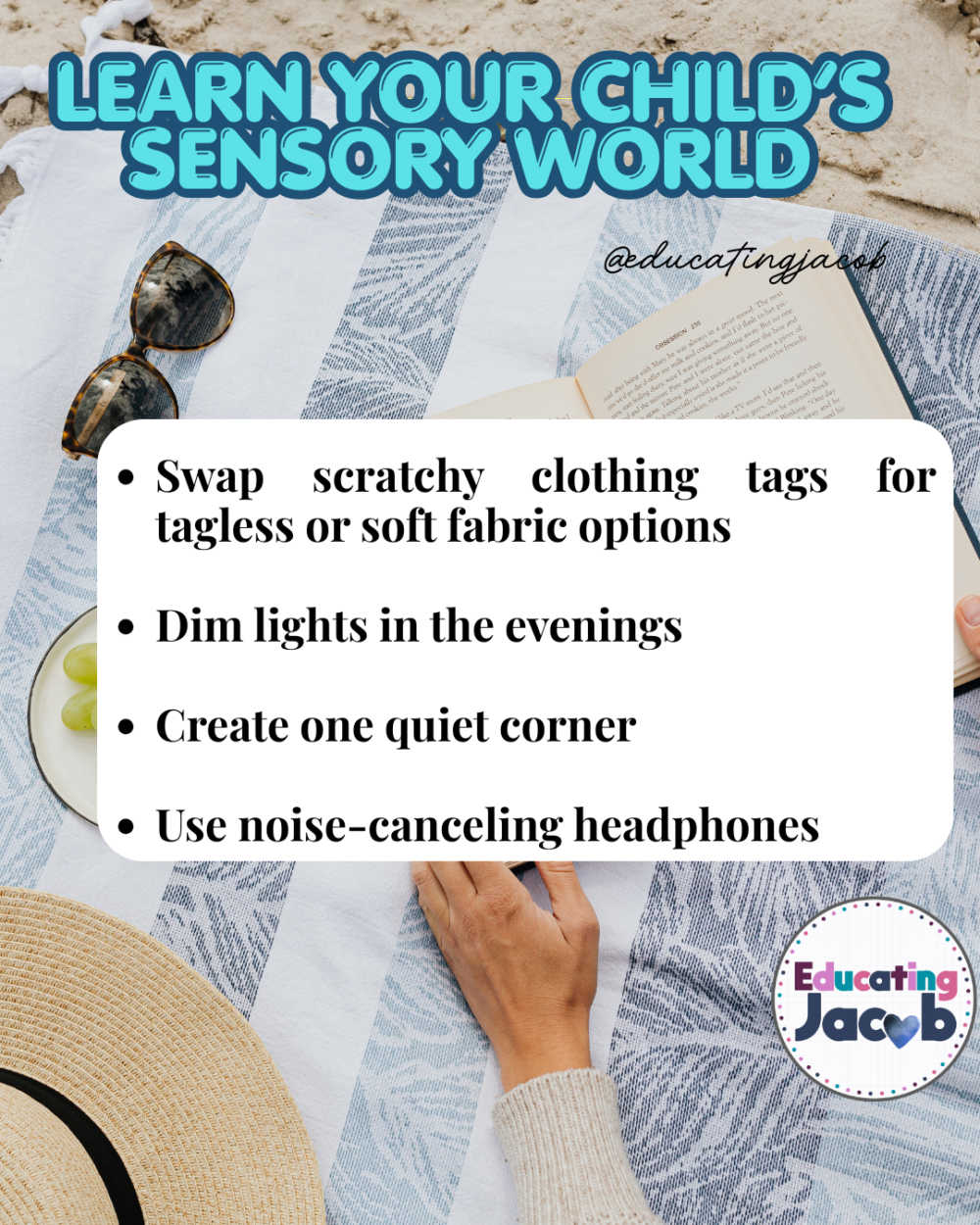
Week One: Learn Your Child’s Sensory World
Before you research therapies or call waitlists, spend the first week simply observing your child with new eyes. Children with autism experience the world through a sensory system that processes things differently. What looks like a meltdown “out of nowhere” almost always has a trigger.
Keep a simple notepad. When a difficult moment happens, write down the time, where you were, and anything sensory in the environment. Do this for seven days. Patterns will emerge. https://www.keyautismservices.com/blog/clothes-for-children-with-autism
Quick wins to try immediately:
- Swap scratchy clothing tags for tagless or soft fabric options
- Dim lights in the evenings if your child seems more dysregulated at night
- Create one quiet corner in your home — minimal clutter, soft textures, dim light
- Use noise-canceling headphones for grocery stores or loud environments

Week Two: Build Your First Visual Schedule
This is the single most transformative tool I have ever used — in my home with Jacob (two decades), and over a decade of special education classrooms.
A visual schedule answers the question that an autistic child’s brain asks constantly: What happens next? When Jacob didn’t have a schedule, our mornings were battles. He wasn’t being difficult — he was anxious. The schedule gave him safety and control that changed everything.
How to build your first one:
- Start with morning only — keep it to 5–7 steps maximum
- Use pictures, photos, or hand-drawn images for each activity
- Post it at your child’s eye level in a consistent location
- Walk through it together every single morning
- By week three, your child will begin moving through it independently
Week Three: Make Three Phone Calls
By week three, you’re ready to start building your professional team.
Call 1 — Your Child’s School District: Federal law (IDEA) requires your school district to evaluate your child and provide appropriate services at no cost. Request a special education evaluation in writing. This starts the legally required clock. They might accept some of your outside testing and start in a special pre-K.
Call 2 — Your Child’s Pediatrician: Ask for referrals to a developmental pediatrician, a speech-language pathologist, and an occupational therapist. Waitlists are long — start now.
Call 3 — One Other Autism Parent: Find one parent who has been on this road longer than you. Not to compare children — just to hear someone say: I know. I’ve been here. You’re going to be okay.
❤ Join the FREE Autism Thrive Tribe on Facebook — community for parents who get it ❤
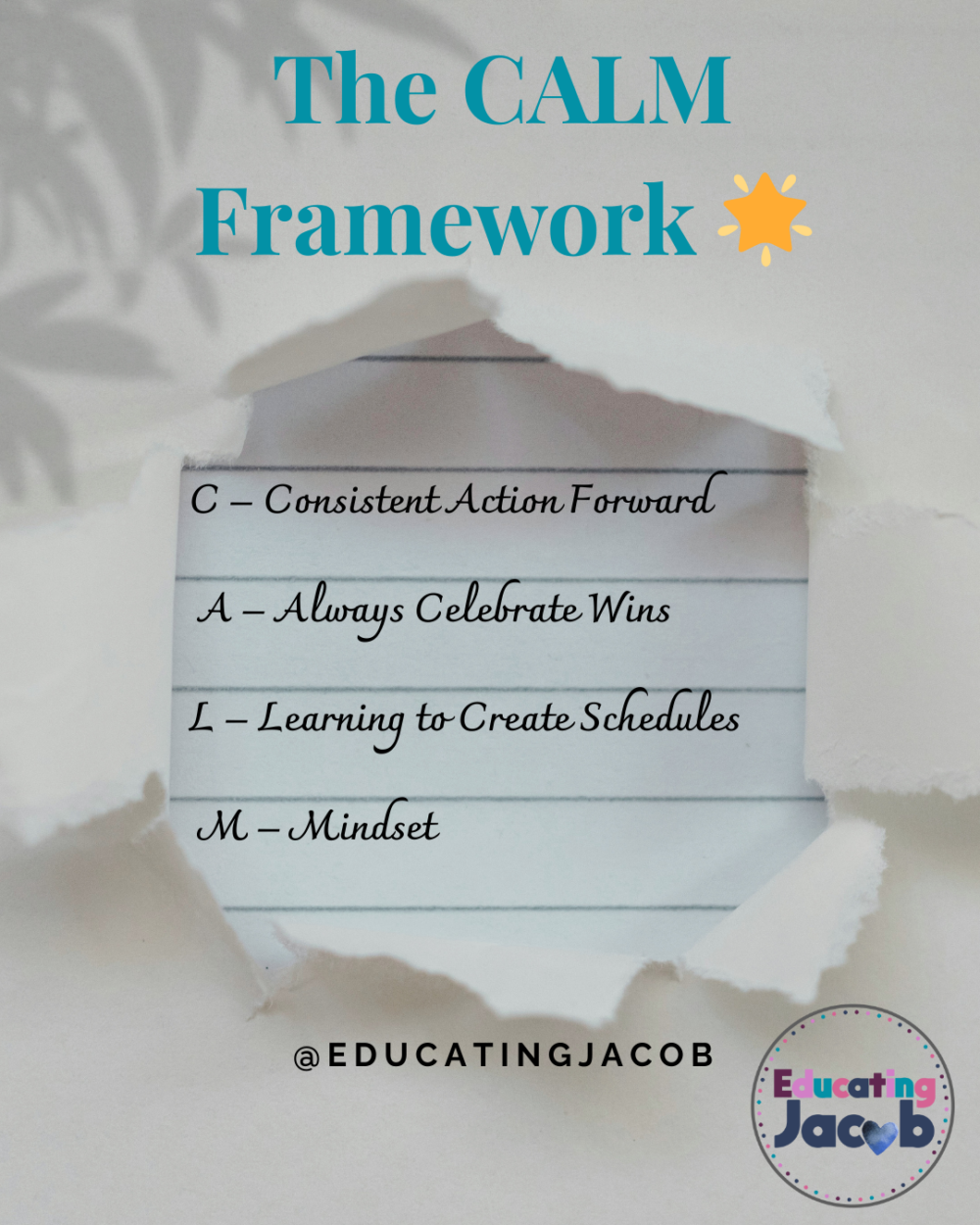
Week Four: Learn the CALM Framework
C — Consistent Action Forward: Autism parenting is a marathon, not a sprint. Consistency — in routines, responses, and expectations — is the most powerful tool you have. You don’t have to do everything right. You just have to keep going.
A — Always Celebrate Wins: Your child said a new word. They wore a new food without melting down. They got through a transition. Celebrate all of it, out loud, every time. Acknowledgment builds confidence that no therapy can replicate. And celebrate your own wins too.
L — Learning to Create Schedules: Visual schedules are not just for mornings. As you build confidence, expand them to afternoons, weekends, mealtimes — any part of the day that regularly produces friction.
M — Mindset: This is the one that took me the longest to learn. The mindset shift that changed everything:
- Step 1: Decide you can do it
- Step 2: Make a plan and get to work
- Step 3: Be persistent and consistent
Not toxic positivity. Not pretending this isn’t hard. It is hard. Our family has suffered real, significant hardship. But choosing to believe that you can navigate this — that your child can grow, that your family can find its footing — that choice is what makes everything else possible.
What I Want You to Know About the Long Road
Jacob is in his twenties now. He lives at home with moderate support needs. He has his routines, his responsibilities, his sense of pride in completing his schedule each day.
The road here was not smooth. There were seasons of real suffering — Jacob’s epilepsy nearly took him from us. There were years I didn’t know how we would manage. There were nights I had nothing left.
But there is also this: David is a firefighter who runs toward emergencies. Nicholas has a PhD and comes home regularly because he built his life to be present for his brother. And I — a pharmacy technician who once sat in a parking lot with no idea what to do — became a special education teacher who now gets to walk alongside families like yours.
Jacob’s diagnosis changed all of us. Not in spite of the hard, but through it. You are at the beginning of that same transformation. You don’t know yet what it will make of you and your family. But it will make something.
Take the next step. Just the next one.
YOUR 30-DAY CHECKLIST:
WHAT TO DO AFTER AN AUTISM DIAGNOSIS
Days 1–2: Rest and Feel
- Tell trusted people what you’ve learned
- Allow yourself to grieve, process, and breathe
- Hold your child — they are the same child they’ve always been
Week 1: Learn Your Child’s Sensory World
- Start a simple observation journal
- Note triggers, patterns, times of day
- Make 1–2 small sensory accommodations at home
Week 2: Build Your First Visual Schedule
- Download the free Visual Schedule Starter Kit
- Create a morning routine schedule (5–7 steps)
- Use it consistently for 7 days
Week 3: Make Your Three Calls
- Call school district — request special education evaluation in writing
- Call pediatrician for speech, OT, and developmental pediatrics referrals
- Find one other autism parent — join the Autism Thrive Tribe
Week 4: Learn the CALM Framework
- Read more at educatingjacob.com, How to replace Chaos with Calm, plays for the long game! #autismschedules
- Identify which routine to build next
- Write your mindset commitment somewhere visible
Frequently Asked Questions
What is the very first thing to do after an autism diagnosis?
Give yourself 48 hours before making any major decisions. Then start with observation — spend one week learning your child’s sensory triggers. A simple visual schedule for your morning routine is the most impactful first practical step.
How do I get services for my newly diagnosed autistic child?
Contact your school district immediately and request a special education evaluation in writing. Under IDEA, they are required to evaluate your child and provide appropriate services at no cost. Also ask your pediatrician for referrals to speech therapy and OT — waitlists are long, so call early.
What is a visual schedule and why does it help autism?
A visual schedule is a simple sequence of pictures or words showing a child what activities are coming next. It reduces anxiety by providing predictability. Many families see significant reductions in meltdowns within the first few weeks of consistent use.
What if my child also has epilepsy or other conditions alongside autism?
Co-occurring conditions like epilepsy are common with autism. Work closely with a neurologist alongside your developmental team. Make sure all caregivers and school staff know seizure first aid. You are not alone — many autism families navigate multiple diagnoses simultaneously.
How do I take care of myself while caring for my autistic child?
Find your community before you hit a wall. Let people help even imperfectly. Caregiver burnout is real and it sneaks up slowly. Taking care of yourself is taking care of your child.
Melissa is the founder of educatingjacob.com and a special education teacher with a master’s degree — a credential she earned after her son Jacob’s autism diagnosis, because she refused to stop searching for answers. She and her husband David, a firefighter, have spent over twenty years building a life around Jacob’s needs. Her mission is to be the guide for other families that she never had.
“Because every child deserves to learn, and every parent deserves to hope.”