Blog

  • 4 Things I Wish I Would Have Known After Getting the Autism Diagnosis

    4-Things-I-Wish-I-Would-Have-Known-After-Getting-the-Autism-Diagnosis
    We all need help and support on this autism journey.

    Autism Diagnosis Tips for Parents

    When I first heard the words “autism diagnosis” for Jacob, my world spun into chaos. I felt like I was fumbling through a fog, unsure of what to do or where to turn. I’m here to share autism diagnosis tips for parents. If you’re reading this, you’re likely on a similar journey, and I want to share four crucial lessons I’ve learned along the way. These strategies have been a beacon of hope and structure for our family, and I hope they can guide you too.

    Autism Tips for Parents Visual Schedules

    What I Wish I Knew:
    Visual schedules are a game-changer for children with autism. This is my big tip for parents getting an autism diagnosis.They provide structure and predictability, helping your child understand what to expect and when.πŸ“…Β 

    Why It’s Important:

    – Reduces Anxiety: Knowing what comes next helps your child feel more secure. For Jacob, having a clear visual schedule transformed his daily experience from chaos to calm. πŸ§˜β€β™‚οΈ

    – Improves Transition: Visual schedules make it easier for your child to move from one activity to another without meltdowns. Transitions became smoother for Jacob once we implemented this strategy. 🚦

    – Encourages Independence: Your child can learn to follow routines independently. Jacob learned to manage his own day, which boosted his confidence and autonomy. πŸ†

    How to Implement:

    – Use images, symbols, or photos to create a daily schedule.
    – Keep it simple and consistent, especially at the beginning.
    – Gradually introduce more complex tasks as your child becomes comfortable.

    Tip: Start with a morning routine and build from there. Consistency is key!


    Build a Strong Support Network πŸ‘ͺ

    What I Wish I Knew:
    You’re not in this alone! My next autism diagnosis tip for parents! Building a support network can make a huge difference for you and your child.

    Why It’s Important:

    – Emotional Support: Connect with other parents who understand your journey. This sense of community can be incredibly comforting. 🀝

    – Resource Sharing: Learn from others’ experiences and get advice on therapies and services. Other parents often have insights and tips that can be invaluable. πŸ’‘

    – Community Connection: Create a sense of belonging for your child and family. Having a support network helps everyone feel less isolated. 🌍

    How to Implement:

    – Join local and online autism support groups.
    – Connect with professionals who specialize in autism.
    – Reach out to family and friends for support.

    Tip: Don’t hesitate to ask for help when you need it. Support is a powerful tool!


    Prioritize Sensory-Friendly Environments 🧩

    What I Wish I Knew:
    Next, on my list of autism diagnosis tips for parents that battle sensory issues. Children with autism often have unique sensory needs. Creating a sensory-friendly environment can enhance your child’s comfort and ability to learn.

    Why It’s Important:

    – Enhances Focus: Reduces sensory overload, allowing your child to concentrate better. This was crucial for Jacob, who could become overwhelmed by certain stimuli. 🎯

    – Promotes Calmness: A calming environment helps regulate emotions and behavior. A peaceful setting can prevent or de-escalate potential meltdowns. 🌿

    – Supports Development: Sensory-friendly spaces can aid in learning and growth. Jacob thrived in an environment tailored to his sensory needs. 🌱

    How to Implement:

    – Identify your child’s sensory triggers and preferences.
    – Adjust lighting, noise, and textures in your home to suit your child’s needs.
    – Create a designated calm-down area with sensory tools and toys.

    Tip: A simple sensory bin or fidget toy can work wonders for self-regulation!


    Learn and Adapt with Your Child πŸ“š
    Finding-your-rhythm-after-an-autism-diagnosis-is-possible
    Consistency and confidence will come with action! Always learning.

    What I Wish I Knew:
    Every child with autism is unique, and so is their journey. Be prepared to learn and adapt as you discover what works best for your child. Read Β πŸ‘‰πŸΌAutism Diagnosis: My Home Was in Chaos and I Felt Like a Terrible Mom!

    Why It’s Important:

    – Individualized Learning: No one-size-fits-all approach exists. Each child’s needs and strengths are different. Jacob taught us that flexibility and adaptation were key. πŸ”

    – Continuous Growth: Your child will change and grow, and your strategies should evolve too. Stay open to new methods and insights. 🌈

    – Parental Empowerment: As you learn alongside your child, you’ll become more empowered and confident in your parenting skills. πŸ’ͺ

    How to Implement:

    – Stay informed about autism research and therapies.
    – Be open to trying new strategies and tools.
    – Embrace the journey and celebrate the unique qualities of your child.

    Tip: Keep a journal to track your child’s progress and reflect on your own growth as a parent. Celebrate your wins too!


    Applying the CALM Framework to Our Journey

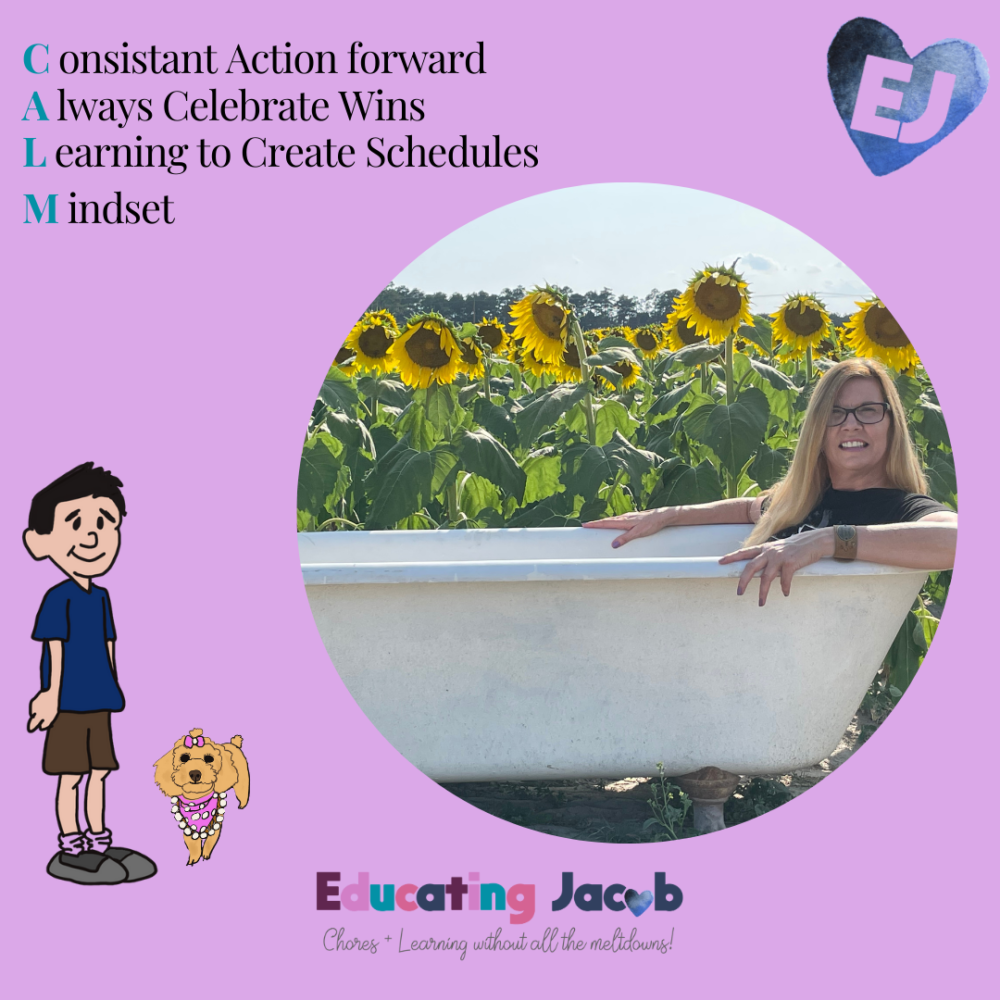
    When Jacob was diagnosed, we developed our CALM framework to guide us through the challenges:

    1. Consistent Action Forward (C)
    – Build routines and stick to them. Consistency helps create a stable environment that reduces anxiety.

    2. Always Celebrate Wins (A)
    – Acknowledge every success, no matter how small. Celebrating milestones fosters a positive atmosphere.

    3. Learning to Create Schedules (L)
    – Use visual schedules to bring peace and order. They help your child understand their day and reduce stress.

    4. Mindset Matters (M)
    – Embrace the journey with a positive outlook. Remember, you are your child’s greatest advocate.Β How does mindset change things when raising a child with autism? 🧩

    CALM-frameworks-for-educatingjacob.com
    CALM over Chaos and frustration!
    Final Thoughts 🌟

    Last, on my list of autism diagnosis tips for parents Raising a child with autism is a journey filled with challenges and triumphs. By applying the CALM frameworkβ€”Consistent Action, Always Celebrate Wins, Learning to Create Schedules, and Mindsetβ€”you can create a nurturing environment where your child can thrive. Remember, you’re not alone in this journey. Together, we can build a brighter future for our children. πŸ’™ Here’s a blog post about an adult diagnosis: https://www.duchessofneverland.com/home/autism-diagnosis

    Feel free to share your thoughts and experiences in the comments below. Let’s support each other on this journey! πŸ“’πŸ’¬ Want more info, download the ebook!Β https://educatingjacob.myflodesk.com/tfgvkumbkg

    Read More

  • Autism Awareness happened in April? Jacob’s Autism Education and schedule.

    Autism Awareness Happened in April?

    Autism Journey
    Follow our journey so you can learn from our mistakes and success’s!

    In a world where understanding and acceptance are vital, autism awareness isn’t just for April. Autism, a complex neurological condition, affects millions of individuals globally. Education empowers individuals with autism to develop their full potential by providing them with the necessary tools and skills to navigate the world. Parents do not have to have a specialized degree to help their child succeed! 🌟

    By embracing autism awareness and autism education, we create an inclusive society that celebrates diversity and fosters empathy. It enables educators, parents, and communities to provide appropriate support and intervention, enhancing the quality of life for individuals with autism.🧩


    Autism Spectrum Disorder (ASD) πŸ“š

    Autism spectrum disorder (ASD) is a complex neurological condition affecting communication, interaction, and information processing. The spectrum means symptoms can vary widely among individuals. Some may have significant communication challenges, while others excel in specific areas like math or music.


    Jacob, my son, has faced significant challenges with communication and social interactions due to his autism. However, through tailored educational strategies, he’s made incredible progress in expressing himself and engaging with others.

    Sensory Processing Differences 🌈

    One of the key features of autism is the way individuals process sensory information. Many individuals with autism are either hyper-sensitive or hypo-sensitive to certain stimuli, such as sounds, textures, or lights. This can lead to sensory overload, which can be overwhelming and distressing. Understanding the sensory processing differences experienced by individuals with autism is crucial in providing them with the support and accommodations they need to thrive.Help! 3 Ways a schedule can help sensory issues and communication barriers? #Autism Challenges🧩

    Social Interaction and Relationships 🀝
    Create Social Interaction and Relationships for your child with autism🀝
    Create Social Interaction and Relationships for your child with autism🀝

    Another important aspect of autism is the way individuals on the spectrum approach social interactions and relationships. Jacob, for example, struggles with understanding social cues, reading facial expressions, and engaging in back-and-forth conversations. This leads to challenges in forming and maintaining friendships and relationships. However, it’s important to recognize that individuals with autism have a unique perspective on the world and can often offer valuable insights and contributions to their communities.

    Common Misconceptions About Autism ❌

    One of the most common misconceptions about autism is that it is a mental illness or a sign of intellectual disability. In reality, autism is a neurological condition that affects how an individual processes information and interacts with the world. Many individuals with autism have average or above-average intelligence, and their unique way of thinking can be a valuable asset.


    The Impact of Education on Autism Awareness πŸŽ“


    Education plays a crucial role in unlocking the potential of individuals with autism. Accurate information and resources can dispel myths, combat stigma, and empower those with autism to reach their full potential. Educators, parents, and community members can better support individuals with autism by understanding their unique sensory needs, communication styles, and social challenges.Β The best schoolwork jobs and schedules for students at home in 2023!

    As a teacher who has a son on the autism spectrum, this would rally support to others in school who had difficulties. My students would come and tell me how they helped a student or informed another teacher of a student who was struggling because of their autism. They would then offer help or explain what they thought was wrong and how the teacher could help. It was amazing!

    For Jacob, education has been transformative. His visual schedules and structured routines have helped him understand his daily activities, reducing anxiety and improving his ability to transition between tasks.

    Promoting Autism Awareness in Schools 🏫

    Schools play a critical role in promoting autism awareness and creating inclusive environments for students with autism. By integrating autism education into the curriculum, schools can empower students to understand and appreciate the diversity of human experiences, including those of individuals with autism.

    Autism-Specific Training for Educators πŸŽ“
    Autism-Specific Training for Educators πŸŽ“
    We need trainings that will give hands on activities for students! (think visual schedules and work activites)

    One effective way to promote autism awareness in schools is through the implementation of autism-specific training and professional development programs for educators. These programs can equip teachers with the knowledge and strategies they need to create inclusive classrooms that cater to the unique needs of students with autism. This includes learning about effective teaching methods, such as visual supports, structured schedules, and sensory-friendly environments, as well as strategies for fostering social-emotional learning and positive behavior support. Check out this post: πŸ‘‰ https://www.healthline.com/health/visual-schedule-autism

    Student-Led Initiatives and Awareness Campaigns πŸŽ‰

    In addition to educator training, schools can also promote autism awareness through student-led initiatives and awareness campaigns. This can include hosting autism awareness events, creating inclusive clubs or extracurricular activities, and encouraging students to engage in peer-to-peer mentoring and support programs. By involving students in these initiatives, schools can cultivate a culture of empathy, understanding, and acceptance, where all students feel valued and supported.

    Strategies for Creating an Inclusive Classroom Environment 🌟
    1. Visual Support: Implementing visual aids such as schedules and task lists can help students with autism understand and navigate their day. Jacob thrives with visual schedules that outline his daily tasks, making him feel more secure and in control.

    Β 

    1. Sensory-Friendly Accommodations: Providing tools like noise-cancelling headphones or quiet spaces can help manage sensory input. Jacob uses noise-cancelling headphones to cope with overwhelming environments.

    Β 

    1. Social-Emotional Learning: Teaching social skills and fostering peer support encourages empathy and understanding among students. Jacob has benefited from social stories that help him understand and practice social interactions.
    The Role of Parents in Supporting Autism Education πŸ‘ͺ

    Parents play a vital role in supporting the education and development of their children with autism. Parents can work closely with educators and administrators to ensure their child’s educational experience is tailored to their unique strengths and challenges.

    One key responsibility of parents is to provide educators with comprehensive information about their child’s autism, including their communication style, sensory needs, and learning preferences. This information can help educators develop effective strategies and accommodations to support the student’s academic and social-emotional growth. Parents can also work with educators to create individualized education plans (IEPs) or 504 plans that outline the specific supports and services their child requires.

    Parents play a vital role in supporting their children’s education and development. Providing educators information about their child’s autism, such as communication style and sensory needs. This can help tailor effective strategies and accommodations. Collaboration between parents and educators creates a supportive environment that fosters growth and independence for children with autism.


    Jacob thrives daily using simple schedules that help him understand his day and our expectations. The schedules are a way to communicate and live independently for Jacob. He is able to have a day where he accomplishes work, chores, and interactions with his family and the community. Β What if you have a plan for your child with autism? A Great Life.

    Resources for Autism Education and Awareness πŸ“š

    There are resources available to support autism education and awareness, both for educators and the general public. These resources can provide valuable information, strategies, and tools to help create inclusive and supportive environments for individuals with autism. https://www.autismspeaks.org/

    Autism Society of America, a resource that offers educational materials, and support services for individuals with autism and their families. The organization’s website, https://www.autism-society.org, provides resources on topics such as early intervention, education, employment, and community engagement.

    Additionally, another resource is the National Autism Center,Β  focuses on evidence-based practices for supporting individuals with autism. The center’s website,

    Read More

  • Autism Diagnosis: My Home Was in Chaos and I Felt Like a Terrible Mom!

    My Home Was in Chaos

    Before Jacob’s autism diagnosis, doctors reassured us with comments like, β€œHe’s meeting his other developmental milestones” and β€œBoys talk later than girls sometimes.” Jacob was 2 years old and still had no language. After a mom fit in the doctor’s office, they finally put in a referral for speech therapy. It took almost 6 months to get into the speech therapist covered by our insurance. After the first visit, she told me to get him tested and into preschool.

    autism mom worry, When I'm afraid, Psalm 56:3
    1 Corinthians 3:11 “For no one can lay a foundation other than that which is laid, which is Jesus Christ”


    Autism Diagnosis: The Fear πŸ˜”

    Researching autism and therapies!
    Researching and going to approved therapies for autism!

    My confidence as a mom plummeted, and the fear was real. My first son was perfect, with all the typical milestones. It took another 4-6 months to get Jacob tested for autism through the schools and Teacch, who were wonderful and conducted thorough evaluations over several days. The meltdowns at the testing sites stripped the rest of my confidence. I felt like I was being judged by everyone when they happened. I felt clueless.

    Navigating the Early Stages 🍼

    Meanwhile, I learned from watching the speech therapist. Jacob was not comfortable with anyone outside the family. No therapies or testing went well. Jacob was obviously upset to be somewhere other than home. He was a fussy eater, didn’t sleep well at night, frequently had ear infections, then tubes in his ears, and frequent bowel issues. Initially, we blamed the ear infections and eventually had his hearing checked.

    Our home was full of worry by this time. We knew something wasn’t right but didn’t know what or how long it would take to get a handle on it. Jacob now had full-on meltdowns as we tried to get speech therapy and more engagement with him.

    The Diagnosis and Initial Steps 🏫

    Jacob was very independent, probably because he didn’t have language to ask us for things. When Jacob started preschool, he did not engage with the other kids and only with the adults when he needed something. The official diagnosis came in, and Jacob was placed into a self-contained autism room. It was necessary because he had no success in the other room, and the teacher had no clue what to do with him. In the autism self-contained room, the teacher started him on a visual schedule from day one. But, there was only a limited time each child could have, and Jacob was really behind, so we started considering homeschooling.

    The Power of Visual Schedules πŸ“…

    Today's Schedule, Jacob-educatingjacob.com
    Jacob’s earlier schedules could not contain more than 1 item per line.

    From that point on, we used visual schedules at home. I started going to the Teacch office, and they helped me build activities that Jacob could understand without needing language. Now, I can build schedules with work (activities) he needs to do to be a member of the family. He discovered he could learn, do work like the rest of the family, and have activities before movies, trains, toys, etc. Can a schedule help hyperactivity in toddlers? #Autism Challenges🧩

    Finding Our Rhythm 🎬

    It took years to figure things out, and Jacob is still not talking, but we started using movie quotes from movies he liked to see him light up. We were speaking his language. We also started using sign language, which really helped Jacob. Using his hands and the visual of watching someone complete a sign allowed Jacob’s brain to locate the word he wanted to say. He learned basic signs that we used while watching a show called Signing Time.Β 3 ways American Sign Language helped my son with autism speak in short sentences?

    Gaining Control and Peace πŸ§˜β€β™‚οΈ

    We have more confidence as parents and peace in the home now. Jacob has a schedule, he can communicate some of his wants and needs, he’s doing schoolwork and chores, and we also started homeschooling him and his brother.

    His brother, Nicholas, is now in graduate school and Jacob is grown and living at home with us today. He still does schoolwork, chores and shopping with us and he is able to do so with less anxiety using schedules. His day is chaotic and anxious without schedules. We are all much happier now.

    A Message to Other Autism Parents πŸ’ͺ

    To all the parents out there feeling the weight of an autism diagnosis and the chaos that follows, know that you are not alone. It’s a journey filled with ups and downs, but with patience, love, and the right strategies, you can create a structured and peaceful environment for your child. Remember, it’s okay to have off days. Just keep moving forward, one step at a time. You’ve got this! πŸ’–

    Feel free to share your thoughts and experiences in the comments below. Want more information? Sign up for my ebook:Β https://educatingjacob.myflodesk.com/tfgvkumbkg Let’s support each other on this journey! πŸ“’πŸ’¬

    Read More

  • Educating Jacob: The Power of Communication in Autism Spectrum Disorder

    Communication in Autism Spectrum Disorder

    Jake's clothes for going out!
    These clothes are for going out and sensory friendly.

    Communication in autism spectrum disorder plays a vital role in our Jacob’s ability to express himself. In our daily lives with Jacob, schedules allow us to communicate with him, connect him with others, and navigate the world around him.

    Autism Spectrum Disorder (ASD) is a developmental disorder that affects communication and social interaction skills, making it difficult for those with ASD to effectively express their thoughts, feelings, and needs.🌟

    The Challenge of Communication in Autism

    For my son Jacob, communication has always been a significant hurdle. From a young age, he struggled to convey his needs and emotions, leading to frustration and meltdowns. As parents of children with autism, we understand the heartache of seeing our children struggle to be understood. πŸ’” But there is hope and immense power in finding the right tools and strategies to help them communicate.

    Methods of Communication in Autism Spectrum Disorder

    There are various methods and strategies that can help individuals with ASD enhance their communication skills, fostering greater independence, understanding, and inclusion. Here are some of the tools that have made a difference in Jacob’s life:

    AAC Devices

    Augmentative and Alternative Communication (AAC) devices have been game-changers for many children with autism. These devices range from simple picture boards to sophisticated speech-generating devices. πŸ—£οΈπŸ”Š

    Jacob used Proloquo2Go on his iPad, but we couldn’t get him to use it consistently, so simple visual schedules and ASL were the winners for us!

    Sign Language

    Should you use sign language with your child with autism?
    Using Sign Language helped to build Jacob’s vocabulary!Β https://www.facebook.com/1584731983/videos/1116777432916450/

    Sign language is another powerful tool. Teaching Jacob sign language not only helped him communicate his needs but also reduced his frustration. The physical act of signing gave him an alternative way to express himself when verbal communication was challenging. 🀟

    The act of signing allowed Jacob to speak the words we were signing without overwhelming him with language. We were speaking with our hands, and since he understood the signs, he was happy and avoided emotional meltdownsβ€”a win-win! 3 ways American Sign Language helped my son with autism speak in short sentences?

    Social Stories

    Social stories have been instrumental in helping Jacob understand social cues and navigate different situations. These personalized short stories describe social situations and appropriate responses, giving Jacob a script to follow and easing his anxiety. πŸ“–πŸ§©

    We use social stories and videos for everythingβ€”going to the dentist, doctor, or vacation. Social stories, pictures, visual schedules, and movies are immediately understood by Jacob and are enjoyable for him!

    Independence and Communication in ASD

    For Jacob, every new way he learns to communicate opens up his world a little more, fostering greater independence and inclusion. πŸŒπŸ’¬

    Breaking Barriers with Communication

    Join us as we delve into the transformative power of communication for those on the autism spectrum. From AAC devices to sign language to social stories, there are a multitude of tools and techniques that can empower individuals with ASD to communicate effectively and have their voices heard. By exploring and implementing these strategies, we can help our children break barriers and thrive in their own unique ways. 🌈πŸ’ͺ

    Challenges Faced by Individuals with ASD in Communication

    Individuals with Autism Spectrum Disorder often face a range of challenges when it comes to communication. These challenges can vary in severity and can significantly impact an individual’s ability to effectively express themselves and engage with others. πŸŒπŸ—£οΈ

    Non-Verbal Communication

    One of the primary communication challenges for individuals with ASD is the difficulty in understanding and interpreting social cues and non-verbal communication. Individuals with ASD may struggle to recognize facial expressions, tone of voice, and body language, which are crucial components of effective communication. This can lead to misunderstandings and difficulties in initiating and maintaining conversations. πŸ˜•πŸ€·β€β™€οΈ

    Example: For Jacob, this meant missing out on the subtleties of social interactions, often leading to frustration for both him and those trying to communicate with him.

    Engaging in Reciprocal Communication

    Another common challenge is the ability to engage in reciprocal communication. Individuals with ASD may have difficulty taking turns in a conversation, maintaining eye contact, and responding appropriately to social interactions. This can make it challenging for them to build and maintain meaningful relationships with others. πŸ”„πŸ‘€

    Example: Jacob often found it hard to keep a conversation going, which sometimes made social interactions feel one-sided or awkward.

    Understanding Social Cues in Autism Spectrum Disorder

    Additionally, individuals with ASD may have difficulties in understanding and using language effectively. They may struggle with vocabulary, grammar, and the pragmatic aspects of language, such as using language in a socially appropriate manner. This can result in difficulties in expressing their thoughts, feelings, and needs, leading to frustration and isolation. πŸ“šπŸ—£οΈ

    Example: Jacob’s language delays meant that even simple exchanges could be challenging, making it hard for him to convey his needs or participate fully in conversations.

    Sensory Processing Challenges

    Furthermore, individuals with ASD may experience sensory processing challenges that can impact their communication abilities. Certain sounds, textures, or environments may be overwhelming, making it difficult for them to focus on and engage in conversations. πŸ”ŠπŸš«

    Example: Jacob found noisy environments particularly challenging, which often caused him to withdraw from social settings.

    Communication Strategies for Individuals with ASD

    Individuals with Autism Spectrum Disorder (ASD) face a range of communication challenges, but with the right strategies and support, they can develop and enhance their communication skills. Here are some effective communication strategies that have benefited Jacob and can help other individuals with ASD:

    Visual Supports

    A-little-planning-goes-a-long-way
    Jacob has sensory friendly clothes, school work in zippered bags and headphones!

    Incorporating visual aids, such as pictures, symbols, or schedules, can help individuals with ASD better understand and express themselves. Visual supports provide a clear and concrete way for them to communicate their needs, preferences, and ideas. πŸ–ΌοΈπŸ“Š

    We use a visual schedule for Jacob to help him understand his daily activities and reduce anxiety. This method has significantly improved his ability to transition between tasks and communicate his needs. Here is good podcast on visual schedules and speech:Β https://www.iheart.com/podcast/263-slp-coffee-talk-57469512/episode/visual-supports-can-create-predictable-systems-101691070/

    Structured Routines and Predictability

    Establishing predictable routines and schedules can help individuals with ASD feel more secure and comfortable, which can, in turn, facilitate better communication. By providing a structured environment, individuals with ASD can better anticipate and navigate social interactions. πŸ“…πŸ”„

    Jacob thrives on routine. Having a consistent schedule helps him know what to expect each day, making it easier for him to engage in conversations and social activities.Β Beyond the Chaos: Scheduling 101 Class for Special Needs Children

    Simplifying Language

    Using clear, concise, and age-appropriate language can help individuals with ASD understand and respond more effectively. Avoiding complex sentences, idioms, and abstract concepts can make communication more accessible and meaningful. πŸ—£οΈβœ‚οΈ

    Example: We keep our language simple when communicating with Jacob. Short, direct sentences help him understand and respond better, reducing misunderstandings.

    Allowing Time for Processing

    Individuals with ASD may need more time to process information and formulate their responses. Providing them with ample time to respond, without interrupting or rushing them, can create a more comfortable and supportive communication environment. β³πŸ•’

    When asking Jacob a question, we give him extra time to think and respond. This patience allows him to communicate more effectively and confidently.

    Reinforcing Positive Communication

    Positively reinforcing and acknowledging successful communication attempts, no matter how small, can help build confidence and encourage individuals with ASD to continue developing their communication skills. πŸŒŸπŸ‘

    Positive reinforcement has been key in building Jacob’s confidence.

    Incorporating Interests and Passions

    Engaging individuals with ASD in conversations about their interests can help them feel more motivated to communicate. Look for ways to provide opportunities for them to share their unique perspectives and experiences. πŸŽ¨πŸš€

    Jacob loves talking about movies and music. Incorporating these topics into our conversations keeps him engaged and eager to communicate.

    Modeling Appropriate Communication

    Demonstrating and modeling appropriate social and communication skills can help individuals with ASD learn and practice these skills in a supportive environment. πŸ“šπŸ‘¨β€πŸ«

    We use social stories for Jacob, and model taking turns in conversation and using polite language. He prefers movie quotes!

    Empowering Communication for All

    By implementing these communication strategies, individuals with ASD can develop the skills and confidence needed to express themselves πŸŒŸπŸ—£οΈ

    Want more? We are dedicated to sharing our journey and strategies to help other parents navigate the complexities of autism. Download the ebook:πŸ‘‡ Β https://educatingjacob.myflodesk.com/tfgvkumbkg

    Read More