
How We Celebrate ASD Communication: Beyond Just Words
Because Connection Doesn’t Always Sound Like a Conversation
If you’re an autism parent drowning in daily chaos, exhausted from trying to talk your child through meltdowns, transitions, and overwhelming routines… this post is your lifeline.
Because sometimes words just aren’t the bridge to autism communication strategies that actually work.
When Traditional Communication Strategies Fall Short
I used to think that if I just kept talking, explaining, and redirecting, Jacob would eventually understand. But all my talking felt like white noise to him—and let’s be honest, it made both of us more frustrated and stuck in that familiar cycle of autism anxiety.
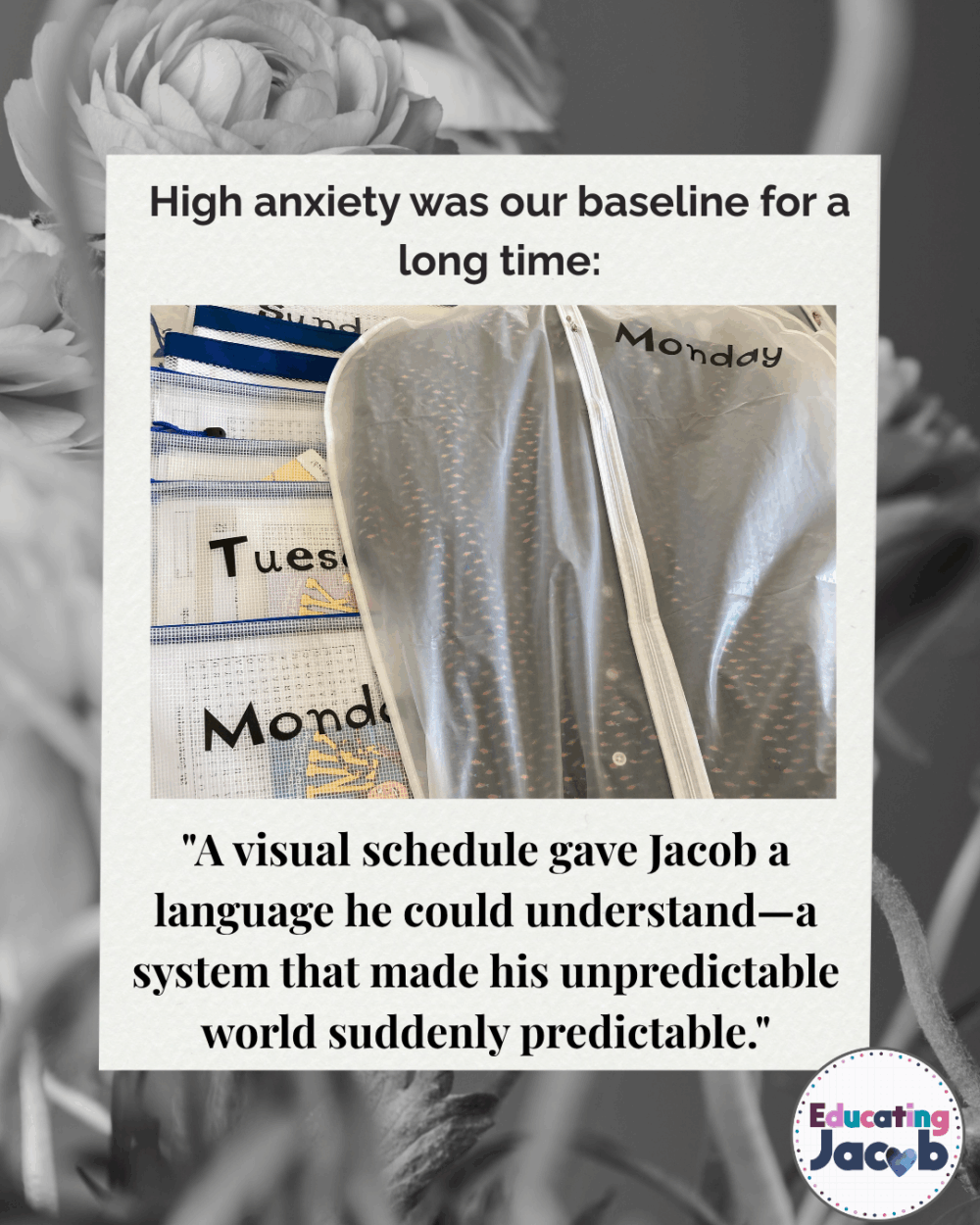
Jacob, my incredible son with level 2-3 autism, doesn’t communicate like most people. Words can be overwhelming, delayed in processing, or completely bypassed when anxiety is high. And trust me, high anxiety was our baseline for a long time—that suffocating feeling where every day felt like survival mode.
The turning point? Realizing that autism communication strategies go far beyond words. And Jacob? He was already communicating—through behavior, gestures, looks, routines, and preferences.
I just needed to listen differently and learn his language.
Your Parent Bond is More Powerful Than Any Degree
Here’s something I wish someone had told me back then: You don’t need a degree to connect with your child using effective autism communication strategies.
Yes, I went back to school and got my degree in special education after Jacob’s diagnosis—but that paper didn’t unlock the magic. What really mattered was learning to see Jacob’s world, his signals, and his communication—his way.
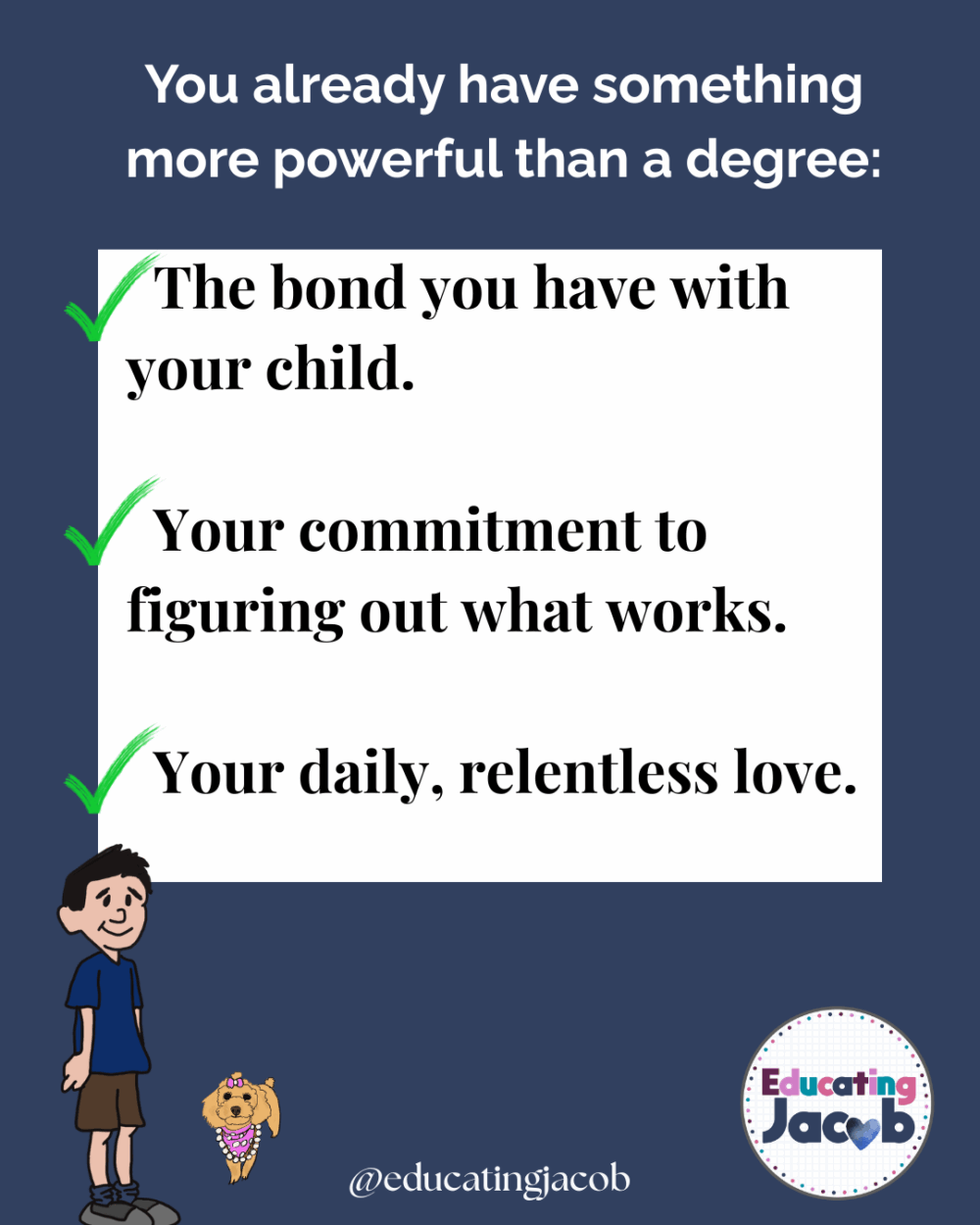
And guess what? You already have something more powerful than any credential:
➡️ The unbreakable bond you have with your child ➡️ Your commitment to figuring out what works ➡️ Your daily, relentless love that doesn’t quit
You don’t need to be perfect. You need to be present and willing to try autism communication strategies that meet your child where they are.
What We Celebrate in Our Autism Communication Journey 🎉
We celebrate communication in all its beautiful, non-traditional forms:
Pointing to the schedule. ✅
Taking your hand to lead you. ✅
Using a picture card or tapping on a device.✅
Even repeating phrases they heard on YouTube (yep, echolalia counts—it has purpose!).✅
And when Jacob started following his visual schedule consistently using our autism communication strategies—that’s when everything shifted. That’s when the chaos began to melt. That’s when the daily power struggles transformed. That’s when we finally started feeling like a team instead of opponents.
Here’s another site you might like:https://specialedresource.com/keep-your-child-calm-while-at-home-with-adhd-autism-high-energy
Our Game-Changing Autism Communication Strategies: Visual Schedules 📅
Jacob thrives with fewer words and more structure. Why? Because visual schedules take the mystery out of his day and become one of the most effective autism communication strategies we’ve ever implemented.
They give him:
- A sense of control over his environment
- Crystal-clear expectations
- Immediate anxiety relief
- No more guessing games about what’s next
That’s why I built our CALM System, starting with the L: Learning to Create Schedules. It’s not just about stickers and pictures—it’s about creating a roadmap your child understands using proven autism communication strategies.
How Our CALM Framework Transformed Our Daily Life
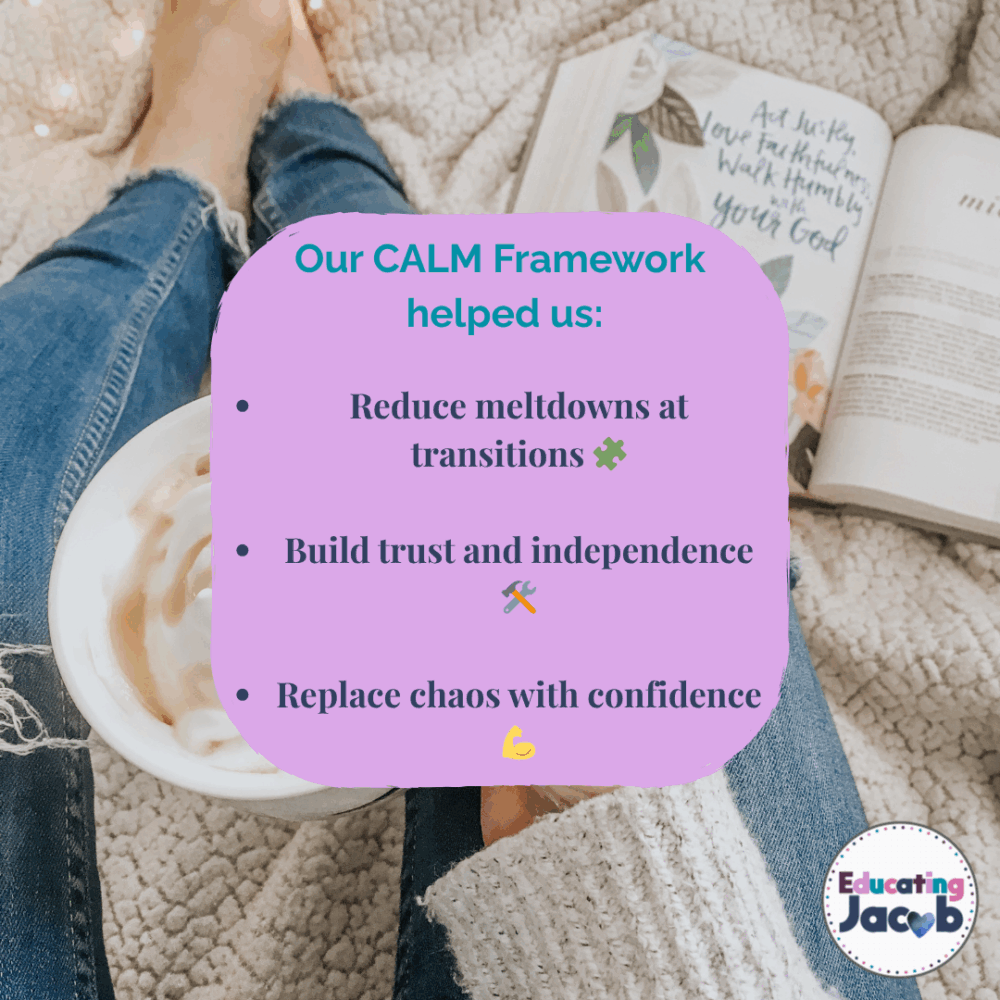
Our autism communication strategies helped us:
- Reduce meltdowns at transitions 🧩 (from 5-6 daily to maybe 1-2 weekly)
- Build trust and independence 🛠 (Jacob now initiates his morning routine!)
- Replace chaos with confidence 💪 (for both of us—I’m not walking on eggshells anymore) Self Compassion, Navigating the Journey as Autism Parents without fear and chaos.
Getting Started: Simple Autism Communication Strategies You Can Try Today
If you’re reading this wondering where to begin with autism communication strategies, start here:
Step 1: Observe Your Child’s Natural Communication
Watch how your child naturally communicates—remember, behavior IS communication! Notice their patterns, triggers, and what they’re trying to tell you.
Step 2: Reduce Words, Add Visuals
Even just 3-4 picture steps can be a complete game-changer. Less talking, more showing.
Step 3: Celebrate Every Small Win
Eye contact, a pointed finger, following one step of a routine—every step forward is still forward, and these small wins build into major breakthroughs.
Step 4: Stay Consistent
Autism communication strategies work best when they’re part of your daily routine, not just crisis management tools. How to reduce chaos at home with an autistic child using my CALM frameworks.
You’re Not Alone in This Autism Communication Journey
If you’re ready to ditch the chaos and implement autism communication strategies that actually work, grab our free CALM Visual Schedule Starter Kit and start creating a calm foundation at home today.
This isn’t about perfection—it’s about connection, understanding, and giving your child the tools they need to thrive.
Final Thoughts from One Autism Mom to Another ❤️
Friend, I’ve been exactly where you are—sitting in the parking lot crying, wondering if anything will ever get easier, questioning if these autism communication strategies will work for YOUR child.
But slowly, with the right tools, support, and faith in your child’s abilities, it does get easier. The chaos transforms into calm. The power struggles become partnerships. And those autism communication strategies that felt impossible? They become second nature.
You’ve got this, and you’re not walking this path alone. 💙
Ready to transform your daily chaos into calm? Download our free CALM Visual Schedule Starter Kit and start implementing these autism communication strategies today.