autism parenting routine

  • Looking for a better way? Visual Schedules reduce Chaos!
    Did-you-know-Visual-Schedules-Reduce-Chaos-🧩
    Visual Schedules Reduce Chaos! 🧩

    Visual Schedules Reduce Chaos! 🧩

    “Is she crazy? I have so many problems on Autism Island🏝️—why is her message ‘visual schedules’?”

    👋 Mama, I get it. I was you. I am you.

    When I say Visual Schedules Reduce Chaos, I’m not tossing around a trendy parenting tip. I’m handing you a battle-tested, mom-approved lifeline—the same one I clung to when I was trying to survive life with my amazing, autistic, strong-willed son, Jacob. The child who ran the house like a cruise director on caffeine (and we were not on vacation).

    Let me tell you what changed everything…
    👉 It wasn’t a new therapy, gadget, or even a perfect parenting plan.

    It was a visual schedule and the foundation that made it work was something I now call the CALM Framework.

    The CALM Framework That Helped My Family Breathe Again

    At Educating Jacob, we teach parents the CALM Framework, a simple system to bring peace and progress into your daily life.

    • C – Consistent Action Forward
    • A – Always Celebrate Wins
    • L – Learning to Create Schedules
    • M – Mindset That Moves You Forward

    This blog post focuses on the “L” for Learning to Create Schedules—because one of the first things I learned is that Visual Schedules reduce Chaos, especially in homes with autistic children who crave structure and predictability. Why Visual Schedules Are a Game Changer for Moderate and Severe Autism
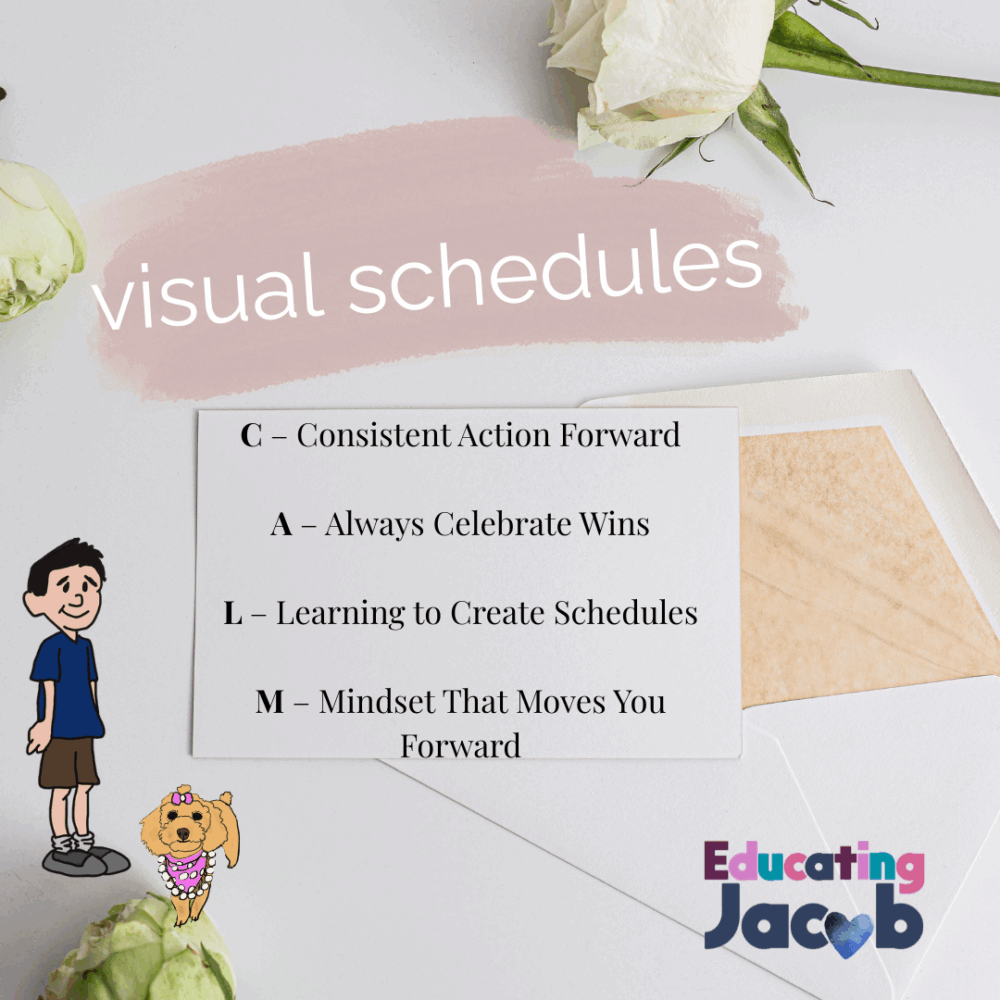
    visual-schedule-and-CALM-
    Visual Schedules Reduce Chaos 📅

    How Visual Schedules Reduce Chaos in Real Life

    Jacob needed control to manage his anxiety, but he didn’t have the words to say, “Mom, I’m overwhelmed.”

    So instead?

    💥 Meltdowns
    💥 Power struggles
    💥 Screaming over socks, cereal, or a trip to the store

    Sound familiar?

    When we started using visual schedules—just simple pictures that showed him what to expect—everything shifted.

    ✅ He could see what was coming
    ✅ He felt calmer
    ✅ Our home started to feel less like a battlefield

    Visual Schedules reduce Chaos. It’s that simple.
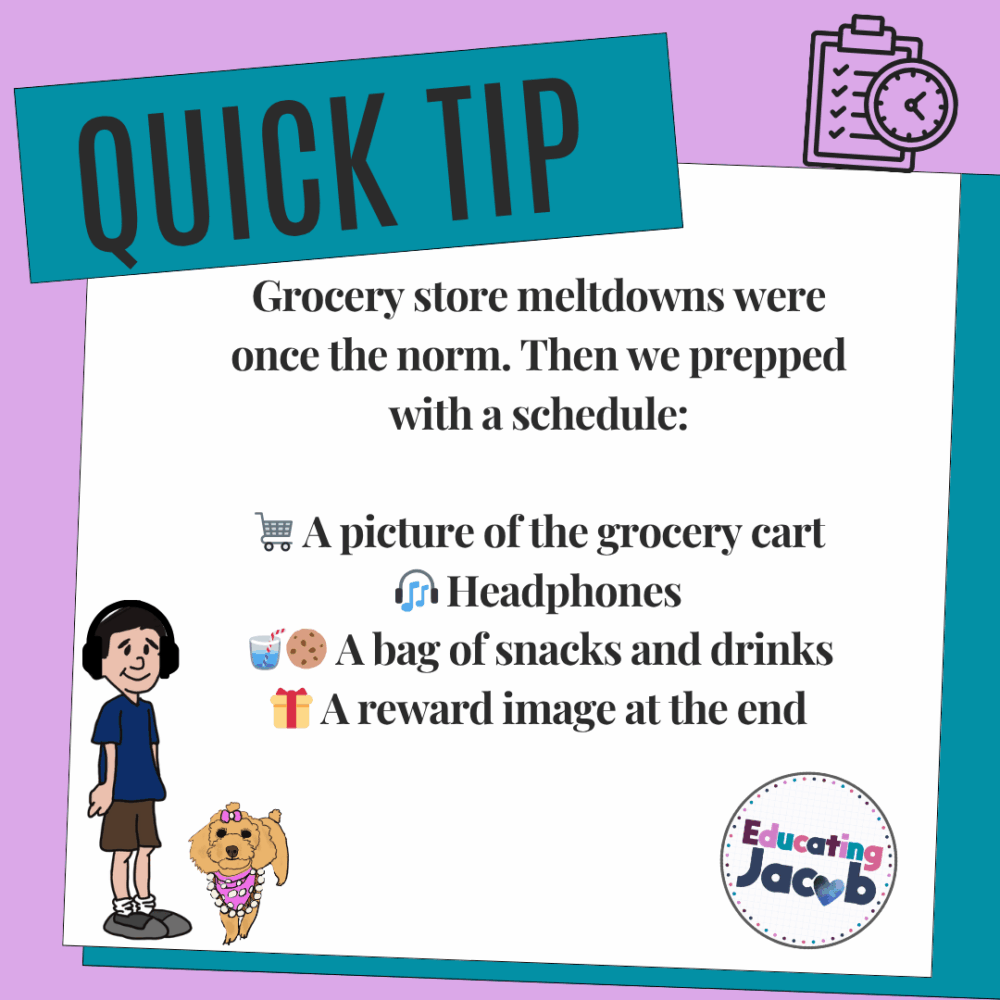
    Quick-Tip-to-prevent-shopping-meltdowns-quoteVisual Schedules Reduce Chaos During Outings and Errands

    Grocery store meltdowns were once the norm. Then we prepped with a schedule:

    🛒 A picture of the grocery cart
    🎧 Headphones
    🥤🍪 A bag of snacks and drinks
    🎁 A reward image at the end

    Jacob knew the plan. He helped with the cart. He even reminded me what was next. Just by seeing it all laid out, he was able to stay calm and participate.

    School and Home Routines That Build Trust

    At school, verbal instructions overwhelmed him. Once his teacher started using visuals to show the routine?

    ✅ He moved from task to task
    ✅ He could track his day
    ✅ He began to participate

    The same system worked at home. Predictable routines made him feel secure in both places. And guess what? It didn’t take 27 steps or a fancy board. I started with 3 pictures and built from there.

    Let your child choose a favorite activity. Add a reward. Communicate visually. You are giving them control in a safe, structured way—and that’s powerful.

    Life Isn’t Perfect, But It Can Be Calmer

    Visual schedules don’t cure epilepsy or sensory challenges. But they help Jacob remember to take his meds. They’ve made meal times predictable. They give him more independence.

    He now takes his own medication from a labeled AM/PM box. We even use visual schedules to introduce new skills by watching videos first so he knows what to expect.

    Once he sees it and knows where it fits in the day, he’s much more open to learning. Feeling isolated, broke, and chaos within the family? You’re not alone!

    Start Small and Stick With It

    Mama, if you take one thing from this post, let it be this:

    ✅ Start the schedule
    ✅ Keep it simple
    ✅ Watch anxiety fade

    Your child will begin to trust the routine. You will breathe easier. That chaos you’re living in right now? It starts to quiet down.

    Because Visual Schedules reduce Chaos.

    You Don’t Have to Do This Alone

    This is the beginning of something better. You can do this. And you don’t have to do it alone.

    🎉 Join us inside Autism Thrive Tribe, where we support each other with CALM tools, real talk, and small wins worth celebrating.

    You’re not behind. You’re just getting started. And I’m right here with you. Here’s another read you might like:  https://veryspecialtales.com/prevent-autistic-child-wandering/

    Final Thought 💙

    “Every visual schedule you create is one more step toward independence for your child, less anxiety in your home, and a whole lot more peace for both of you. I’m cheering you on.”
    Check list Here!

    Read More

  • Why Most Visual Schedules Fail (And How to Fix Yours)

    Visual schedules aren’t just tools — they’re lifelines. Discover the 3 common mistakes I made (and how we fixed them!) 💪 #ParentingAutism #AutismSupport
    Learning to create schedules! Keep it Simple and Have Fun.

    Are you drowning in unpredictability, meltdowns, and constant chaos that seems to come with parenting a child with autism? I see you. I was you. https://autismadhdconnection.com/5-tips-for-explaining-an-autism-diagnosis-to-others/

    When Jacob was younger, I felt like I was failing. I lost confidence in my parenting and had no clue how to make our days work without everything spiraling into tears (his and mine 😅). That’s when I began learning to create visual schedules for autism  and friend, they changed everything. 💙

    But I didn’t get it right at first. In fact, I got it very wrong. Let me share the three biggest mistakes I made with visual schedules and how you can avoid them for your child’s success. Stop Morning Chaos: How to start using Visual Schedule for Autism and CALM

    Learning to Create Schedules:

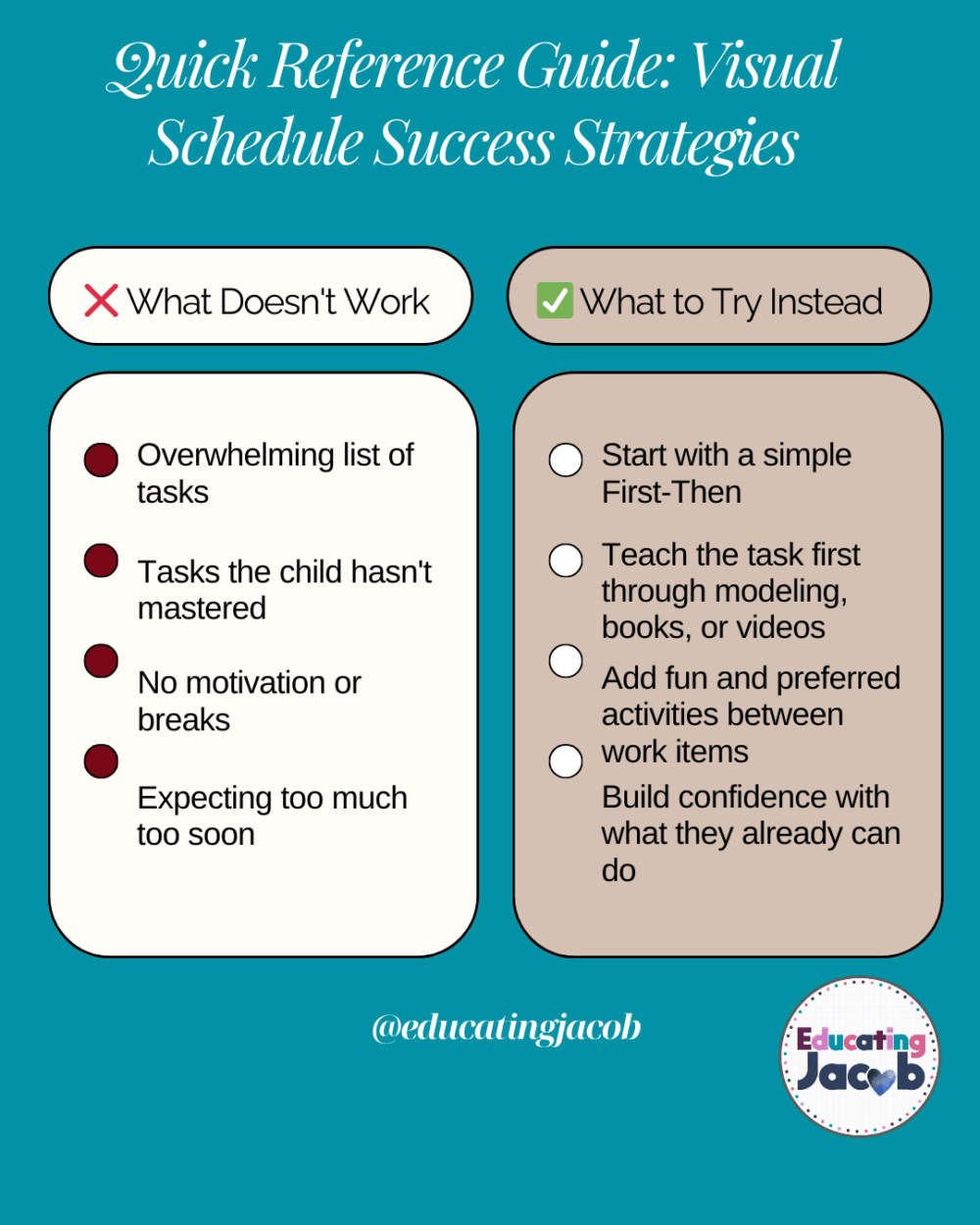
    ❌ Mistake #1: Making the Schedule Too Long

    When we first started, I loaded Jacob’s visual schedule with 10 pictures in a row — all the things I wanted him to do that day. Guess what he did? He skipped right to his favorites and ignored the rest. Smart kid. But also? A total flop. 😩

    ✅ Fix: Start with a First-Then: Board

    We simplified. I chose just two pictures:

    • Something he needed to do (like brushing teeth 🪥)
    • Something he loved (like snack time 🍎 or a favorite show 📺)

    This tiny change was powerful. It gave Jacob predictability and motivation. Once he understood that the schedule wasn’t just me bossing him around all day  but him being part of the plan  everything shifted.

    ❌ Mistake #2: Adding Tasks Before They’re Mastered

    Early on, I made the mistake of putting tasks on the schedule that Jacob didn’t yet know how to complete independently. This backfired hard. Seeing something unfamiliar  like getting dressed or a new math activity  only spiked his anxiety and resistance.

    ✅ Fix: Teach First, Then Schedule

    I learned to teach the task before putting it on the visual schedule. We’d read stories about it 📚, watch short videos 🎥, or use simple modeling and signs. Once he could do it with confidence, then  and only then  it went on the schedule.

    Remember, this is not about testing. It’s about setting up your child for independence and success. Learning to Create schedules for autism are not magic. They’re a bridge between your child and the world around them. That bridge has to be built with care.

    ❌ Mistake #3: Leaving Out the Fun Stuff

    Yes, structure is good. Yes, we need routines. But guess what I forgot in the beginning? Fun. I was so focused on “getting things done” that I forgot schedules should also be joyful and engaging.

    ✅ Fix: The Work-Break-Work Sandwich

    We call this the work-break-work sandwich:

    • Math 🧠
    • Snack break 🍌
    • Reading time 📖
    • Walk outside 🚶
    • Writing ✏️
    • Dance party 💃

    This structure keeps momentum going. Your child will begin to understand that effort leads to reward  a life skill that pays off again and again.

    Just because it’s a schedule doesn’t mean it’s all chores! Don’t forget the FUN items!
    Learn to create Schedules but don’t forget the FUN items!

    How Visual Schedules for Autism Grow with Your Child

    Jacob is 27 now. And guess what? He still craves routine. Visual schedules give him independence, comfort, and a sense of control over his day. And I’m not following him around narrating his every move! 🙌 Autism mom support, what happens when being a hands on doesn’t stop at 18?

    But here’s what I wish someone had told me earlier:

    “The schedule is not the goal, independence is.”

    It’s not about checking boxes. Learning to Create Schedules is having a plan for success!  It’s about helping your child feel secure, understood, and empowered. You’re not just making a chart. You’re building a bridge. 🌉

     Visual Schedule Success Strategies


    Quick-Reference-Guide-Visual-Schedule-Success-Strategies
    Create Visual Schedules, Let’s build them together one step at a time. 💙

    Pillar 3: L – Learning to Create Schedules

    At Educating Jacob, we call this Pillar 3: L – Learning to Create Schedules because it’s one of the most transformational pieces of the CALM framework. Effective visual schedules for autism reduce chaos, create confidence, and foster independence — for both you and your child.

    Remember, every visual schedule you create is another step toward independence for your child, less anxiety in their daily life, and more peace and happiness for your entire home. We’re cheering you on!💙

    Ready to Get Started?📌 Don’t Miss This! Download our free CALM Visual Schedule Starter Kit — it’s packed with templates and real-life examples from Jacob and me.Or join us inside Autism Thrive Tribe, where you’ll get step-by-step help and the encouragement you’ve been craving from parents who understand exactly what you’re going through.What’s been your experience with visual schedules? Share in the comments below!

    Read More