
Calm strategies for autism parents

  • Parenting a Child with Autism Level 2-3 Can Be Ra Ra Rough! Stay CALM

    Autism's level 2-3's can be rough on parenting
    Parent with CALM!

    Autism Level 2-3 Can Be Rough!

    Living on Autism Island? Then you already know what I’m about to tell you…

    If you’re parenting a child with autism level 2-3, this post won’t shock you—but it will encourage you. This one’s for the exhausted parents who need a peek behind the curtain and some practical strategies for not just surviving, but actually thriving on Autism Island. How I made it through the holidays without chaos and anxiety on autism island.

    You know the drill: unpredictable days that start before dawn, public meltdowns that make strangers stare, and that constant feeling of treading water while everyone else seems to be swimming laps.

    Jim Gaffigan nailed it when he said: “We try to be good parents
 not that you’d be able to tell. Like if you met one of my sons, you’d think, ‘Oh wow, Jim decided not to parent this one.'”

    Hilarious? Yes. Painfully relatable? Absolutely.

    More than once, I’ve caught those looks—the ones that silently ask, “Is she even trying to parent this child?” The truth is, parenting my son Jacob (now 27, autism level 2-3) has taught me more than any book, class, or degree ever could. But getting here wasn’t easy.

    The Daily Struggle Was Real

    I used to feel like a complete failure—overwhelmed, defeated, and desperate to figure out how to help my son have just one good day, let alone a good life.

    Our mornings looked like this:

    • Getting dressed? A 45-minute battle that left us both in tears
    • Grocery shopping? Forget it—unless I wanted a full-scale meltdown in aisle 3
    • Family gatherings or therapy appointments? Pure anxiety for days beforehand

    I never knew what would set him off. The heartbreaking part? Neither did he. That’s the reality of parenting a child with autism level 2-3—you’re both trying to navigate a world that doesn’t make sense. Autism Awareness Month! Parenting on the spectrum, no judgment here?đŸïž

    Use Structure for Autism Levels 2-3
    CALM Framework is all about — four key habits that changed everything for our family.

    The Turning Point: When Everything Changed

    What finally turned the corner for us wasn’t a miracle cure or expensive therapy. It was something beautifully simple: visual schedules.

    A mentor from UNC TEACCH at Chapel Hill introduced me to structured supports that actually made sense to Jacob’s brain. Little by little, with unwavering consistency, we began to see his anxiety decrease. Jacob started feeling more in control of his world.

    And I? I began to breathe again.

    Here’s the thing—we still use visual schedules today. Even as a young adult, Jacob needs that structure to understand his day and feel safe in it. And you know what? There’s absolutely nothing wrong with that.

    CALM: The Framework That Saved Our Sanity

    Parenting a child with autism level 2-3 means accepting that support is needed long-term. It also means learning to create your own version of calm in the chaos.

    That’s where our CALM Framework comes in—four key habits that transformed our family’s daily life:

    C – Consistent Action Forward

    Stop trying to fix everything at once. You’ll burn out faster than a birthday candle in a hurricane.

    Instead, choose one thing that’s disrupting your peace and create a simple schedule around it. Start ridiculously small. Repeat it daily. Build momentum like you’re training for a marathon, not sprinting to the finish line.

    Those tiny wins? They stack up and create a ripple effect for both you and your child.

    A – Always Celebrate Wins

    Every. Single. Win. Counts.

    • Got dressed without a meltdown? 🎉 Victory dance time!
    • Used a visual cue to ask for help? 🎉 That’s communication gold!
    • Made it through Target with only one minor incident? 🎉 You deserve a medal!

    When you focus on what’s working and celebrate it (even if it feels small), you’re rewiring your brain to notice progress. Your child feels that pride and confidence too—and starts believing in their own capabilities.

    L – Learning to Create Schedules

    Visual schedules aren’t just for classrooms or little kids. They’re for anyone who needs predictability, independence, and reduced anxiety. (So basically, all of us.)

    Start with 2-3 simple tasks your child already knows how to do. Build in something they love. Add one small challenge. Follow it with another preferred activity.

    The magic formula: Familiar + Preferred + Challenge + Preferred = Success

    This isn’t about rigid control—it’s about guidance, ownership, and helping your child feel safe in their own skin.

    And no, you don’t need a special education degree to do this. I didn’t have one when I started! I eventually got my degree because I wanted to understand Jacob better, but what really taught me was the daily experience of parenting him.

    M – Mindset

    Here’s the truth bomb: You can do this.

    But your mindset has to shift from reactive to proactive:

    • Reactive = chaos, burnout, feeling like you’re always putting out fires
    • Proactive = preparation, structure, and actual peace in your home

    Your calm becomes their calm. Your belief that they can succeed (with the right support) is what helps them actually succeed.

    You’re Not Failing—You’re Learning

    If you’re parenting a child with autism level 2-3, I need you to hear this:

    💛 You’re not a bad parent. You’re learning to parent differently.
    💛 Your child is not broken. They’re wired differently and need different supports.
    💛 You absolutely can have calm and happiness, even on Autism Island.

    Is it always easy? Not even close. But can you build peace, structure, and genuine joy into your days? Absolutely yes. Here’s a post from someone else you might like: https://marvelouslysetapart.com/2018/08/24/10-positives-of-autism/

    Your Next Step Starts Now

    Ready to begin your CALM journey? Here’s what you do:

    1. Choose one challenge that’s disrupting your peace
    2. Build one simple visual schedule around it
    3. Celebrate one win when you see progress

    That’s it. Start there. Build momentum. Trust the process.

    Want more support on this journey? Join the Autism Thrive Tribe—my membership community where parents use the CALM framework to bring real peace and purpose into daily life. We share wins, support each other through the tough days, and celebrate every step forward together.

    Because parenting a child with autism level 2-3 doesn’t have to mean constant chaos. Let’s build CALM—and a future full of possibility.

    Remember: Every visual schedule you create is another step toward independence for your child, less anxiety in their daily life, and more peace for your entire family. We’re cheering you on! 💙
    Read More

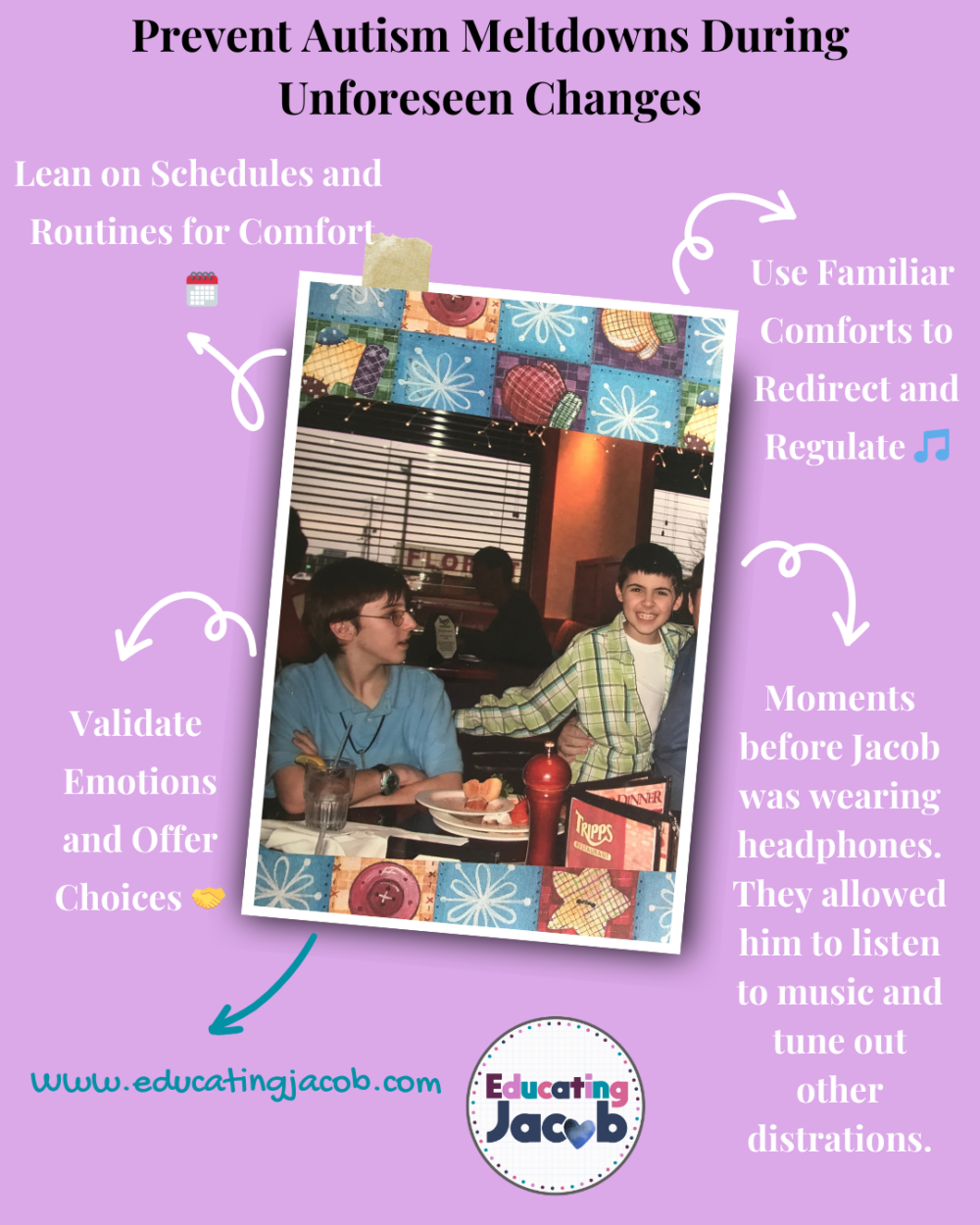
  • How can I prevent meltdowns during unexpected changes? 😔 Ditch the chaos.

    Prevent-Autism-Meltdowns-During-Unforeseen-Change
    Validate Emotions and Offer Choices đŸ€

    Prevent Autism Meltdowns During Unforeseen Changes

    So, how to prevent autism meltdowns during unforeseen changes? 📅Mornings like today remind me just how challenging unforeseen changes can be for children with autism—and for us as parents. Just this morning, Jacob, my son who thrives on routine, struggled when his worker couldn’t come because she was sick. Before I could even tell him, Jacob had already jumped in the shower, stripped his bed, and prepared for their usual routine of washing his sheets and clothes. Tired and Frustrated Mom! Sensory Challenges for the Autism Spectrum

    But when she didn’t show, he started to feel it. 😔 He kept asking about her and eventually lay on his bed, visibly upset. After a while, he came out and told me and his dad that he was angry. Through short questions, we clarified why—he was upset because Ms. Gwen didn’t come as expected.

    Jacob’s frustration lingered for a while. He even turned down his favorite activity: going out to lunch. đŸ„Ș But we turned to what always helps—the schedule and routine. We validated his feelings, redirected him back to his visual schedule, and used our tools (like offering choices and playing calming music) to help him move forward. Jacob wasn’t bribed—bribing does not work and can undo the positive habits and independence we’re building. Instead, we leaned on structure and support to get him through.

    By the end of the day, he was back on track, had completed his scheduled work, enjoyed his favorite meal from Panera, and even found joy in the music his dad played for him. đŸŽ¶ This experience reminded me why tools like schedules and routines are critical for children with autism.

    This is a perfect example of how preventing autism meltdowns during unforeseen changes relies on practical, foundational strategies. Let’s explore how you can apply these steps to bring calm to your child’s day and ditch the chaos.

    Why Unforeseen Changes Cause Chaos in Autism Families

    If you’re parenting a child with autism, you know how deeply they rely on predictability. Routine isn’t just about structure; it’s about security. When something unexpected happens, it can feel like their whole world has been turned upside down. đŸ˜©

    Children with autism often process changes differently. They may not have the words to express what they’re feeling, leading to behaviors that seem out of control but are really expressions of overwhelm. This is why meltdowns are so common when routines are disrupted.

    The key to preventing autism meltdowns during unforeseen changes is to have strategies in place that provide comfort, predictability, and tools for emotional regulation—even in moments of uncertainty.

    1. Lean on Schedules and Routines for Comfort đŸ—“ïž

    Schedules are more than just a way to structure your child’s day—they’re a tool that helps them understand what’s happening next. When Jacob’s day is disrupted, returning to his visual schedule gives him something to hold onto, even when everything else feels uncertain.

    Here’s how schedules helped Jacob today:

    • He went back to his visual schedule and completed tasks like his work and chores.
    • The routine gave him a sense of independence, allowing him to regain control of his day.
    • The consistency helped him regulate his emotions and decrease anxiety.

    💡 Practical Tip: Create a simple visual schedule that reflects your child’s regular activities. When changes arise, adapt the schedule in a way that provides continuity, such as adding a calming activity or favorite meal as a substitute. How are using schedules improving our autistic child’s daily life?

    2. Validate Emotions and Offer Choices đŸ€

    When Jacob told us he was angry, it was a breakthrough. He was able to communicate what he was feeling instead of bottling it up or having a meltdown. Validating those feelings was crucial.

    Rather than pushing him to follow the original plan, we adjusted. He didn’t want to go out, so we offered a choice: pick up Panera instead. This small shift respected his emotions while keeping some structure intact.

    💡 Practical Tip: Start by acknowledging your child’s feelings. For example, “I can see you’re upset that we had to change plans today.” Then, offer choices that give them some control, like an alternative activity or favorite food. https://www.autismsociety-nc.org/social-supports-for-families-with-autism-2/

    3. Use Familiar Comforts to Redirect and Regulate đŸŽ”

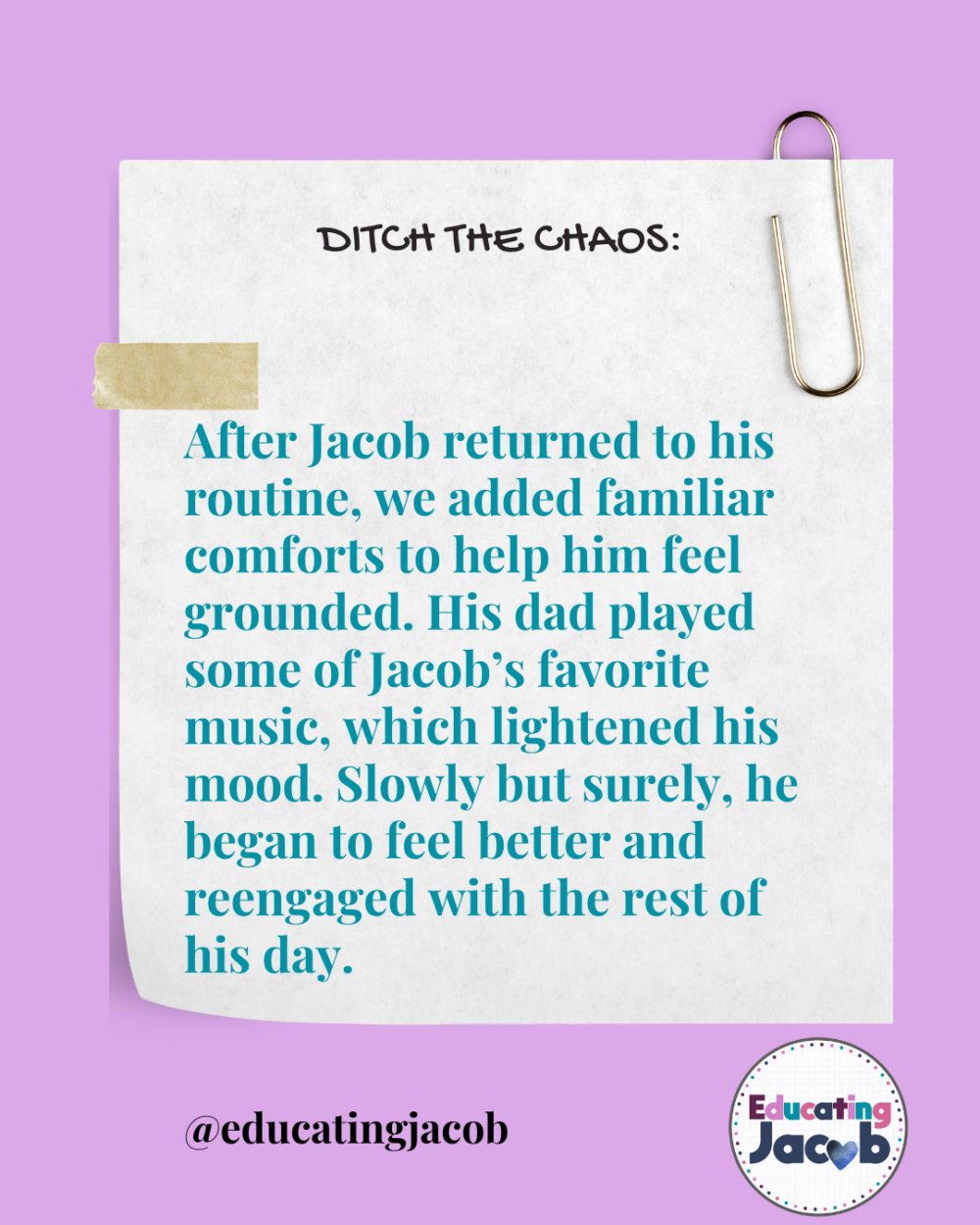
    After Jacob returned to his routine, we added familiar comforts to help him feel grounded. His dad played some of Jacob’s favorite music, which lightened his mood. Slowly but surely, he began to feel better and reengaged with the rest of his day.

    💡 Practical Tip: Keep a “comfort toolkit” ready for moments like these. This might include sensory toys, calming music, or even just extra time in a quiet space. Pairing these comforts with a routine can help your child self-regulate. How my husband changes Jacob’s bad mood with music! #musicandautism.

    Ditch-the-Chaos
    Prevent autism meltdowns during unforeseen changes.

    Ditch the Chaos: What Jacob Taught Me Today

    Jacob’s ability to work through his frustration today was a reminder that preventing autism meltdowns during unforeseen changes doesn’t mean avoiding change altogether—it means building the tools to handle it.

    By validating his emotions, redirecting him back to his schedule, and using familiar comforts, we helped Jacob work through the disruption. Bribing wasn’t part of the process—our goal isn’t to distract or pacify but to teach independence and emotional regulation. When we lean on structure and routines, we’re giving our kids the tools to thrive, even when life feels unpredictable.

    Your Turn Take the First Step 🚀 @educatingjacob
    This was a very simple way to ditch the chaos of dressing!

    Your Turn: Take the First Step 🚀

    If you’re feeling overwhelmed by the chaos of unforeseen changes, know that you’re not alone. Start small—create a visual schedule, validate your child’s feelings, and find those small comforts that help them reset.

    For more strategies like these, I’d love to invite you to join the Autism Thrive Tribe. This is a supportive community where parents share resources, celebrate wins, and tackle the challenges of autism together.

    👉 Click Here to Join the Autism Thrive Tribe

    P.S. Don’t forget, change is hard for all of us, but with the right tools and mindset, it doesn’t have to disrupt your entire day. By leaning on schedules, validating emotions, and teaching independence, you can ditch the chaos and create calm in your family’s life. 💙

    With love and encouragement,
    Melissa Garcia
    Founder, Educating Jacob

    P.S.S. If you’re seeking disability advice, you should primarily contact the Social Security Administration (SSA) to understand your eligibility for Social Security Disability Insurance (SSDI) or Supplemental Security Income (SSI) benefits based on your medical condition, work history, and income level; you can apply online or at a local SSA office, and should gather comprehensive medical documentation to support your claim.

    Outreach Director sent this brochure to me for you to check out if you need additional help outside of the normal route: https://disabilityadvice.org/child-disability/

    Read More