visual schedules autism

  • Mom Guilt Ruling the Day? Have a Plan and CALM for Autism Spectrum.

    mom guilt autism parenting
    Jesus and coffee to start the day CALM!

    🌅 When Mom Guilt Takes Over

    We’ve all been there—the days when everything feels too heavy, the plan didn’t go right, and your child’s emotions are melting right along with yours. On those days, mom guilt can take center stage. You start wondering, “Am I doing enough? Did I just make it worse? Why can’t I keep calm like other moms?”

    If you’re an autism parent, that guilt can hit harder. Because every meltdown, every skipped therapy, and every missed cue feels personal. But here’s what I’ve learned through years of mom guilt autism parenting: the guilt isn’t the problem—it’s the lack of a plan that magnifies it. How to reduce chaos at home with an autistic child using my CALM frameworks.

    That’s where CALM comes in. 💛

    🌤️ C — Consistent Action Forward: Keep Going, Not Perfect

    When Jacob was younger, mornings were chaos. Breakfast battles, getting dressed, and transitions to school often ended in tears—sometimes his, sometimes mine. I used to think every meltdown meant I’d failed.

    Then I learned the secret: consistent action forward is better than perfection.

    If breakfast doesn’t go as planned, it’s okay. I just move forward with what’s next on our visual schedule. Jacob sees that I’m calm and that the day still has structure.

    When we show up with consistency—even in messy moments—our children learn that the world is still safe. That alone can quiet the guilt and bring back our peace. Parenting a Child with Autism Level 2-3 Can Be Ra Ra Rough! Stay CALM
    💛-mom-guilt-autism-parenting
    Small steps and a simple plan go a long way!

    ☀️ A — Always Celebrate Wins (Even Tiny Ones!)

    Mom guilt can make us focus on what went wrong, not what went right. But celebrating small wins has the power to change your whole day—and your child’s confidence.

    Last week, Jacob brushed his teeth without prompting. That’s a huge win in our world. We celebrated with a “What in the world!” high-five (his favorite phrase).

    If you’re deep in mom guilt autism parenting, I want you to try this today: write down one thing your child did well and one thing you did right. Even if it’s just, “I didn’t yell this morning.” That counts.

    CALM isn’t about control—it’s about connection and grace.

    🌻 L — Learning to Create Schedules that Bring Peace

    Structure is your best friend when guilt and anxiety try to rule your day. For us, visual schedules aren’t optional—they’re essential. They take the guesswork out of what’s next and reduce both our stress levels.

    On hard days, I pull out Jacob’s visual schedule, which includes a few safe tasks: taking out the garbage, then listening to his favorite music, or watching a short video to help him calm down.

    It gives him a sense of control—and gives me a few deep breaths. That’s CALM in action.

    If you’re stuck in mom guilt autism parenting, start with one small visual schedule: breakfast-to-lunch or after-school-to-bedtime. Simple routines bring big peace.

    Try a First-Then Schedule to get started:

    • First: Breakfast 🍳
    • Then: Get Dressed 👕

    These simple structures help you through the parts of the day that usually create chaos.

    🌈 M — Mindset: From Shame to Strategy

    Mindset is the heartbeat of the CALM system. It’s the shift from “I’m failing” to “I’m learning.”

    When Jacob was first diagnosed, I thought I needed to do everything right all the time. Now I know that calm doesn’t come from perfection—it comes from having a plan.

    When guilt starts to creep in, I stop and pray. ☕🙏 Coffee and Jesus are essential in making my plans and creating my CALM! I remind myself that God entrusted me with Jacob for a reason. He doesn’t need a perfect mom—he needs one who keeps showing up, creating safety, and building a world where he can thrive.

    That mindset shift also means planning for me. If I schedule things like a haircut, manicure, or time to rest, I’m not forced to cram them in when I’m already exhausted from a long week at school.

    When I plan ahead, Jacob isn’t melting down because I’m rushed or reacting. His sensory needs are supported—and so are mine. https://marvelouslysetapart.com/2018/06/26/redirectingstims/?utm_medium=social&utm_source=pinterest&utm_campaign=tailwind_tribes&utm_content=tribes&utm_term=383815566_12575362_431166

    Structure-saves-the-day-on-Autism-Island-🗓️-
    Use a simple first-then schedule! Start small, quick wins!

    🌻 Final Thoughts: Grace Over Guilt

    If mom guilt has been ruling your days lately, it’s time to take your power back.

    Create a plan, even if it’s small. Use our CALM foundations as we’ve shared on this site. Write out your visual schedule. Celebrate progress. And when the day doesn’t go as planned, remind yourself—it’s not about perfection, it’s about Consistent Action Forward.

    On Autism Island, peace isn’t found in perfection. It’s found in the plan.
    In the visual schedule.
    In staying CALM. 🌴💛

    Read More

  • When Migraines Hit: How This Autism Mom Survived the Day (And You Can Too)

    Autism-Parent-Stress-Management
    Self-care for autism parents!

    How This Autism Mom Survived the Day


    Picture this: You wake up and your skull feels like it’s in a vise grip. Your teeth are throbbing. Even the thought of light makes you nauseous. But there’s no calling in sick when you’re parenting a child with autism. 😵‍💫

    Sound familiar? Why Hurting My Back and Foot Was So Scary: A Parent’s Journey with Autism

    I lived this exact scenario last Tuesday—and here’s what saved both my sanity and our day. These autism parent stress management techniques became my lifeline when I needed them most. 🛟

    Autism Parent Stress Management
    Autism Daily Routines = Independence

    The Reality of Autism Parenting: There Are No Sick Days 🚫🏠

    Here’s what most people don’t understand about raising a child with autism: every single day requires intention. Good days need structure. Hard days need structure. Days when you can barely lift your head off the pillow? They need the most effective autism parent stress management strategies you can find. 📅

    Research shows that children with autism are more likely to experience migraines and headaches than their neurotypical peers—but what about the parents? Between the constant vigilance, sensory overwhelm from our children’s needs, and chronic stress of navigating systems that weren’t built for our families, developing strong autism parent stress management skills becomes crucial for survival. 🧘‍♀️

    When my migraine hit, I had two choices: panic or rely on the autism daily routines and stress management systems I’d already built. ⚖️

    I chose systems. ✅

    The CALM Framework: Proven Autism Parent Stress Management 🌟

    Let me share what actually worked—not the Instagram-perfect version, but the real, messy truth of surviving when your body says “no” but your child still needs you. This autism parent stress management approach is battle-tested! 💯

    C: Consistent Routines Already in Place 🔄

    Jacob has Level 2/3 autism. He communicates through short phrases, movie quotes, and lots of pointing. On a good day, this requires patience. On a migraine day? It could have been a disaster without proper autism parent stress management in place. 😰  Summer Structure = School Success: Why Kids with Autism Need Predictable Routines Now!

    But here’s the thing: we’d already practiced this through our autism daily routines. 🎯

    ✅ His work bags were prepped for the entire week (Sunday prep saves Wednesday chaos) 📦 ✅ Visual schedules were posted and familiar 📋 ✅ His daily routine was so predictable that he could navigate it independently 🚶‍♂️

    When I curled up on the couch with an ice pack, Jacob didn’t panic. He looked at his visual schedule, grabbed his work bag, and got started. No meltdowns. No confusion. Just calm consistency. This is what effective autism parent stress management looks like in action! 🧊💙

    The Reality Check: When Preparation Saves You ⚠️

    I’ll be honest—there have been days, even recently, when I didn’t do what I should have. The zippered work bags weren’t put together in advance. The haircut that was scheduled got ignored. Sometimes you can get away with that and survive because you have wiggle room in your autism daily routines. 🤷‍♀️

    Once the routine is built and everyone understands how to work through the schedule, things can be changed without bad results. If I had woken up with that migraine and Jacob wanted a haircut, I could have easily changed the schedule to reflect another day without much of a problem—if his hair wasn’t overgrown and the cut hadn’t already been put off. In other words, if it wasn’t already on his nerves. 💇‍♂️

    But here’s what would have been a disaster: if he had come to me with an empty work bag while I was dealing with a pounding headache. I would have had to put that together even though I wasn’t feeling well, probably making both of us stressed and frustrated. 😵‍💫

    The Truth About Autism Parent Stress Management:

    We are human and things won’t get done sometimes. But if we stop being prepared consistently, it will not end well. We WILL get caught on days when we desperately need a break, and then the whole family will experience the chaos. This is why building these autism daily routines isn’t just helpful—it’s essential for effective stress management. 🌪️➡️☮️

    A: Always Celebrate Small Wins 🎉

    That day, “winning” looked like: 🏆

    • Jacob following his schedule without prompting ✨
    • Getting pizza heated up without burning down the house 🍕
    • Both of us making it through the day without major meltdowns 😌

    These weren’t small wins—they were everything for successful autism parent stress management! 💪

    L: Learning Through Visual Supports 👀📚

    Jacob’s communication challenges mean that verbal directions on a migraine day would have been impossible. But visual schedules? They speak his language perfectly and are essential components of both autism daily routines and autism parent stress management. 🗣️

    His picture schedule showed: 📸

    • Morning routine ☀️
    • Independent work time 💼
    • Lunch break 🥪
    • Quiet activity time 🤫
    • Evening routine 🌙

    No interpretation needed. No repeated explanations required. 🙌

    M: Mindset Shift: Progress Over Perfection 🧠💭

    The old me would have pushed through the migraine, probably making myself sicker and definitely making Jacob’s day harder. The new me with effective autism parent stress management? I accepted that survival mode was enough. 🛡️

    We ate frozen pizza. We watched more screen time than usual. Jacob did his work independently while I rested. And you know what? It was exactly what we both needed—successful autism parent stress management in real life! 🍕📺✨

    Why Autism Parent Stress Management Matters for Your Family 👨‍👩‍👧‍👦💙

    Whether your child is 3 or 30, whether they’re newly diagnosed or you’ve been on this journey for years—you need autism daily routines and stress management strategies that work even when you don’t. 🔧

    Recent research indicates that approximately 20 to 50% of individuals on the autism spectrum suffer from migraine or frequent headaches, and the stress of autism parenting significantly increases the risk for parents too. This makes developing strong autism parent stress management skills absolutely essential! 📊⚡

    This isn’t about being a “perfect” autism parent. This is about being a human one with effective stress management tools. 💝

    Your Next Steps: Building Stress-Proof Routines 🛠️📝

    Start where you are with these autism parent stress management strategies: 🏁

    This Week: 📅

    • Create one visual schedule for your child’s most challenging time of day 📋✨
    • Prep something ahead (snacks, activities, anything that removes decisions from hard moments) 🥨🎨
    • Practice one transition when you’re feeling good so it’s automatic when you’re not 🔄

    This Month: 🗓️

    • Build work bags or activity boxes for independent time 📦🎯
    • Establish predictable autism daily routines for mornings and evenings ☀️🌙
    • Create a “stress management plan” for your hardest days (yes, actually write it down) 📝💡

    Beyond: 🚀

    • Remember that teaching independence to your child with autism isn’t just good for them—it’s essential autism parent stress management for your survival as their parent 💪👨‍👩‍👧‍👦

    The Science Behind Autism Parent Stress Management 🧠⚡

    Both autism and migraines involve sensory processing differences and shared neurological patterns. We’re not just imagining that this parenting journey is overwhelming our nervous systems! But here’s what research-backed autism parent stress management teaches us: 🤯

    The same structured, visual, predictable autism daily routines that help our children thrive also create space for us to be human. To have bad days.  Needing to rest. To practice effective stress management. 😴💙

    Your child with autism doesn’t need you to be superhuman. They need you to be consistent, prepared, and present, which is much easier when you have proven autism parent stress management strategies and aren’t forcing yourself to function through preventable chaos. 🦸‍♀️➡️👩‍💼

    routines that support your child with autism
    You need autism daily routines that work even when you don’t. 🔧

    Ready to Master Autism Parent Stress Management? 🌊➡️☮️

    I spent years believing that good autism parenting meant sacrificing my own wellbeing. That stress was just part of the job. That my needs always came last. 😔

    I was wrong. ❌  Parenting a Child with Autism Level 2-3 Can Be Ra Ra Rough! Stay CALM

    Building autism daily routines that support your child with autism AND create space for your humanity isn’t selfish—it’s strategic autism parent stress management. It’s how we go from surviving to thriving, even on the days when your head is pounding and you can barely see straight.  https://www.funsensoryplay.com/how-to-make-a-sensory-room-at-home/💡🎯

    Because here’s the secret: when you take care of yourself using proven autism parent stress management techniques, you’re modeling something crucial for your child with autism. You’re showing them that everyone, even caregivers has limits, needs support, and deserves care. 🤗💕

    That’s not just good parenting. That’s good life preparation. 🌱📚


    Want to dive deeper into building autism-friendly routines that work for the whole family? The CALM framework has transformed not just our hardest days, but our everyday life. Because every autism family deserves autism daily routines and stress management strategies that support both the child and the parent—especially when life throws you curveballs. 💙🏡✨

    Read More

  • Parenting a Child with Autism Level 2-3 Can Be Ra Ra Rough! Stay CALM

    Autism's level 2-3's can be rough on parenting
    Parent with CALM!

    Autism Level 2-3 Can Be Rough!

    Living on Autism Island? Then you already know what I’m about to tell you…

    If you’re parenting a child with autism level 2-3, this post won’t shock you—but it will encourage you. This one’s for the exhausted parents who need a peek behind the curtain and some practical strategies for not just surviving, but actually thriving on Autism Island. How I made it through the holidays without chaos and anxiety on autism island.

    You know the drill: unpredictable days that start before dawn, public meltdowns that make strangers stare, and that constant feeling of treading water while everyone else seems to be swimming laps.

    Jim Gaffigan nailed it when he said: “We try to be good parents… not that you’d be able to tell. Like if you met one of my sons, you’d think, ‘Oh wow, Jim decided not to parent this one.'”

    Hilarious? Yes. Painfully relatable? Absolutely.

    More than once, I’ve caught those looks—the ones that silently ask, “Is she even trying to parent this child?” The truth is, parenting my son Jacob (now 27, autism level 2-3) has taught me more than any book, class, or degree ever could. But getting here wasn’t easy.

    The Daily Struggle Was Real

    I used to feel like a complete failure—overwhelmed, defeated, and desperate to figure out how to help my son have just one good day, let alone a good life.

    Our mornings looked like this:

    • Getting dressed? A 45-minute battle that left us both in tears
    • Grocery shopping? Forget it—unless I wanted a full-scale meltdown in aisle 3
    • Family gatherings or therapy appointments? Pure anxiety for days beforehand

    I never knew what would set him off. The heartbreaking part? Neither did he. That’s the reality of parenting a child with autism level 2-3—you’re both trying to navigate a world that doesn’t make sense. Autism Awareness Month! Parenting on the spectrum, no judgment here?🏝️

    Use Structure for Autism Levels 2-3
    CALM Framework is all about — four key habits that changed everything for our family.

    The Turning Point: When Everything Changed

    What finally turned the corner for us wasn’t a miracle cure or expensive therapy. It was something beautifully simple: visual schedules.

    A mentor from UNC TEACCH at Chapel Hill introduced me to structured supports that actually made sense to Jacob’s brain. Little by little, with unwavering consistency, we began to see his anxiety decrease. Jacob started feeling more in control of his world.

    And I? I began to breathe again.

    Here’s the thing—we still use visual schedules today. Even as a young adult, Jacob needs that structure to understand his day and feel safe in it. And you know what? There’s absolutely nothing wrong with that.

    CALM: The Framework That Saved Our Sanity

    Parenting a child with autism level 2-3 means accepting that support is needed long-term. It also means learning to create your own version of calm in the chaos.

    That’s where our CALM Framework comes in—four key habits that transformed our family’s daily life:

    C – Consistent Action Forward

    Stop trying to fix everything at once. You’ll burn out faster than a birthday candle in a hurricane.

    Instead, choose one thing that’s disrupting your peace and create a simple schedule around it. Start ridiculously small. Repeat it daily. Build momentum like you’re training for a marathon, not sprinting to the finish line.

    Those tiny wins? They stack up and create a ripple effect for both you and your child.

    A – Always Celebrate Wins

    Every. Single. Win. Counts.

    • Got dressed without a meltdown? 🎉 Victory dance time!
    • Used a visual cue to ask for help? 🎉 That’s communication gold!
    • Made it through Target with only one minor incident? 🎉 You deserve a medal!

    When you focus on what’s working and celebrate it (even if it feels small), you’re rewiring your brain to notice progress. Your child feels that pride and confidence too—and starts believing in their own capabilities.

    L – Learning to Create Schedules

    Visual schedules aren’t just for classrooms or little kids. They’re for anyone who needs predictability, independence, and reduced anxiety. (So basically, all of us.)

    Start with 2-3 simple tasks your child already knows how to do. Build in something they love. Add one small challenge. Follow it with another preferred activity.

    The magic formula: Familiar + Preferred + Challenge + Preferred = Success

    This isn’t about rigid control—it’s about guidance, ownership, and helping your child feel safe in their own skin.

    And no, you don’t need a special education degree to do this. I didn’t have one when I started! I eventually got my degree because I wanted to understand Jacob better, but what really taught me was the daily experience of parenting him.

    M – Mindset

    Here’s the truth bomb: You can do this.

    But your mindset has to shift from reactive to proactive:

    • Reactive = chaos, burnout, feeling like you’re always putting out fires
    • Proactive = preparation, structure, and actual peace in your home

    Your calm becomes their calm. Your belief that they can succeed (with the right support) is what helps them actually succeed.

    You’re Not Failing—You’re Learning

    If you’re parenting a child with autism level 2-3, I need you to hear this:

    💛 You’re not a bad parent. You’re learning to parent differently.
    💛 Your child is not broken. They’re wired differently and need different supports.
    💛 You absolutely can have calm and happiness, even on Autism Island.

    Is it always easy? Not even close. But can you build peace, structure, and genuine joy into your days? Absolutely yes. Here’s a post from someone else you might like: https://marvelouslysetapart.com/2018/08/24/10-positives-of-autism/

    Your Next Step Starts Now

    Ready to begin your CALM journey? Here’s what you do:

    1. Choose one challenge that’s disrupting your peace
    2. Build one simple visual schedule around it
    3. Celebrate one win when you see progress

    That’s it. Start there. Build momentum. Trust the process.

    Want more support on this journey? Join the Autism Thrive Tribe—my membership community where parents use the CALM framework to bring real peace and purpose into daily life. We share wins, support each other through the tough days, and celebrate every step forward together.

    Because parenting a child with autism level 2-3 doesn’t have to mean constant chaos. Let’s build CALM—and a future full of possibility.

    Remember: Every visual schedule you create is another step toward independence for your child, less anxiety in their daily life, and more peace for your entire family. We’re cheering you on! 💙

    Read More

  • Why Most Visual Schedules Fail (And How to Fix Yours)

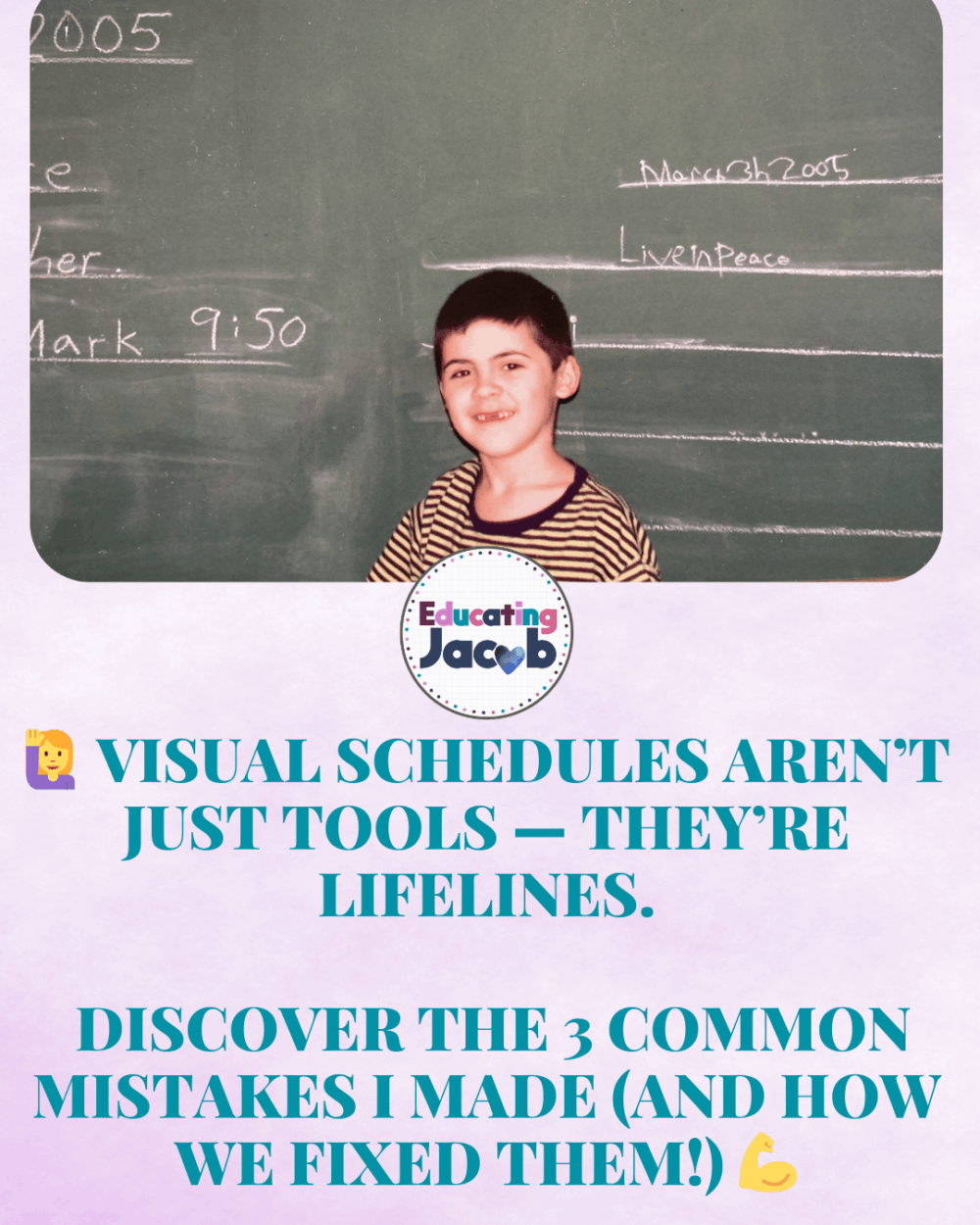
    Visual schedules aren’t just tools — they’re lifelines. Discover the 3 common mistakes I made (and how we fixed them!) 💪 #ParentingAutism #AutismSupport
    Learning to create schedules! Keep it Simple and Have Fun.

    Are you drowning in unpredictability, meltdowns, and constant chaos that seems to come with parenting a child with autism? I see you. I was you. https://autismadhdconnection.com/5-tips-for-explaining-an-autism-diagnosis-to-others/

    When Jacob was younger, I felt like I was failing. I lost confidence in my parenting and had no clue how to make our days work without everything spiraling into tears (his and mine 😅). That’s when I began learning to create visual schedules for autism  and friend, they changed everything. 💙

    But I didn’t get it right at first. In fact, I got it very wrong. Let me share the three biggest mistakes I made with visual schedules and how you can avoid them for your child’s success. Stop Morning Chaos: How to start using Visual Schedule for Autism and CALM

    Learning to Create Schedules:

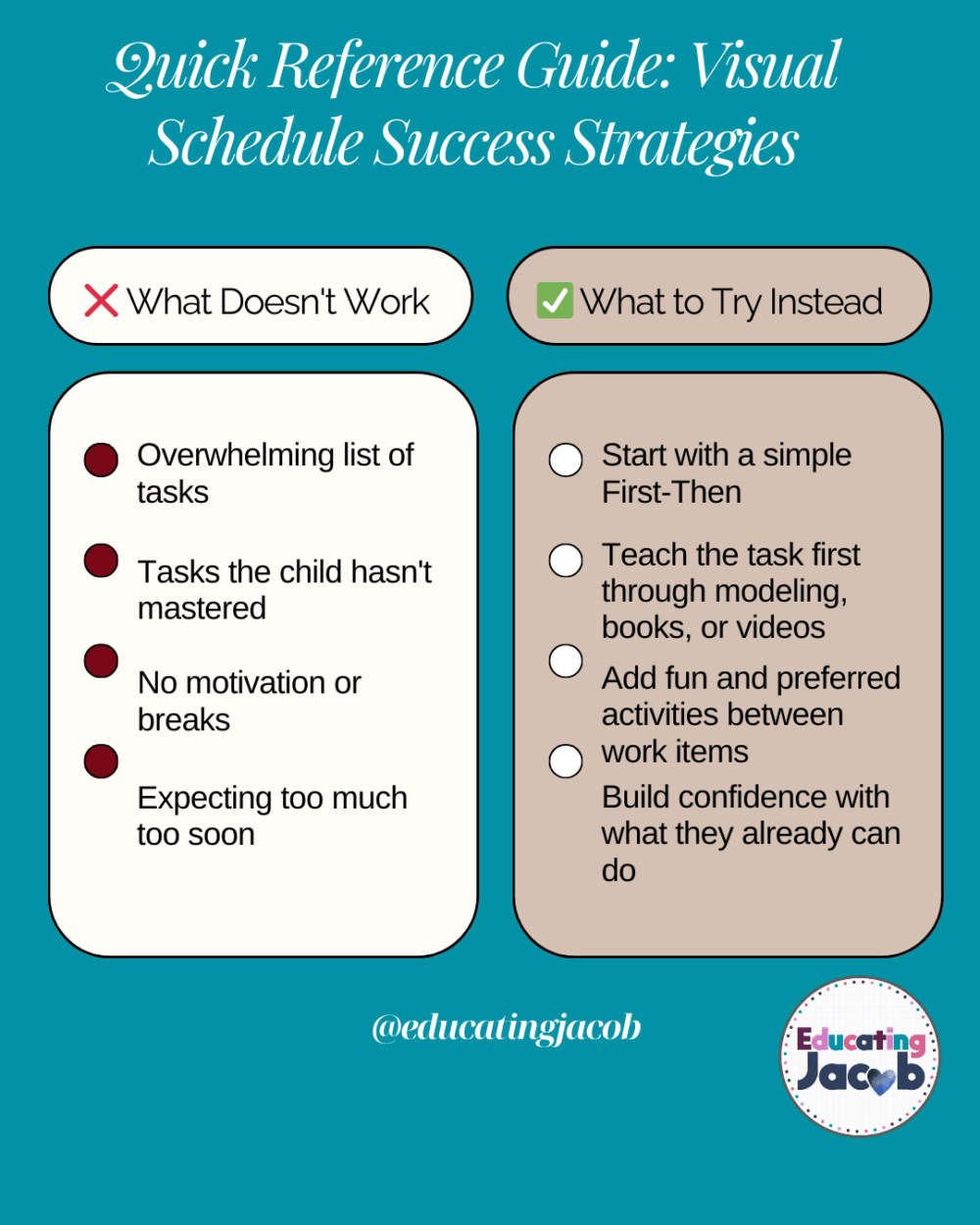
    ❌ Mistake #1: Making the Schedule Too Long

    When we first started, I loaded Jacob’s visual schedule with 10 pictures in a row — all the things I wanted him to do that day. Guess what he did? He skipped right to his favorites and ignored the rest. Smart kid. But also? A total flop. 😩

    ✅ Fix: Start with a First-Then: Board

    We simplified. I chose just two pictures:

    • Something he needed to do (like brushing teeth 🪥)
    • Something he loved (like snack time 🍎 or a favorite show 📺)

    This tiny change was powerful. It gave Jacob predictability and motivation. Once he understood that the schedule wasn’t just me bossing him around all day  but him being part of the plan  everything shifted.

    ❌ Mistake #2: Adding Tasks Before They’re Mastered

    Early on, I made the mistake of putting tasks on the schedule that Jacob didn’t yet know how to complete independently. This backfired hard. Seeing something unfamiliar  like getting dressed or a new math activity  only spiked his anxiety and resistance.

    ✅ Fix: Teach First, Then Schedule

    I learned to teach the task before putting it on the visual schedule. We’d read stories about it 📚, watch short videos 🎥, or use simple modeling and signs. Once he could do it with confidence, then  and only then  it went on the schedule.

    Remember, this is not about testing. It’s about setting up your child for independence and success. Learning to Create schedules for autism are not magic. They’re a bridge between your child and the world around them. That bridge has to be built with care.

    ❌ Mistake #3: Leaving Out the Fun Stuff

    Yes, structure is good. Yes, we need routines. But guess what I forgot in the beginning? Fun. I was so focused on “getting things done” that I forgot schedules should also be joyful and engaging.

    ✅ Fix: The Work-Break-Work Sandwich

    We call this the work-break-work sandwich:

    • Math 🧠
    • Snack break 🍌
    • Reading time 📖
    • Walk outside 🚶
    • Writing ✏️
    • Dance party 💃

    This structure keeps momentum going. Your child will begin to understand that effort leads to reward  a life skill that pays off again and again.

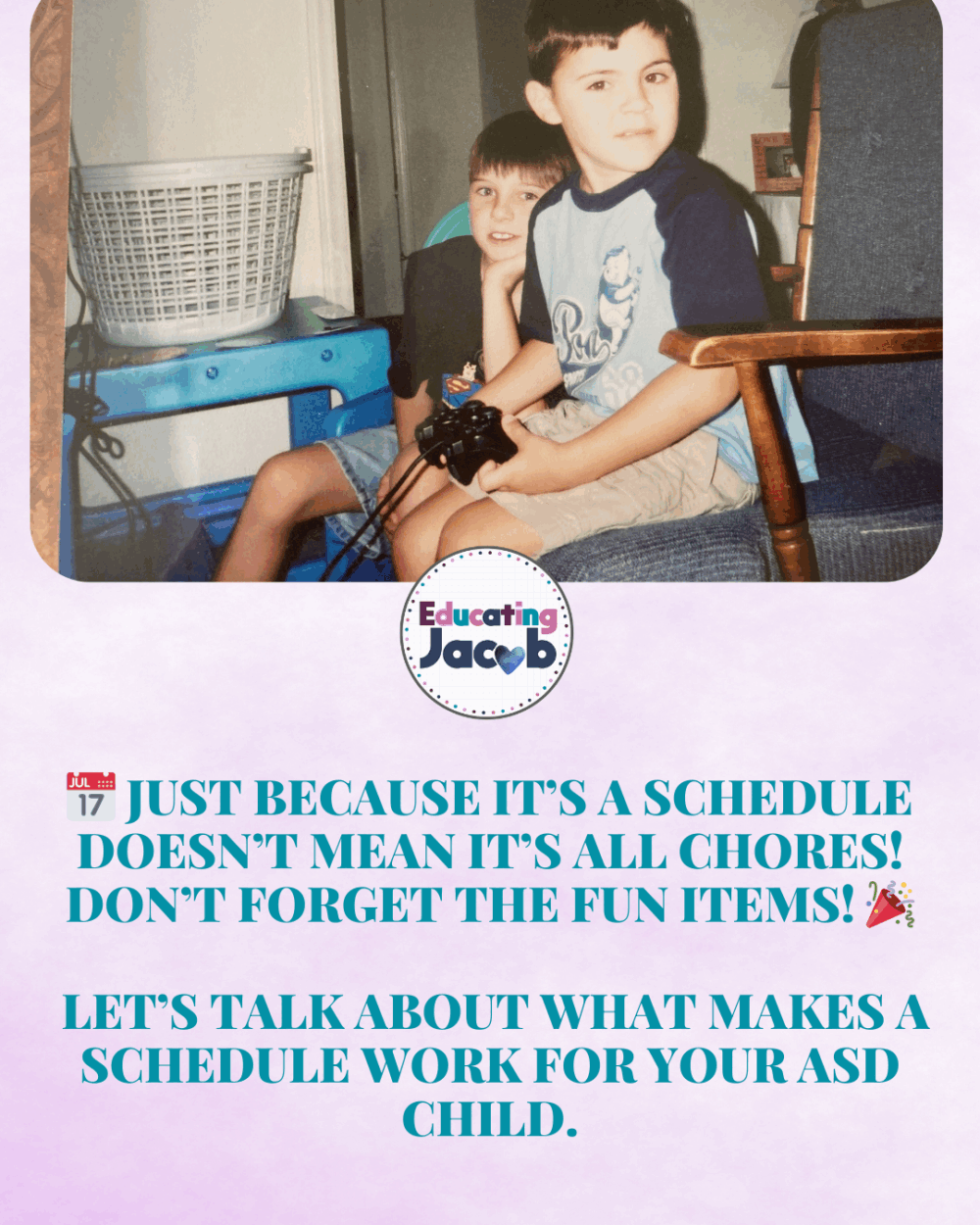
    Just because it’s a schedule doesn’t mean it’s all chores! Don’t forget the FUN items!
    Learn to create Schedules but don’t forget the FUN items!

    How Visual Schedules for Autism Grow with Your Child

    Jacob is 27 now. And guess what? He still craves routine. Visual schedules give him independence, comfort, and a sense of control over his day. And I’m not following him around narrating his every move! 🙌 Autism mom support, what happens when being a hands on doesn’t stop at 18?

    But here’s what I wish someone had told me earlier:

    “The schedule is not the goal, independence is.”

    It’s not about checking boxes. Learning to Create Schedules is having a plan for success!  It’s about helping your child feel secure, understood, and empowered. You’re not just making a chart. You’re building a bridge. 🌉

     Visual Schedule Success Strategies


    Quick-Reference-Guide-Visual-Schedule-Success-Strategies
    Create Visual Schedules, Let’s build them together one step at a time. 💙

    Pillar 3: L – Learning to Create Schedules

    At Educating Jacob, we call this Pillar 3: L – Learning to Create Schedules because it’s one of the most transformational pieces of the CALM framework. Effective visual schedules for autism reduce chaos, create confidence, and foster independence — for both you and your child.

    Remember, every visual schedule you create is another step toward independence for your child, less anxiety in their daily life, and more peace and happiness for your entire home. We’re cheering you on!💙

    Ready to Get Started?📌 Don’t Miss This! Download our free CALM Visual Schedule Starter Kit — it’s packed with templates and real-life examples from Jacob and me.Or join us inside Autism Thrive Tribe, where you’ll get step-by-step help and the encouragement you’ve been craving from parents who understand exactly what you’re going through.What’s been your experience with visual schedules? Share in the comments below!

    Read More