Parenting is filled with triumphs. When your child learns a skill, it’s a win.
But here’s the twist: we don’t want these skills to stay home. We want them to travel, to work anywhere, anytime.
Welcome to skill generalization, where we teach your child’s skills to be flexible world travelers.
Skills That Roam: Making Your Child a Skillful Globetrotter
Imagine your child’s skill as a globetrotter with a passport. They’ve mastered it at home, but can they use it confidently at school or with friends and family?
In this section, we’re exploring how to ensure skills don’t become homebodies. We’ll give you tips to help your child use their skills wherever they are. It’s like preparing them for a world tour, but instead of landmarks, they’ll showcase their abilities.
Teamwork: School, Home, and Beyond
When Jacob was in school, we became a team. It wasn’t just about his teachers; it was a group effort. We teamed up to help him learn and apply new skills, and it worked wonders.
We borrowed a page from Jacob’s school schedule playbook. After school, it was time for our version of “homework.” Dinner, cleaning up, tackling homework, getting that room cleaned (which, let’s face it, was a skill in itself), and, of course, brushing those teeth to dazzle the tooth fairy.
Our family and friends became invaluable allies. They understood that Jacob needed support not just with speech and academics but also in play and social interactions.🤝
So, when we visited or had gatherings, they joined the cause. They used schedules, they engaged with him, they ensured he felt included and supported. It wasn’t just us; it was a village effort. 👨👩👦👦
Generalization: The Magic of Everywhere Learning
The magic here is in “generalization.” It’s not enough for a child to learn something in one setting; they need to apply it everywhere. That’s what we achieved by creating a unified front.✨
At school, at home, and with family and friends, Jacob was learning and using skills consistently. It wasn’t about different rules or routines in different places; it was about one set of skills that applied everywhere.
The result? Jacob became a skillful globetrotter. He could navigate various situations with confidence because he had practiced those skills in different settings using his schedule.
So, if you want your child’s skills to be versatile and work seamlessly in all areas of life, remember this: teamwork makes the dream work, no matter where you are. If you need social stories to help with family friends here is another place to look: [Link to Social Stories](https://eclkc.ohs.acf.hhs.gov/children-disabilities/article/social-stories) 📚
Get Your Special Needs Child Thriving Without a Superhero Cape!
Hey there, I’m Melissa! If you’re a parent or teacher, you’ve probably faced the wild rollercoaster that is helping a special needs child conquer a world designed for “typical” learners. I’ve been right there in the trenches with you, and trust me, it’s one wild ride! Jacob had schoolwork jobs and schedules both at school and home. They helped him tremendously!
No Degree? No Problem!
But hey, here’s the scoop: you don’t need a PhD in Special Education or a secret stash of superpowers to make a real difference in your child’s life.
The Quest Begins: Finding Direction
Now, let me whisk you back to the beginning of my adventure. Picture this: my son, Jacob, gets the autism diagnosis, and I’m left feeling like a confused squirrel in a maze.
The Search for Answers
So what did I do? Well, what any modern parent would do – I went on a deep dive into the early 2000s internet. And guess what? It left me more befuddled than ever! There were plenty of articles about what led to the diagnosis, but no one handed me a neat, step-by-step guide on how to actually help my kiddo.
The Power of Support
Cue the desperate prayers for a superhero to swoop in and save the day. While I didn’t get Thor or Wonder Woman, I was gifted something even better: a superhero squad of family and friends who had my back. They were my rock, my guiding lights on this unexpected journey.
Educating Jacob: More Than Just a Business
And out of this chaos, “Educating Jacob” was born. It’s not just a business; it’s a mission to share what worked for us and help you navigate this labyrinth more easily.
You’re the Hero Too
You don’t need a fancy degree to be your child’s hero and guide. We’re here to help you turn daily chaos into moments of zen, self-doubt into confidence, and meltdowns into triumphs. You too, can be a part of the schoolwork jobs and schedules for students at home club!
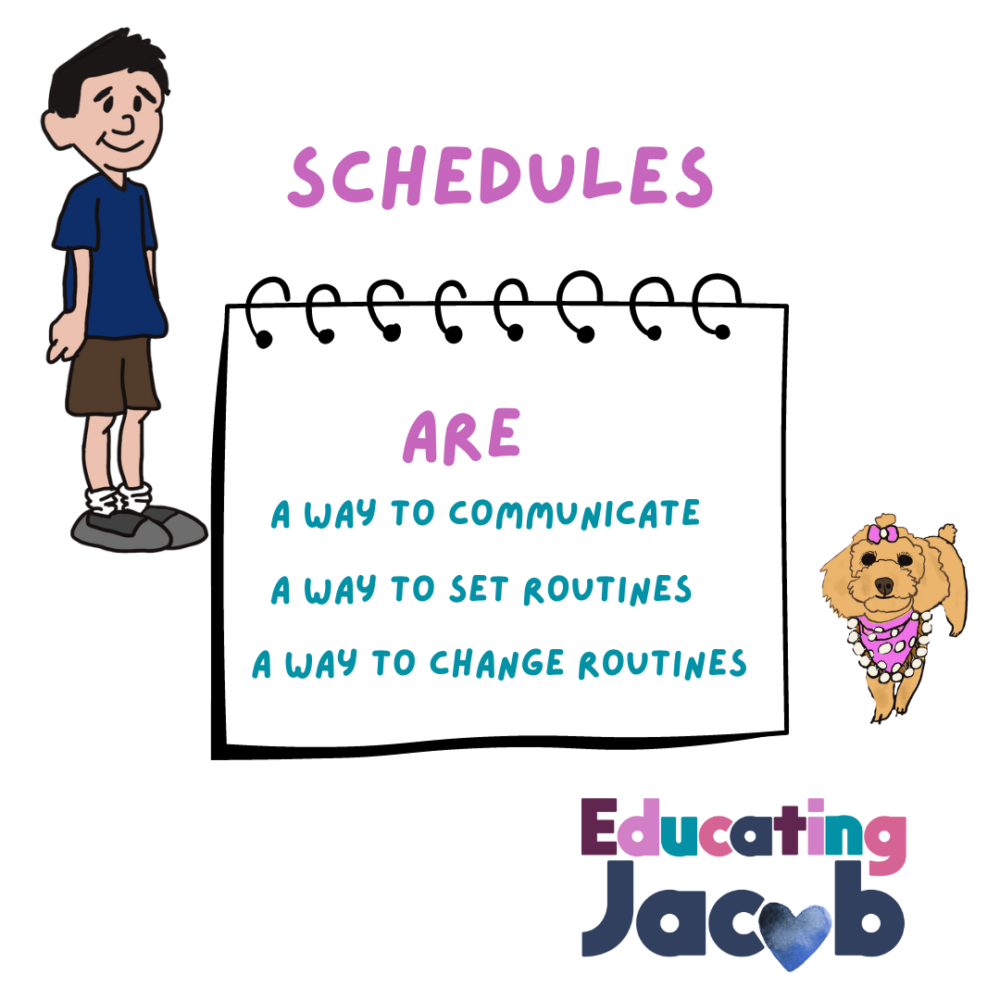
Schedules are a way to communicate, set routines and change routines!
They’ve been a game-changer for us, and I’m here to spill the beans on how they can be your secret weapon too. Get ready to take back your space, ditch the chaos, and let the learning extravaganza begin!
Schoolwork Jobs: The Confidence Builders
Now, let’s dive into the good stuff: schoolwork jobs. Think of these as mini superpowers that not only teach responsibility but also make your child feel like a rockstar.
The ‘Line Leader’ – The Maestro of Marching
Picture your kiddo confidently leading their classmates in a merry parade through the classroom, setting the pace, and ensuring the smoothest transitions ever.
The ‘Door Holder’ – The Courteous Captain
In the classroom, this champ holds the door open for pals, showing courtesy and care.
The ‘Pencil Sharpener’ – The Artisan of Order
Meet the unsung hero of classroom readiness! This superstar keeps those pencils sharp and ready for action.
Home Jobs: Where Responsibility Blossoms
Now, let’s bring the school magic to your home:
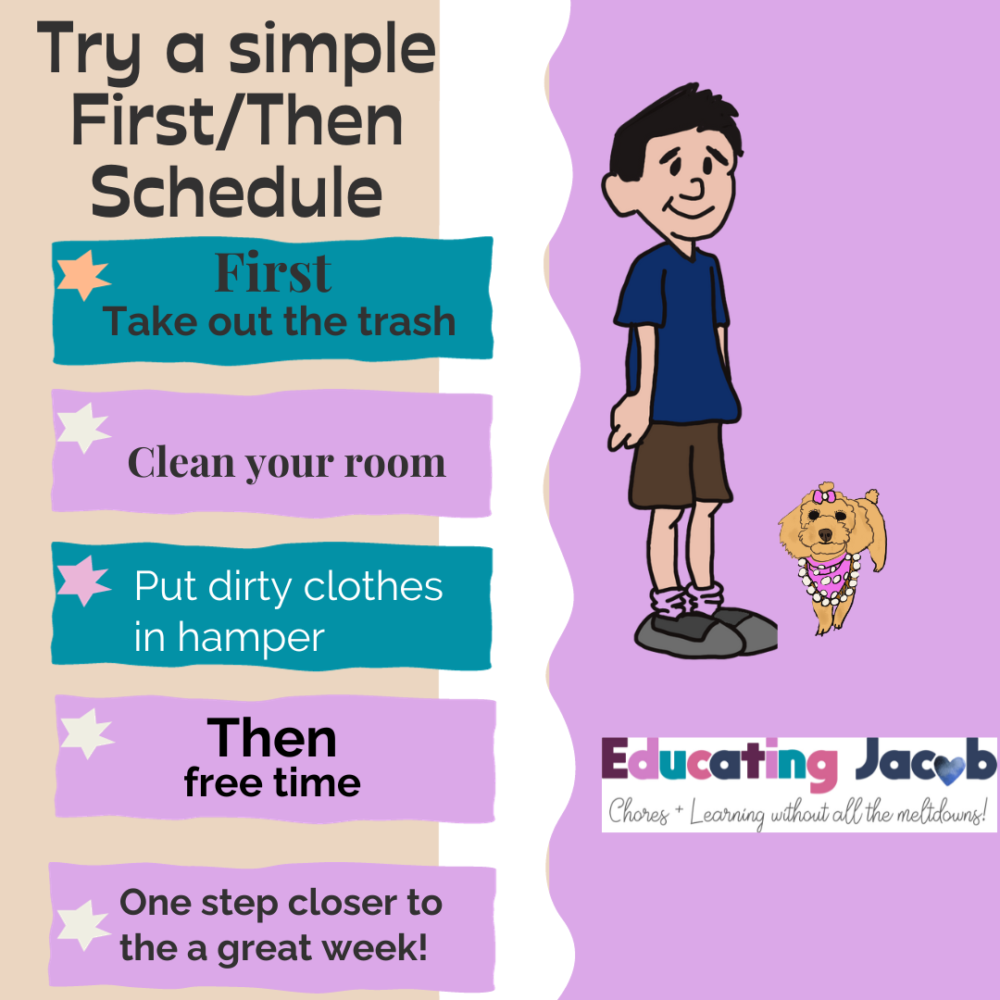
Trash Taker-Outer’ – The Cleanliness Connoisseur
Just like the Line Leader takes charge in the classroom, the ‘Trash Taker-Outer’ is the cleanliness captain at home.
‘Room Cleaner’ – The Tidiness Titan
At school, the Pencil Sharpener keeps things sharp. At home, the ‘Room Cleaner’ takes on a similar role.
Dirty Clothes Depositor’ – The Laundry Luminary. The room looks so nice when it’s picked up and laundry is ready to carry to the washing machine.
Just like the Door Holder, this superstar exudes consideration.
Home-School Relationships: Schedules to the Rescue. Schedules let the child know exactly what is expected and when they will be done! We all want to know how are day is going to go.
With these tools – schoolwork jobs, home tasks, and the magic of schedules – you’re in for a 2023 full of smooth sailing. Stay tuned for more tips and tricks to make this year a roaring success!
Watching movies, games and his phone had Jacob stuck in a loop.
Screen Time for Autistic Children 📺📱🕹️
Screen time for autistic children in today’s digital age. A waltz of wires, pixels, and the occasional meltdown thrown in for good measure. As parents, we’re all familiar with the perplexing puzzle of balancing our children’s love for games, TV, and cell phones, especially when they come with a side order of learning disabilities. Balancing screen time for autistic children can be a unique challenge, but it’s a necessary one. Here’s an article warning of screen hazards: https://www.ncbi.nlm.nih.gov/pmc/articles/PMC10442849/
Screen time, autism, and childhood development!
Now, I know what you’re thinking – “Screen time is the nemesis of childhood development!” Trust me; I’ve read the articles, heard the warnings, and contemplated creating a bonfire with every device in the house just to free our kids from their pixelated prisons.
But here’s the twist in our tale: I’ve also stumbled upon studies suggesting that video games can miraculously morph into concentration enhancers for our ADHD champs. Oh, and let’s not forget the cautionary tales of phones, iPads, and games birthing OCD tendencies.
Enter Jacob, my youngest progeny, who is legally an adult but will stick around with family until heaven is our permanent address. My husband and I, well, let’s just say we’re charter members of the “How Do We Adult When Our Kid Is a Permanent Resident of Autism” club.
It was a sad day but necessary!
The Solution: Saying Goodbye to iGadgets 🚫📱
The solution was as simple as a triumphant exit for the iPhone and iPad – two devices that Jacob clung to with the ferocity of a squirrel protecting its nut stash. Why, you ask? Well, for starters, our beloved iGadgets couldn’t differentiate between age-appropriate entertainment and YouTube’s greatest hits of “Movie Voiceover Catastrophes.”
Snippets of perfectly decent films transformed into bizarre voiceovers that would leave even Darth Vader scratching his helmeted head being consumed by our son on the autism spectrum. After years of tireless monitoring, debates, and the occasional eye roll from our tech-savvy son, we decided to go medieval on those devices.
Screen Time as a Welcomed Guest 🎮📺
Now, before you peg me as a screen time Scrooge, let me clarify – we’re all about balance, folks. Jacob loves the predictability of his games and movies, but like a squirrel fixated on that nut stash, he can get a tad obsessed.
So, we embark on a quest for equilibrium, where balancing screen time for autistic children becomes a welcomed guest in Jacob’s daily schedule, not the puppeteer pulling all the strings.
Let’s dive right into the chaotic realm of screen time, where YouTube voiceovers reign supreme, sarcasm flows like a never-ending river, and emotions take center stage. Picture this: Jacob would merrily parrot inappropriate voiceovers from movie clips he’d stumble upon in the depths of YouTube.
You know, the clips that sneakily infiltrate even the most kid-friendly content. To make matters even more interesting, he’d not only repeat the lines but also wear the emotions like a hat.
Now, this might sound like an amusing party trick for your average teenager, but for Jacob, who grapples with emotion regulation difficulties courtesy of his learning disabilities, it was like a comedy show gone awry.
Sarcasm and emotional mimicry? Well, they don’t quite fit the bill for a kid navigating the complexities of his own emotions. So, we had to bid farewell to YouTube and its unexpected voiceover adventures.
Screen Time and Removing iPhone and iPad
Next up on our journey: Jacob’s affinity for the iPhone. He would rise at the crack of dawn and make a beeline for his cherished device. At first, it was innocent enough – just a little music to set the morning mood. Christian tunes from the Newsboys, classics from the Eagles, and the uplifting melodies of MercyMe filled our home.
But here’s the catch: YouTube was always just a click away, and on his device, we couldn’t effectively filter the content.
In an ideal world, he’d have a dose of music during the day, tackle his schoolwork and chores, and enjoy the iPad, TV, or games during his well-deserved downtime in the evening. However, what ensued was a full-blown obsession with the phone and iPad, and it wasn’t all smooth sailing.
The lack of parental controls, combined with a sudden onset of attitude issues and an unsettling penchant for repeating the aforementioned sarcastic voiceovers, led us to a decision – those devices had to go.
Finding Alternative Devices
With a heavy heart, we waved goodbye to the iPhone and iPad, and in their place, we introduced the Kindle tablet.
Jacob wasn’t exactly thrilled with the switch, but necessity often breeds adaptation. The Kindle offered us better controls and access to Amazon Prime movies and Kindle books – a trade-off that Jacob eventually came to appreciate.
You see, movies and games were more than just entertainment for Jacob. They were a vital part of his life, a means of communication, and a source of shared laughter within our family. We wanted to nurture these positives and, in turn, steer clear of the negatives.
Now, let’s get to the crux of the matter – how do we strike that elusive balance between screen time and the real world?
Monitoring: Jacob might be older, but that doesn’t mean we can let our guard down. His emotional regulation quirks are still very much a part of his daily life. If he immerses himself in a movie or show, he becomes it, quirks and all.
Limiting: By limiting his screen time and offering alternative activities, we’ve witnessed a remarkable transformation. He’s no longer a device-clinging zealot but a much happier individual with a broader spectrum of interests.
Scheduling: Finally, we integrate screen time into Jacob’s daily schedule, just like any other activity.
Jacob thrives on balance and predictability, and our schedules provide just that.
A Balanced Approach to Screen Time 💖🕹️
Monitoring, limiting, and scheduling screen time have all contributed to our collective success as a family. With vigilant monitoring, we were able to identify and address issues, leading us to bid adieu to the iPhone and iPad in favor of the Kindle tablet.
Limiting screen time curbed obsessive tendencies, helping Jacob understand the importance of a diversified day.
Finally, incorporating it all into a daily schedule bestowed upon him the predictability he so dearly craved, fostering independence and a sense of accomplishment. Want more download the ebook: https://educatingjacob.myflodesk.com/tfgvkumbkg
This is a picture of Jacob’s Monday-Friday zippered pouches that hold his school work!
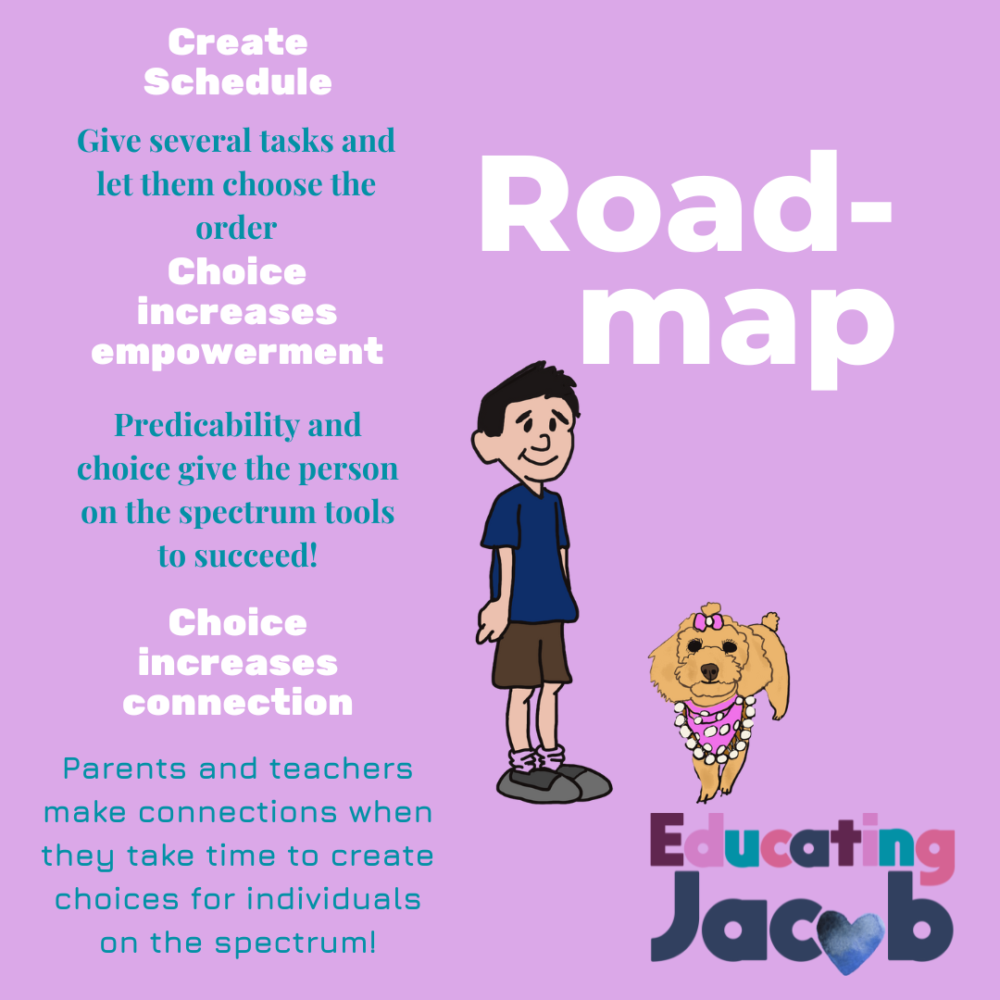
First, I created schedules for Jacob so that he could choose the order in which they were completed. Second, Jacob could choose what activities he wanted to do once the schedule was done. Third, by using schedules with built-in choices, I gave Jacob the predictability and structure that he needs to keep anxiety and emotional regulation in check. 📅✅
Choices are like the secret weapons in our arsenal of connection and learning, especially when it comes to navigating the labyrinth of the autism spectrum. If you’re on this roller coaster of a ride, you know that sometimes it’s like having Darth Vader unexpectedly show up in a rom-com movie – a mix of surprises, challenges, and a few laughs along the way. 🎢🧩😄
Jacob’s Journey: From Chore Dread to Delight
Celebrate all tasks and chores completed!
Enter Jacob, our household hero 🦸♂️ who embarked on a chore journey that promised both epic battles and heartwarming victories. Picture this: the first time we floated the idea of chores, I was half-expecting dramatic background music à la Darth Vader’s theme – because, let’s be honest, even chores can feel like an intergalactic quest. 🎶🌌
Armed with Patience, Creativity, and Humor
But fear not, fellow adventurers, because we faced this challenge armed with an unshakable combo of patience, creativity, and yes, a touch of humor. With lightsabers… okay, maybe not actual lightsabers, but definitely a light-hearted approach, we ventured to transform Jacob’s perspective on chores from dread to delight. 💡✨😄
Transforming Mundane Tasks into Cosmic Missions
At the core of this transformation were three simple yet potent tips that held the power to rewrite the chore playbook. We delved into the world of schedules, weaving choices into Jacob’s day that resonated with his quest for predictability. These choices became more than just checkboxes; they were his way of cracking the code of the world around him, a chance to have his say in the grand cosmic dance. 📅✅🌟
Empowerment Through Choice: A Path to Connection
Use schedules with built in choice for connection and learning!
Jacob has problems with receptive and expressive language. Having a conversation isn’t happening, and he will shut down because it takes too long to process. He loves movies and quotes from them because they say the same thing every time. Speaking with a person is different every time. 🗣️🤐🎬
Schedules are short, sweet and easy for Jacob to understand! It eases his anxiety for the day and gives him the predictability he needs to help regulate his emotions. 📅✨😌
Choices at Home: More Than Chores
Giving Jacob choices in the form of visuals, or a schedule where he can choose when to complete something during his day makes him empowered and confident. It also makes him happy and connected with me for helping him understand. It also shows I care to include the choices he enjoys along with chores that need to be done as part of the family. 🎨⏰😊👩👦👦
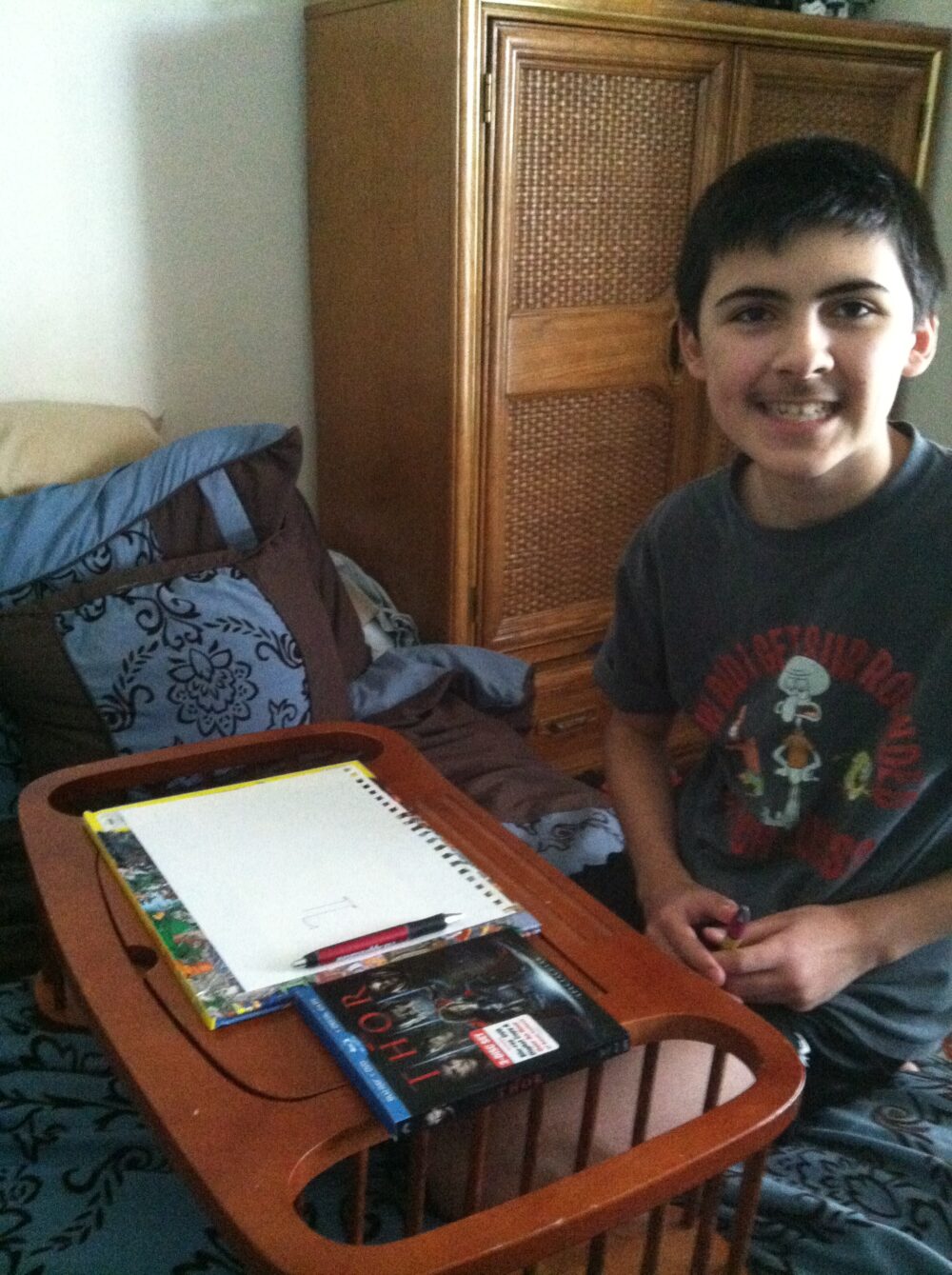
This is Jacob drawing something from a movie cover after homework is complete!
Choices at School: Bridging Learning and Connection 🏫
At school during the day, I’m a special education teacher. I give my students schedules based on their present level in academic areas, and choices after the work are based on their preferences. 📚👩🏫
Creating Independence and Connection 🌟
If they complete my work, they are allowed to do activities that are more to their liking. They are more willing to do my work and are happy to come to my room for work when they feel they will have a say in what happens there. 🙌😊
Jacob’s Journey: Visual Schedules and Independence 🛤️
In the beginning of Jacob’s journey, in order to get Jacob to understand his day, we used visual schedules. His day was a series of pictures that told him what to do; he also had pictures of activities that he loved to do placed in between work or chores to keep him happy and moving through the day. 🖼️🕒
This allowed me as a mom to take a breath and do my own chores. After all, our job is to create independent humans! The mother bear in me wanted to protect and keep him happy, but the tired, worn-out momma needed him to learn and start becoming independent without being a “me” monster no one wanted to be around. 🐻💤
Three Simple Strategies for Choices and Connection 🔄
1. I created schedules with work, and he was able to choose the order in which he completed them. ✅
2. After the work he chose was completed, Jacob could choose what activities he wanted to do. 🎨🎮
3. By using schedules and built-in choices, I gave Jacob predictability and structure that he needs to keep anxiety and emotional regulation in check. 🗓️
Embrace the Adventure of Choices
So, prepare to embark on a journey where choices light up the path and humor is our trusty sidekick. Life is a series of choices, and each choice has the potential to create ripples of change. So, are you ready to wield your lightsaber of choice and embrace the adventure? Let’s do this! 🌟💫