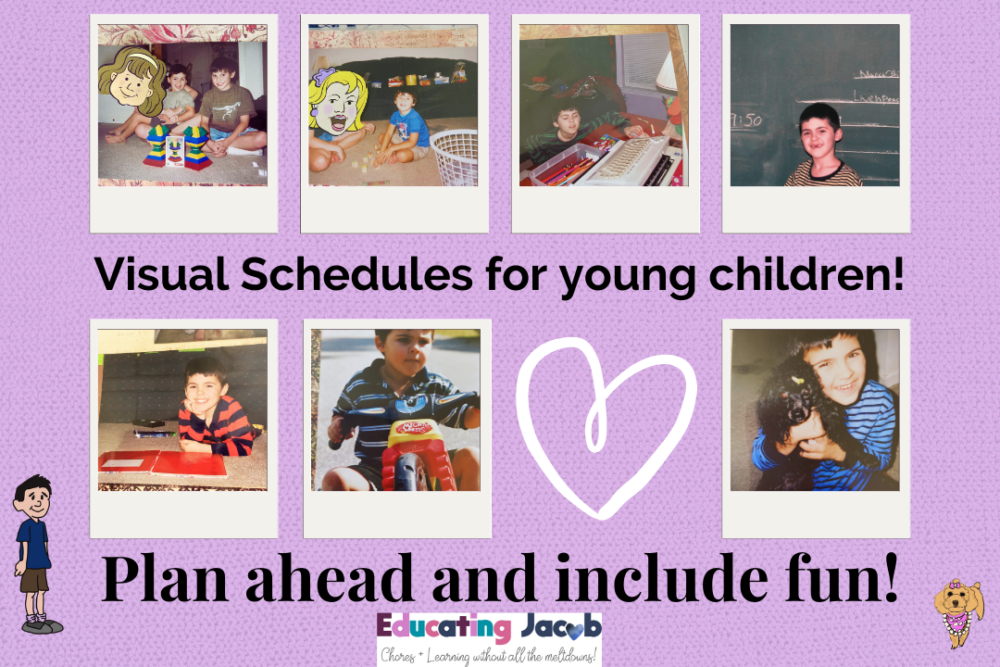
schedules

  • When Autism Parenting Gets Hard: Why I Chose Not to Give Up on My Son

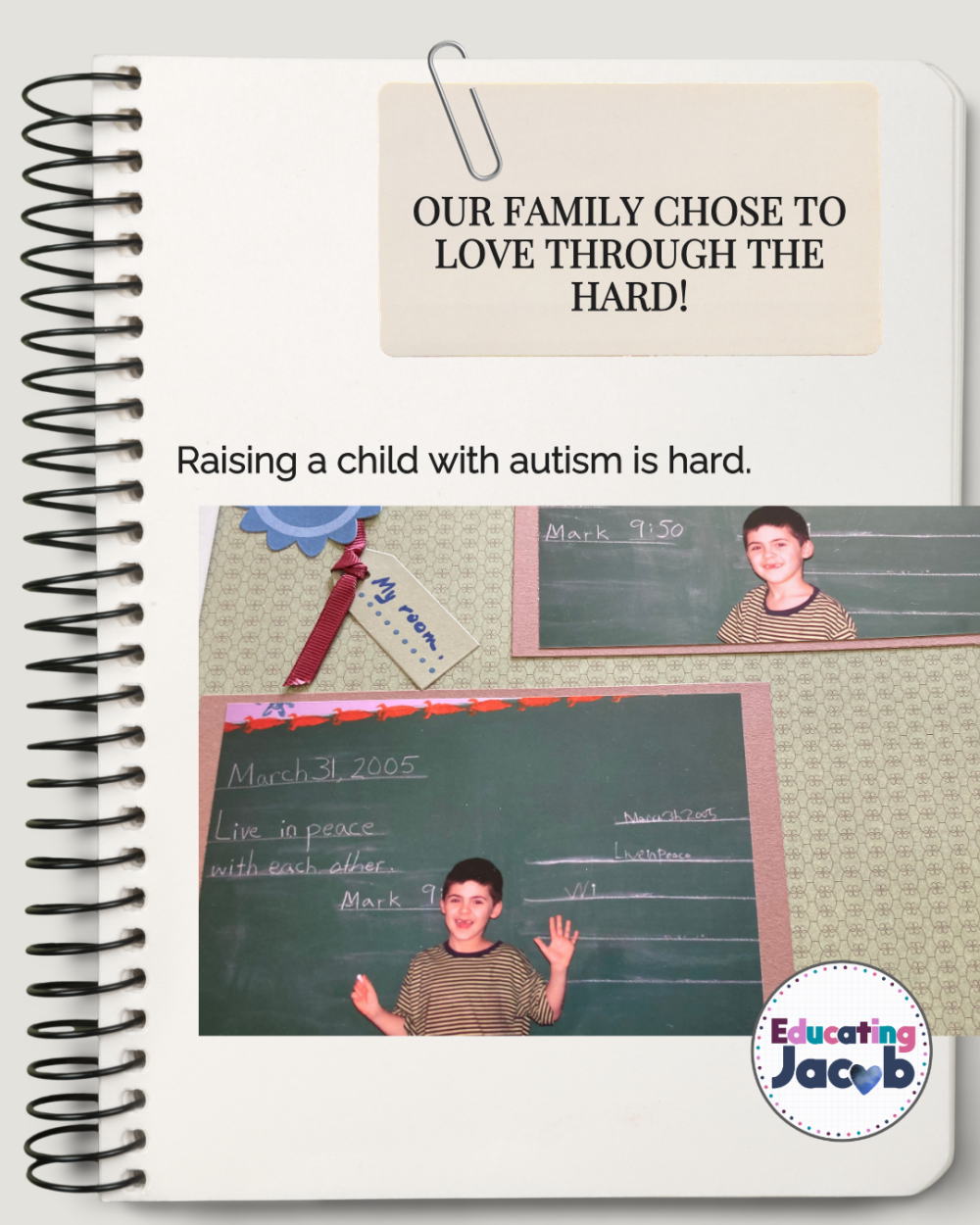
    Raising-a-child-with-autism
    Choose your Hard, here was a season of Homeschool!

    Raising a child with autism can be beautiful, exhausting, heartbreaking, and hopeful all at the same time. There are days filled with laughter and connection, and there are days when everything feels heavy.

    If you are in one of those heavy seasons right now, I want you to know something important.

    You are not alone.

    There were seasons in our life with Jacob when I cried more than I talked about. I researched everything I could find. I questioned myself as a mother. I felt overwhelmed and even depressed at times.

    But one thing never changed.

    I could not and would not give up on my son.Β This too shall pass, how we changed our mindset on autism island!

    When Raising a Child With Autism Feels Overwhelming

    When Jacob was younger, I often felt like I was constantly searching for answers.

    I read books.
    I researched therapies.
    I tried different approaches.

    My confidence as a mom took a hit because I wanted so badly to help him, and sometimes it felt like nothing was working.

    When I didn’t know what else to do, I made a big decision.

    I went back to school and earned my master’s degree in special education, hoping it would help me better understand autism and help me parent Jacob more effectively.

    Education helped me learn strategies. But the truth is something deeper carried our family forward.

    We refused to give up on each other.

    Raising-a-child-with-autism-2-
    Jacob’s journey has never been walked alone.

    Our Family Chose to Love Through the Hard

    Jacob’s journey has never been walked alone.

    Our family stood together.

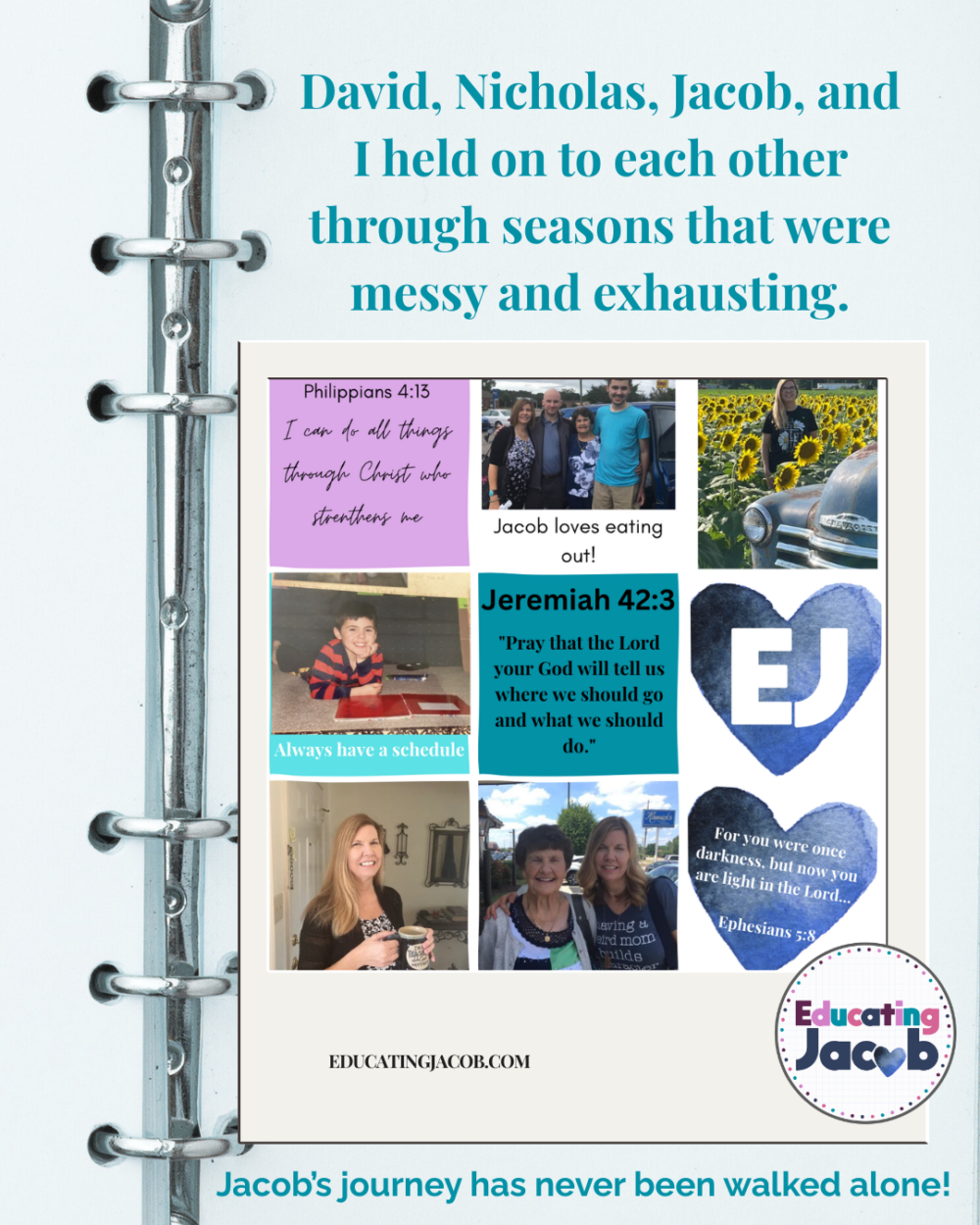
    David, Nicholas, Jacob, and I held on to each other through seasons that were messy and exhausting.

    Sometimes we supported each other with energy and determination.

    Other times we simply hugged each other because that was all we had left.

    We prayed.
    We studied.
    We tried again.

    But we never gave up.

    Trying Everything While Raising a Child With Autism

    Like many autism families, we tried many different things hoping something would help.

    We explored:

    • Special diets
    • Different strategies
    • New routines
    • Various therapies

    Some things helped. Some things didn’t.

    But something surprising happened along the way.

    The biggest progress often came from the smallest changes.

    Using-Autism-Schedules-
    I honestly did not believe that something as simple as visual schedules would help our family.

    The Small Things That Changed Everything

    At one point, I honestly did not believe that something as simple as visual schedules would help our family.

    It seemed too small to make a difference.

    But we tried them anyway.

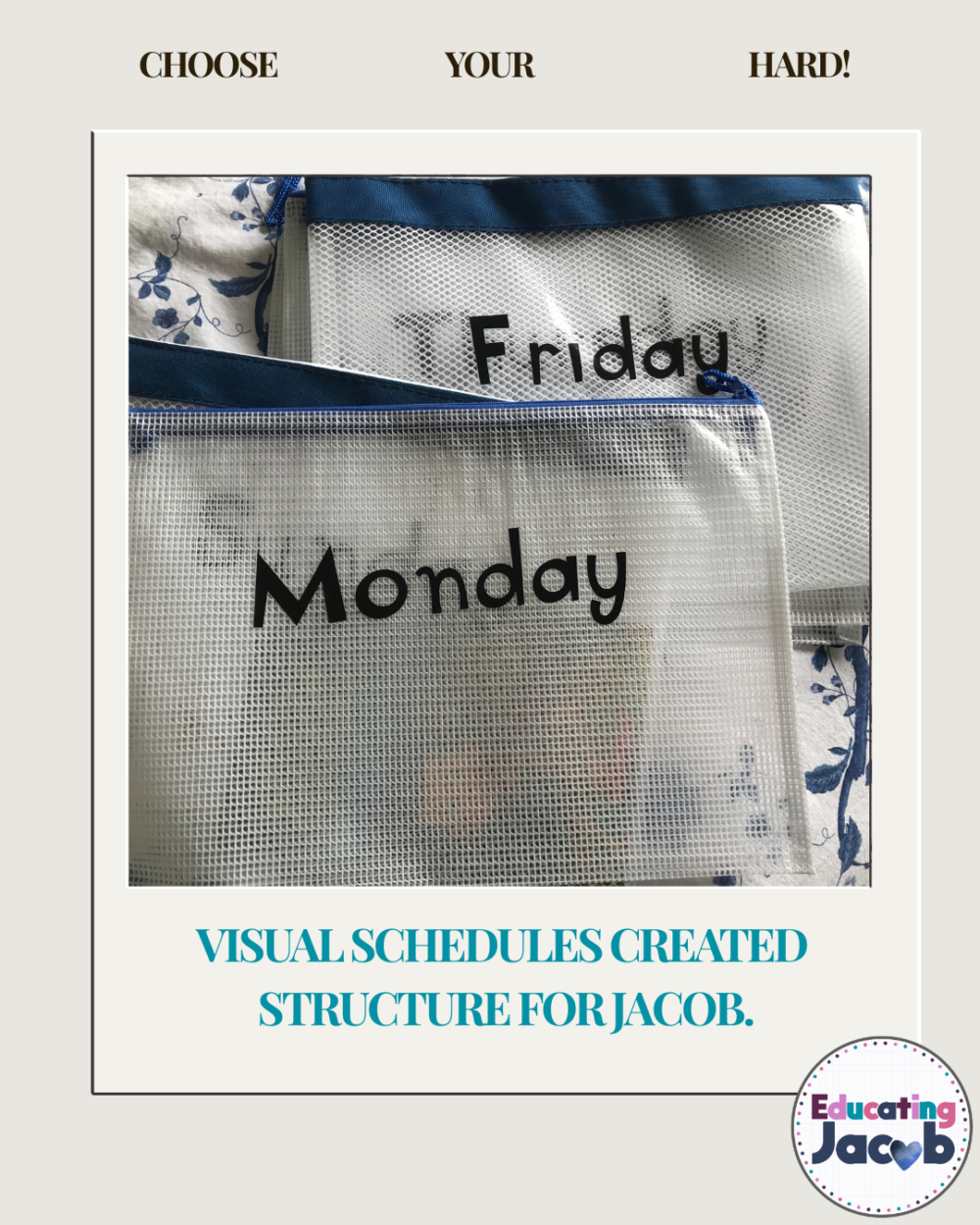
    Visual schedules created structure for Jacob. They helped him understand his day. They reduced anxiety and made transitions easier.

    We also focused on routines, nutrition, and most importantly, our mindset as a family.

    Those small steps did not fix everything overnight. But over time they helped replace chaos with calm.

    Choose Your Hard When Raising a Child With Autism

    There is a phrase that has stayed with me over the years.

    Choose your hard.

    Exercise is hard.
    Living with disease from not exercising is hard.

    Saving money is hard.
    Living with financial stress is hard.

    Autism can be hard for the child.
    Autism can be hard for the family.

    So we had to choose our hard.

    We could give in to exhaustion and let life happen to us.

    Or we could choose the hard work of moving forward, learning, adjusting, and trying again.

    We chose to keep moving forward.

    The CALM Framework Became Our Way Forward

    Over time, the lessons our family learned became the CALM Framework that now guides both our home and my classroom.

    C – Consistent Action Forward

    We kept taking the next step even when progress felt slow.

    A – Always Celebrate Wins

    Small victories matter. Independence grows one step at a time.

    L – Learning to Create Schedules

    Schedules helped bring structure to Jacob’s world and calm to our home.

    M – Mindset

    The most important piece of all was believing that we would keep going, even when things were hard.

    Life Can Get Better When You Keep Moving Forward

    Raising a child with autism is not about finding a perfect solution.

    It is about building systems that support your child and your family over time.

    Today our life looks different than it did in those early chaotic seasons.

    We still face challenges. Autism and epilepsy are part of Jacob’s life and always will be. But we have learned how to move forward with structure, patience, and hope.

    Jacob continues to grow in independence. Our family has time for rest, laughter, and even fun again.

    And we continue to adjust as each new season comes.Β How to replace Chaos with Calm, plays for the long game! #autismschedules

    If Autism Parenting Feels Hard Right Now

    If you are raising a child with autism and things feel overwhelming today, please hear this.

    You are not alone.Β https://www.facebook.com/groups/1093600039340070

    You do not need to solve everything today.

    Just take the next step forward.

    Try something new.
    Celebrate small wins.
    Lean on your support system.

    And when things feel impossible, remember this:

    You do not have to give up.

    β€œI can do all things through Christ who strengthens me.”
    Philippians 4:13

    Read More

  • How to replace Chaos with Calm, plays for the long game! #autismschedules

    Using-Autism-Schedules
    Visual schedules and autism can replace chaos with calm.

    How to Replace Chaos With Calm

    By Melissa | Educating Jacob

    When you’re in the thick of autism parenting and navigating meltdowns before 8 a.m., dreading every transition, bracing for the next hard moment β€” it can feel impossible to think past today.

    I know that place well. For years, survival mode wasn’t a phase for our family. It was just Tuesday.

    But over time, something shifted for me β€” not because life got easier, but because I stopped asking “How do we get through today?” and started asking a bigger question:

    What kind of life do we want Jacob to have? And what are we building toward, right now, to get him there?

    That question changed everything.

    using autism schedules
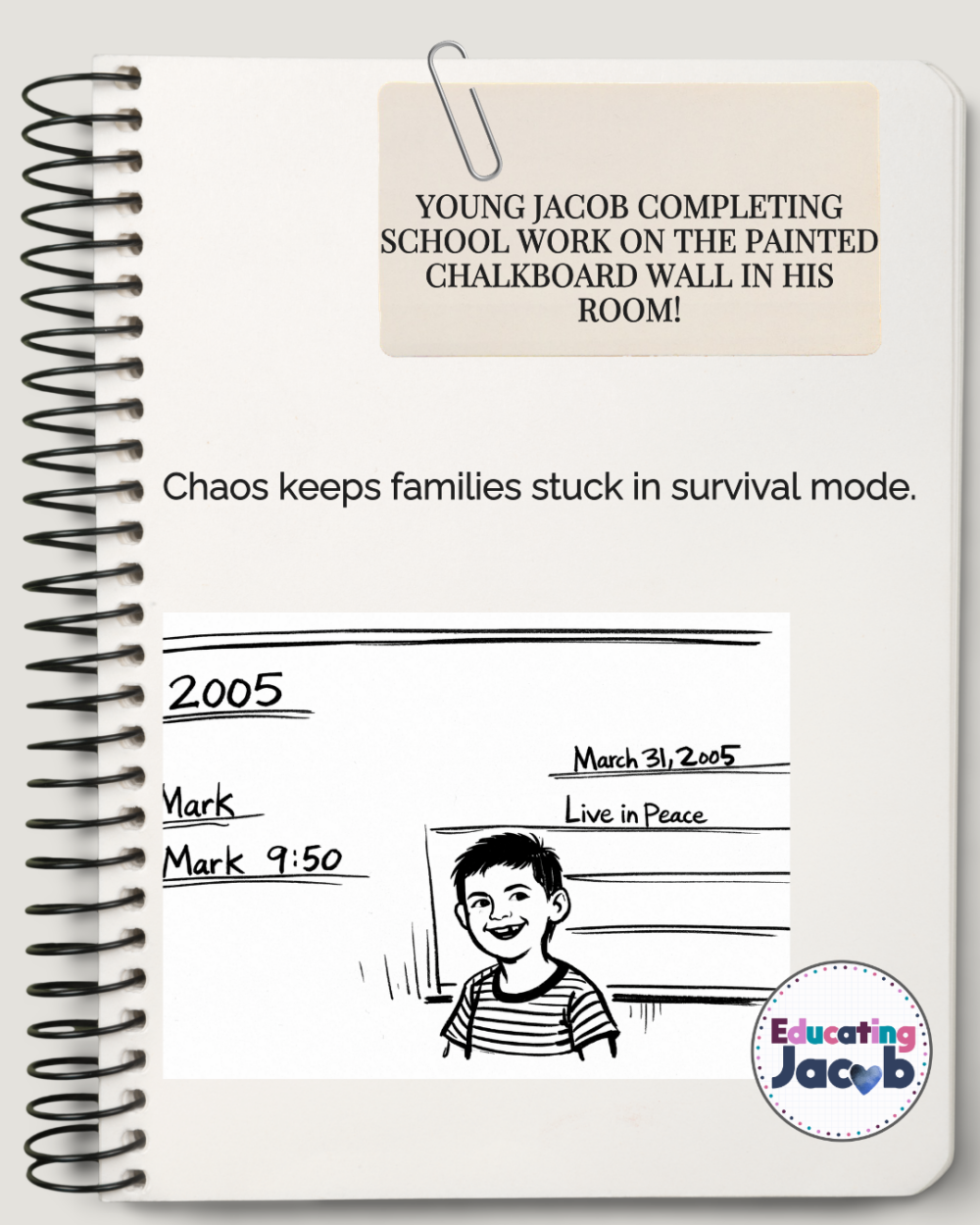
    Chaos keeps families stuck in survival mode. You need growth not survival tricks!

    The Long Game I’m Playing With Jacob

    Jacob is 28 now. He has Level 2 autism and epilepsy, our dog Chloe is always a nice distraction and social support for us. Jacob will always need support β€” that’s not something I’m trying to fix or ignore. Safety matters. Structure matters. Supervision matters.

    But here’s what I know for certain: my goal has never been to keep Jacob dependent on us forever.

    Our long game looks like this:

    Jacob has an older brother, Nicholas, who will be there for him when we’re gone. That matters more than I can put into words. But I never want Jacob’s life to feel like a burden placed on someone else’s shoulders.

    So we think long term. We dream about having a tiny house behind our home someday β€” a space where Jacob can have his own routines, his own privacy, his own slice of independence, while still being close enough for us to step in when he needs us.

    Independence with support, not independence alone. That’s the goal.

    And if you’re an autism parent reading this, I’d bet that’s your goal too.

    Why Schedules Are a Long-Game Strategy (Not Just a Daily Survival Tool)

    Here’s something I’ve said to countless parents over the years, both as a mom and as a special education teacher: visual schedules are not just about keeping today running smoothly. They are life skill training.

    When chaos ruled our days β€” and it did for a long time β€” Jacob was constantly reactive. His anxiety was high. Every transition felt like a battle. Independence felt like a distant, maybe even impossible, dream.

    Schedules changed that.

    Not overnight. Not perfectly. But gradually, consistently, they gave Jacob something he desperately needed: a way to understand what comes next.

    And that’s everything for a child whose brain is wired to struggle with uncertainty.

    As a special ed teacher, I’ve watched this same transformation happen in classrooms over and over. The child who can’t make it through morning circle without a meltdown β€” once a visual schedule is in place, once they can see the shape of their day β€” something settles in them. The anxiety doesn’t disappear, but it has somewhere to go.Β How a Visual Schedule for Autism Gave My Son Independence πŸ“…βœ¨

    Schedules gave Jacob a way to:

    πŸ—“οΈ Know what was coming next without having to ask or guess

    βœ… Practice the same skills in small, repeatable ways until they became automatic

    🧠 Lower his anxiety simply by reducing uncertainty

    🌱 Build toward independence one predictable routine at a time

    That’s the long game.

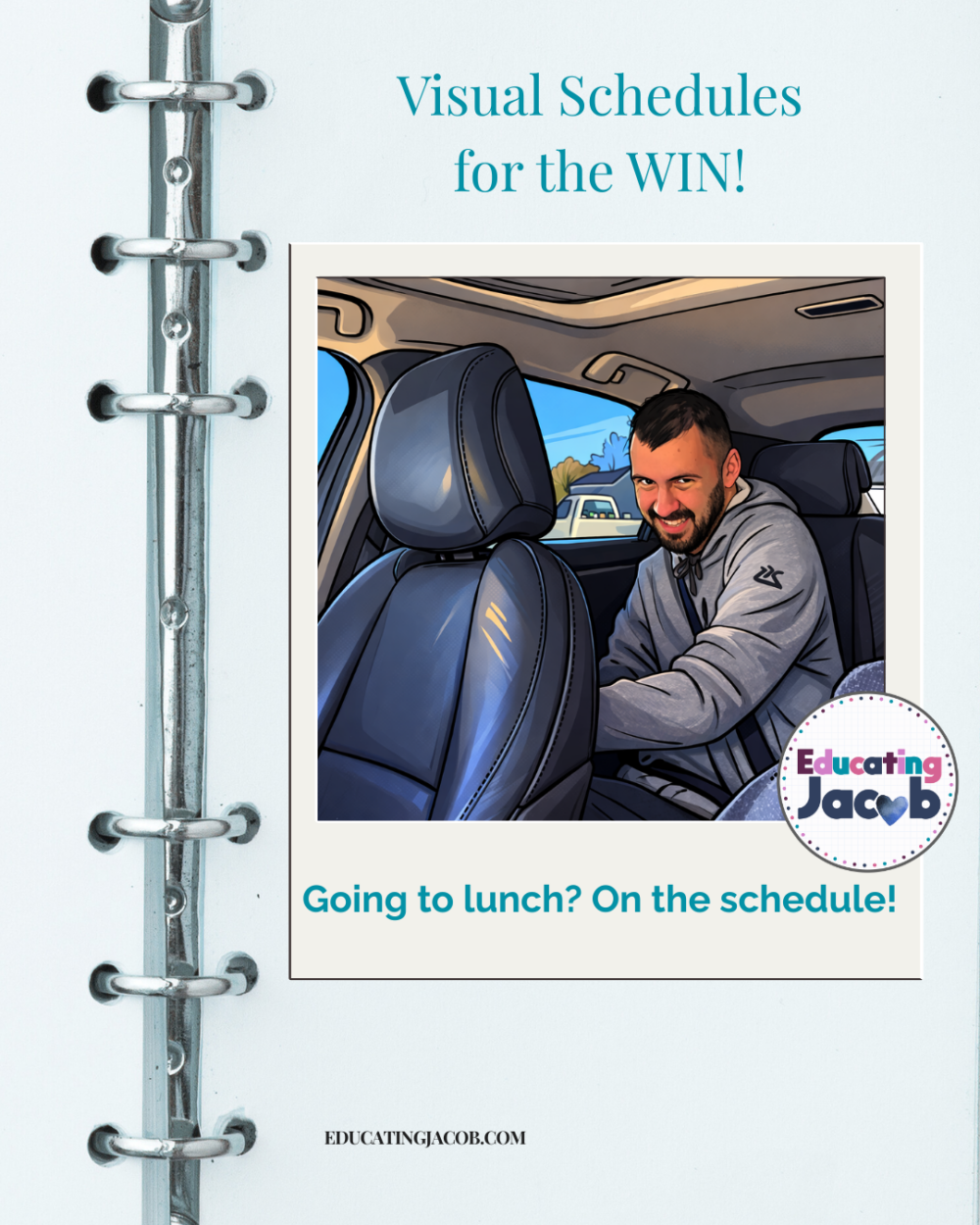
    Visual-schedules-for-the-win
    Jacob is all smiles going out for lunch! It’s on his daily schedule.

    Using the CALM Framework to Replace Chaos With Calm

    Everything I do β€” both with Jacob at home and in the resources I create for parents β€” flows through my CALM Framework. Because calm doesn’t come from one good day or one perfect strategy. It comes from consistency over time.Β How to Let Go of the Guilt and Find Peace as an Autism Mom, CALM Hacks!

    Here’s what that looks like in real life:

    C β€” Consistent Action Forward

    The long game requires you to keep showing up even when it’s hard, even when progress is invisible, even when you’re exhausted.

    Consistency is what teaches your child what to expect β€” and what’s expected of them. When we first introduced Jacob’s morning routine schedule, it was messy. He resisted. I second-guessed myself. But we kept showing up, and slowly, it clicked.

    A β€” Always Celebrate Wins

    This one saved me more times than I can count.

    When Jacob started putting his dishes in the sink without being reminded, we celebrated like he’d won an Olympic medal. Because in our world? He had.

    The small wins aren’t small. They are the building blocks of the big life skills you’re working toward. Please don’t skip celebrating them.

    L β€” Learning to Create Schedules

    Schedules aren’t one-size-fits-all, and they’re not permanent.

    What worked for Jacob at 8 looks nothing like what works for him at 25. The long game means your systems grow with your child. You adjust.Β  Personalize to your child. Stay curious about what your child actually needs, not just what worked before.

    M β€” Mindset

    This is the hardest one. Hands down.

    Playing the long game means letting go of comparison. It means releasing the guilt when things fall apart. It means choosing β€” over and over β€” to focus on progress, not perfection.

    On the days I feel discouraged, I come back to this: calm today is preparing Jacob for tomorrow. That’s enough.

    The Lie We Tell Ourselves About Autism and Independence

    I want to address something directly, because I hear it from parents all the time and I felt it too for a long time:

    We think that if our children always need support, they’ve somehow failed to become independent.

    That’s not true. And it’s a harmful way to measure success.

    Independence doesn’t mean doing everything alone. It means doing as much as possible β€” with the right support in place.

    For Jacob, independence looks like following his daily routine without being prompted step by step. It looks like making simple choices about what to eat, what to wear, how to spend his time. It looks like feeling confident in his own space, safe within structure, and knowing that if he needs help, it’s there.

    That kind of independence β€” independence with support β€” is what we’re building toward through every schedule, every routine, every consistent structure we put in place.

    Why Replacing Chaos With Calm Matters So Much

    Chaos keeps families stuck in survival mode. And when you’re just surviving, there’s no room for growth β€” not for your child, and not for you.

    When calm becomes part of your daily life β€” even imperfect, partial calm β€” something opens up:

    Your child can practice skills because anxiety isn’t consuming all their bandwidth. Their confidence grows because they know what to expect. Your household stops bracing for impact and starts moving forward.

    And you, the parent? You get to breathe. You get to be present instead of perpetually reactive.

    That space β€” that exhale β€” is where the real work happens.

    If You’re Playing the Long Game Too

    If thinking about your child’s future keeps you up at night, I want you to hear this:

    You are not alone.

    We are still on this road with Jacob. Some days are hard. Some days are really hard. But we are not where we started, and that matters.

    Replacing chaos with calm is not about being a perfect parent or having a perfect system. It’s about doing what works, being consistent, and staying in it for the long haul.

    Start small. Stay consistent. Celebrate the wins. Keep the long game in mind.

    Your calm today is preparing your child for tomorrow.


    “I can do all things through Christ who strengthens me.” Philippians 4:13


    Want support as you work to create more calm in your home? Join us in the Autism Thrive Tribe β€” a community of parents and caregivers who get it. [Click here to join the free Facebook group β†’]

    πŸ“Œ Save this post for later β€” and share it with an autism parent who needs to hear this today.Β https://themomkind.com/autism-vitamins-adhd/?utm_source=Pinterest&utm_medium=organic


    Read More

  • Visual Schedules and autism, we’ve got you! Don’t figure this out alone!

    Why I Teach That Autism and Schedules Work Together

    Why do I teach that autism and schedules work together?
    Because in my lived experience with my son Jacob and in my classrooms, replacing chaos with calm has always come through structure and consistency.

    If you are parenting, teaching, or loving a child on the autism spectrum and life feels chaotic, overwhelming, or isolating, I want you to hear this first:

    You are not failing. And you do not have to figure this out alone.

    I did not have another autism mom to call. I did not have family members who understood what our daily life truly looked like. What I had was stress, fear, and a deep desire to help my son Jacob thrive in a world that often felt too loud and unpredictable for him.

    This blog post is for the parent, family member, or teacher who knows something has to change but does not yet know where to start.

    I have lived this life. I am still living it. And I want to help where I can.Β 3 Ways You Can Stop Chaos On Autism Island. Use My Calm Home Autism Routines.

    2-Corinthians-129
    My grace is sufficient for you!

    When Autism Parenting Feels Heavy and Lonely

    There was a season when everything felt hard.

    Transitions were difficult.
    Behavior felt unpredictable.
    Anxiety was constant.

    Jacob lives with autism and epilepsy, and there were many days I worried about his safety, his future, and whether I was doing enough. I felt isolated and overwhelmed. That stress eventually pushed me to go back to school while working and earn a degree in special education because I needed answers.

    What I did not realize at the time was this:

    The biggest lessons would not come from textbooks.
    They would come from Jacob.Β When the Guilt Hits Hard: Autism Level 2–3, Meltdowns and Mom Regret

    Finding Strength in the Hard Moments

    I am not a daily journaling person. But during some of our lowest seasons, I started doing two simple things.

    I took pictures of real moments.
    I wrote short reflections when things felt heavy.

    Often, I would end those reflections with Bible verses reminding myself that God had our family and that I could take the next step even when things felt impossible.

    Looking back now, I can see something clearly.

    Progress did not come from fixing everything.
    Progress came from not giving up.

    There were bad days. Hard moments. Seasons that felt like survival. But over time, continuing forward and trying something new moved us toward calm.

    Why Visual Schedules and Autism Work Together

    For a long time, I thought visual schedules were just one more thing to add to my already full plate. Mentally, I did not feel like I had the capacity for another strategy.

    But what I did have was a lot that was not working.

    So I tried visual schedules anyway.

    And then I adjusted them.
    Simplified them.
    Tweaked them again.

    Before I knew it, the chaos in our home started to decrease.Β 5 ways to regain my calm when my special needs child is dancing on my last nerve!

    visual schedules and autism
    Replace Chaos with Calm, use Visual Schedules.

    Visual schedules and autism work together because they:

    • Reduce anxiety by showing what comes next
    • Limit overwhelming verbal language
    • Create predictability and safety
    • Support independence one step at a time

    When children with autism can see their day, they are not constantly guessing what is happening next.

    Structure does not restrict children with autism.
    Structure supports them.

    How Visual Schedules Helped Jacob

    When we began using visual schedules consistently, several things changed.

    Jacob’s anxiety decreased.
    Transitions became easier.
    His independence slowly increased.

    Visual schedules did not change who Jacob is.
    They supported how he experiences the world.

    Jacob will always need support, structure, and family to help him navigate life. Our goal has never been independence without help. Our goal is for him to thrive in every way he can.

    One of our long-term hopes is to have a tiny house behind our home so Jacob can have more independence while staying connected and supported.

    This is what thriving looks like for our family.Β https://lifewithasideoftheunexpected.com/what-not-to-do-with-an-autistic-child/?utm_source=Pinterest&utm_medium=organic

    The CALM Framework That Guides Our Home

    Everything we do at Educating Jacob is built on the CALM Framework, because calm does not happen overnight.

    C – Consistent Action Forward
    You keep moving forward, even when it is hard.

    A – Always Celebrate Wins
    Every win matters, no matter how small.

    L – Learning to Create Schedules
    Schedules are learned and adjusted, not forced.

    M – Mindset
    Progress over perfection. Grace over guilt.

    It sounds simple. I know it is not simple in the moment. But it pays off.

    Celebrate what works.
    Do more of what helps.
    Do less of what does not.
    And be willing to try something new.

    Start-Small-if-You-Are-New-to-Visual-Schedules
    Simple =Success, celebrate all wins!

    Start Small if You Are New to Visual Schedules

    If you are just starting, please hear this clearly.

    You do not need an all-day schedule.

    Start with one routine:

    • Morning routine
    • After-school routine
    • Bedtime routine

    Use three to five steps only.

    Small steps create confidence.
    Confidence creates independence.

    You Do Not Have to Do This Alone

    If you are tired, overwhelmed, or unsure where to start, you are in the right place.

    At Educating Jacob, we share real life on Autism Island and practical tools that support both the child and the family.

    Here are your next steps if you need support:

    • Explore the CALM Visual Schedule Starter Kit
    • Join Autism Thrive Tribe for community and continued guidance
    • Visit my consulting page if you want one-on-one support
    • Connect with us on Facebook and be part of a community that understands

    We are stronger together, and calm is possible.

    β€œI can do all things through Christ who strengthens me.”
    Philippians 4:13

    Read More

  • 3 Ways You Can Stop Chaos On Autism Island. Use My Calm Home Autism Routines.

    Try Something New: Start a Visual Schedule πŸ“…
    Try Something New: Start a Visual Schedule πŸ“…

    3 Ways You Can Stop Chaos on Autism Island

    Use My Calm Home Autism Routines

    If your home feels loud, unpredictable, and exhausting, you are not failing. You are simply doing what you have always done in a situation that now requires something new.

    That was me with Jacob.

    I loved my son deeply, but chaos ruled our days. Mornings felt like battle. Transitions felt impossible. Conversations turned into meltdowns. And I kept thinking, Why isn’t this working?

    The truth was simple and painful: what I was doing wasn’t working anymore.

    If you want a calm home on Autism Island, something has to change. That is where calm home autism routines begin. Not with perfection. With courage to try something new.

    Here are the three shifts that changed everything for our family. πŸ’™

    1. Try Something New: Start a Visual Schedule πŸ“…

    Jacob does not struggle because he is stubborn. He struggles because language overwhelms him.

    He loves movie quotes. He can be loud and joyful. But when I talk at him or list steps out loud, his brain shuts down. Processing delays plus anxiety equal meltdown.

    So I stopped talking and started showing.

    A visual schedule let Jacob see his day.

    • What was expected
    • What came next
    • When he would get free time
    • What was his responsibility and what was not

    It removed pressure from his mind. He no longer had to hold ten steps in his head. He no longer had to decode my words. He could simply look.

    And the change was immediate.

    Less anxiety. ✨
    Less frustration.
    More peace.
    More fun.

    Our home became calmer, happier, lighter.

    What We Use Now:

    • A daily schedule
    • A weekly calendar
    • Visuals for chores and routines
    • A family calendar showing dad’s shifts, brother’s visits, workdays

    Jacob wants to know all of this. He just does not want it spoken at him.

    A visual schedule is communication without overload.

    πŸ› οΈ Practical Steps to Start:

    For Beginners: Start with just three activities. Breakfast. School/therapy. Bedtime. Use real photos of your child doing these activities or simple clipart. Laminate it or put it in a page protector. That’s it.

    The First-Timer Trick: Take photos with your phone of your child’s actual bedroom, bathroom, kitchen table. Print them. Write one word under each: “Wake Up,” “Brush Teeth,” “Eat Breakfast.” Velcro them to a piece of poster board. Done. βœ…

    When to Use It: Put the schedule where your child naturally looks first thing in the morningβ€”maybe taped to their bedroom door or on the fridge at eye level.

    The Reset Rule: If they resist it for three days, move it. Try the bathroom mirror. Try their tablet case. Location matters more than perfection.

    It does not need to be complicated.
    Start simple.
    Pictures and words.
    One routine.
    Add more over time.

    That is how calm home autism routines begin.Β Inside Our Day: A Calm Autism Routine That Works

    Celebrate What Works πŸŽ‰
    All wins count, no matter how small!

    2. Celebrate What Works πŸŽ‰

    When the schedule works, even a little, celebrate.

    Not the perfect day.
    The five good minutes.
    The smooth transition.
    The independent choice.

    Let your child feel success.

    We all repeat what brings praise and joy. Our children are no different.

    Celebration builds:

    • Confidence πŸ’ͺ
    • Motivation
    • Independence

    Our children do not need us doing everything for them. That leads to learned helplessness. What they need is to see that they can do things.

    πŸ› οΈ Practical Ways to Celebrate:

    The Immediate Win: When Jacob completes a step on his schedule, he gets a high-five right then. Not later. Not “good job today.” In the moment. Immediate connection between action and praise.

    The Visual Victory: For a small child you can keep a small jar of pom-poms on the counter. Every time he follows the schedule independently, one pom-pom goes in. When the jar is full (doesn’t take long), he picks the family movie night pick. Simple. Visual. Rewarding.

    The Sibling Strategy: Nicholas learned to be Jacob’s cheerleader. “Dude, you got dressed without being reminded!” Peer praise hits different. If you have neurotypical siblings, teach them how powerful their words are. He also uses movie quotes that Jacob loves in the characters voice!Β https://drroseann.com/magnesium-benefits-autism/

    What NOT to Do: Don’t praise completion of the entire day if they struggled through it. That feels hollow. Celebrate the one thing they did well. That feels real.

    Independence looks different for every child. The goal is always the same.

    To:

    Let them thrive.
    Help them grow.
    Believe, “I can.” πŸ’™

    That is part of building calm home autism routines.

    3. Shift Your Mindset 🧠

    I had to stop second-guessing myself.

    I had to walk in confidence.

    I had to accept that I did not know what I did not know.

    So I made a deal with myself:

    • Try something
    • If it works, do more of it
    • If it does not, tweak it
    • If it still fails, ditch it and move on

    Every small win became a clue.

    Do not overcomplicate this.

    Success leaves tracks.
    Follow them. πŸ‘£

    The 3-Day Rule: Give any new routine three full days before you decide it's not working.
    Most parents quit on day two.

    πŸ› οΈ Practical Mindset Shifts:

    The 3-Day Rule: Give any new routine three full days before you decide it’s not working. Day one is chaos. Day two is resistance. Day three is where you see the truth. Most parents quit on day two.

    The “Good Enough” Standard: Your visual schedule doesn’t need to be Pinterest-perfect. Jacob’s first schedule was printed clipart taped to construction paper with packing tape. It worked for eight months. Done is better than perfect.

    The Comparison Trap: Other autism parents will do things differently. That’s okay. Their child isn’t Jacob. Your child isn’t Jacob. What works for us might not work for you. What works for you might not work for your neighbor. And that is completely fine.

    The Permission Slip: I give you permission to stop trying strategies that don’t serve your family. If the sensory bin makes a mess and stresses you out, ditch it. If the token board confuses your child, try something else. You are not failing. You are being smart.

    The Journal Hack: I keep a tiny notebook in my kitchen. When something works, I write it down with the date. “1/15 – Jacob transitioned to bath without meltdown when I gave 5-min warning + visual.” When I’m stuck, I flip back and look for patterns. This eliminates guessing. ✍️

    That mindset became the foundation of everything I teach today.

    Why This Matters πŸ’›

    For those who are new here, I am Melissa.

    I am a mom to two boys, Nicholas and Jacob. Jacob is autistic. He was diagnosed at four. We knew early that he would need lifelong support.

    Our entire family changed.

    I became a special education teacher because I needed to understand how to help my own child. But long before any degree, I started teaching Jacob myself. I started homeschooling him before I knew what I was doing because I knew one thing.

    Someone had to try.

    And that someone was me.

    Jacob has been my greatest teacher. πŸ“š

    From him, I created the CALM foundations:

    • Consistent Action Forward
    • Always Celebrate Wins
    • Learning to Create Schedules
    • Mindset

    These are not theories.

    They are how we live.

    They are how we turned chaos into calm on Autism Island. 🏝️

    And they are how you can begin building your own calm home autism routines today.

    Ready to Create Calm in Your Home?

    You do not have to figure this out alone.

    Autism Island can feel isolating, exhausting, and overwhelming, especially when every day feels like you are reinventing the wheel just to survive. That is exactly why I created Autism Thrive Tribe.

    Autism Thrive Tribe is a safe, supportive community for parents who are tired of chaos and ready for calm. Inside, you will find:

    • Step-by-step guidance for building calm home autism routines
    • Visual schedule tools you can use immediately
    • Coaching rooted in real life, not perfection
    • Encouragement from parents who get it
    • A place where wins are celebrated, no matter how small</p>

    So, if you are ready to stop surviving and start thriving, I would love to walk with you.

    πŸ‘‰ Join us inside Autism Thrive Tribe and begin building your calm today.

    Read More