schedules

  • When Autism Doctor Appointments Fail: Showing Up Is Enough, Still a Win!

    The Truth About Autism Doctor Appointments Nobody Tells You

    If you’ve ever left a medical appointment feeling frustrated, defeated, or like you just ran a marathon without moving an inch—mama, you’re not alone. Autism doctor appointments can feel overwhelming for both parent and child, and some days the “plan” goes completely out the window.

    Today’s visit with Jacob’s neurologist reminded me of something crucial: not every appointment goes as planned, and that’s okay. Some days, just showing up is the real victory.

    The Reality Behind Every Autism Doctor Appointment “Plan”

    Jacob, now an adult on the autism spectrum, still talks about going to the doctor like it’s an adventure. He’ll ask questions, remind me of appointment times, and even tell me he’s ready to go. But once we arrive at those autism doctor appointments? His plan and mine rarely line up.

    Today was one of those days.

    The moment we walked into the neurologist’s office, Jacob didn’t want to talk, be examined, or answer questions. Jacob wanted me to do the talking, the doctor to listen quietly, and then for us to leave. No exam, or extra questions. Just… done.

    And honestly? I didn’t have the energy to fight it.

    When You’re Running on Empty

    I had worked all day, was pushing through a sinus headache, and felt that familiar tug between wanting to “do it right” and just wanting to be done. The pressure we put on ourselves as autism moms during doctor appointments is real—we want everything to go smoothly, our child to cooperate, and the doctor to see our child at their best.

    But here’s what I noticed: Jacob was dressed. He had his shoes on and he was calm. Jacob, made it to the appointment without a meltdown.

    That’s progress, CALM. We’re counting that a win.

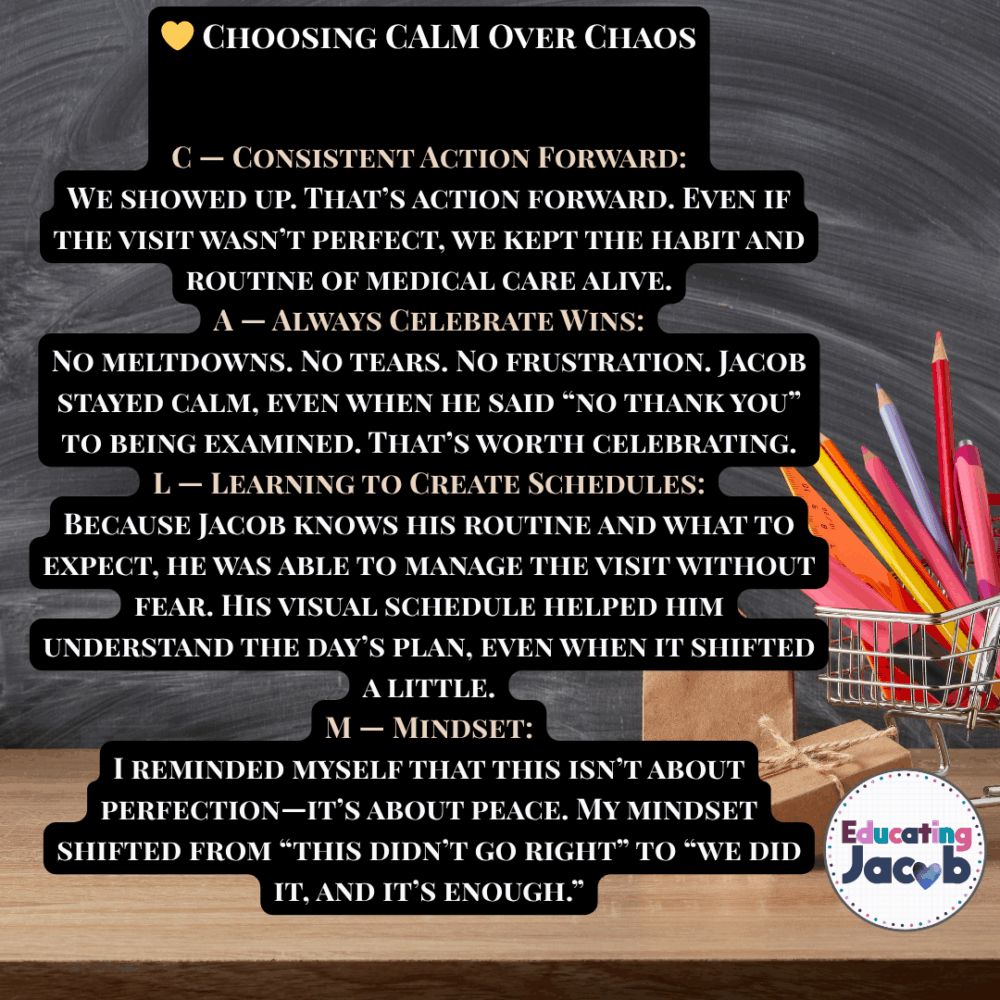
    💛-Choosing-CALM-Over-Chaos
    💛 Choosing CALM Over Chaos!

    Choosing CALM Over Chaos During Autism Doctor Appointments

    When autism doctor appointments fall apart—or don’t go according to your carefully laid plans—it’s so easy to spiral into guilt or frustration. Did I prepare him enough? Should I have done more? What will the doctor think?

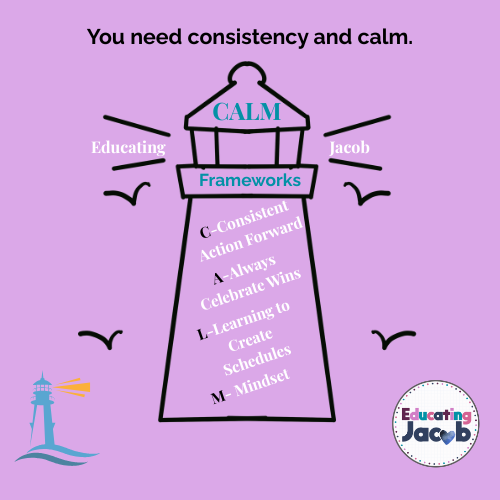
    This is exactly where our CALM Framework becomes your lifeline:

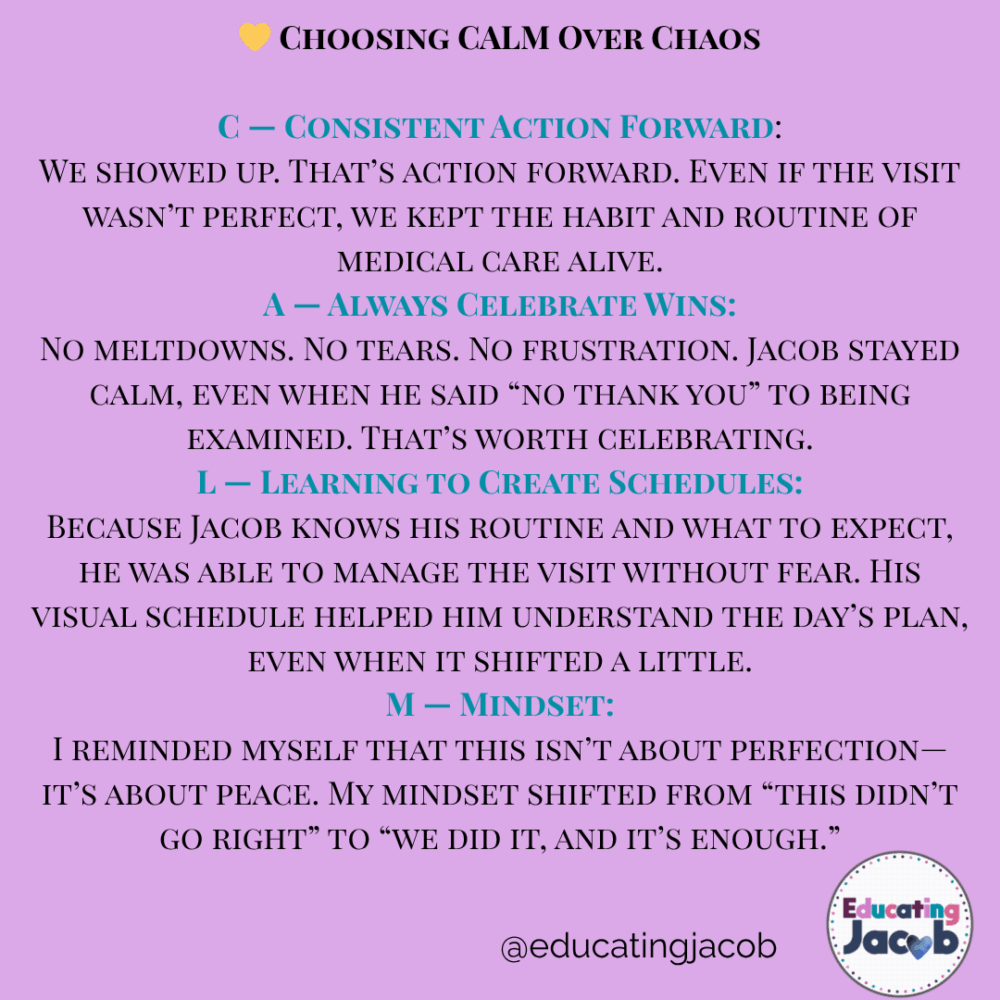
    C — Consistent Action Forward

    We showed up. That’s action forward. Even if the autism doctor appointment wasn’t “perfect,” we kept the habit and routine of medical care alive. Jacob knows we go to the neurologist regularly. He understands this is part of his health routine, even on days when he doesn’t feel like participating fully.

    Progress isn’t always linear—it’s consistent.

    A — Always Celebrate Wins

    No meltdowns, tears or frustration in the waiting room. Jacob stayed calm, even when he said “no thank you” to being examined more thoroughly. He advocated for his boundaries in a respectful way.

    That’s absolutely worth celebrating, even if it’s not what we “planned” for the appointment.

    L — Learning to Create Schedules

    Because Jacob knows his routine and what to expect from autism doctor appointments, he was able to manage the visit without fear or anxiety. His visual schedule helped him understand the day’s plan, even when parts of it shifted.

    We use visual schedules at home and bring them into the community. Jacob knew:

    • We’re going to the neurologist
    • Mom will talk to the doctor
    • The doctor may want to check him
    • Then we go home

    Even when he chose not to participate in the exam, the schedule gave him control and predictability.

    M — Mindset

    This is where the real transformation happens. I reminded myself that autism doctor appointments aren’t about perfection—they’re about peace and progress.

    My mindset shifted from “This didn’t go right” to “We did it, and it’s enough.”

    That mental shift changed everything. Instead of leaving defeated, I left grateful.

    A Doctor Who Understands Autism Makes All the Difference

    Jacob’s neurologist has been with us for years. She knows his epilepsy history, his sensory boundaries, and his unique rhythm. She’s not just his doctor—she knows our whole family through years of visits.

    She would have liked to examine him more closely today, but she respected his “no.” That’s something I deeply appreciate—a medical provider who sees Jacob as a whole person with autonomy, not just a checklist of tasks to complete.

    What We Accomplished at This Autism Doctor Appointment:

    ✅ His epilepsy medications were reviewed and refilled
    ✅ Jacob remained calm and content throughout
    ✅ We left without stress, tears, or a meltdown
    ✅ The doctor understood and respected his boundaries
    ✅ Jacob felt heard and in control of his body

    Even without a full physical exam, we completed what needed to be done. The relationship with his doctor remained positive. Jacob knows he’s safe there.

    Sometimes success looks like cooperation, not compliance.

    When Autism Doctor Appointments Don’t Go “Perfectly”

    Here’s the truth that needs to be said more often: Not every visit is going to be Instagram-ready. There will be days of refusal, fatigue, and frustration. There will be appointments where your child won’t talk, won’t cooperate, or melts down in the waiting room.

    But when you zoom out and look at the big picture, those moments still move you forward.

    Real-Life Autism Doctor Appointment Wins That Count:

    • You got your child dressed and out the door
    • You made it to the appointment on time (or close enough)
    • You advocated for your child’s needs
    • Your child stayed regulated enough to not have a meltdown
    • You kept a routine medical appointment on the calendar
    • You modeled calm even when things didn’t go as planned

    It’s okay—more than okay—to count the visit as a win. You made it there,  modeled calm and kept your child safe and respected their boundaries.

    That’s parenting progress. That’s living the CALM way—at home and in the community.

    💛 Choosing CALM Over Chaos2 @educatingjacob
    Say “No” to Chaos, take the win of showing up!

    Using CALM Strategies in the Community for Autism Doctor Appointments

    The CALM Framework isn’t just for home—it’s designed to travel with you into the real world, especially during challenging situations like autism doctor appointments.

    Before the Appointment:

    • Create a visual schedule showing each step of the visit
    • Talk through what will happen using simple, clear language
    • Set realistic expectations (yours AND your child’s)
    • Decide what “success” looks like for THIS visit

    During the Appointment:

    • Stay calm in your body language and tone
    • Advocate for your child’s sensory needs
    • Communicate boundaries to medical staff
    • Remember: you know your child best

    After the Appointment:

    • Celebrate what went RIGHT
    • Process what was hard without shame
    • Adjust the plan for next time if needed
    • Give yourself credit for showing up

    The Win That Actually Matters

    At the end of the day, Jacob was happy. The doctor was supportive and understanding. And I left knowing that calm won over chaos.

    We got Jacob’s epilepsy medications managed. Maintained a positive relationship with his medical team, ✅. Plus,we showed up as a family unit navigating autism together.

    That’s the educatingjacob way—finding peace in the process, celebrating progress over perfection, and trusting that showing up with love is always enough.

    A Message to Autism Moms: You’re Doing Better Than You Think

    If you’re an autism mom reading this after a tough day, after an autism doctor appointment that didn’t go as planned, take a deep breath and hear this:

    You don’t have to win every battle to make progress.

    Sometimes showing up—with love, patience, and faith—is more than enough. Your child doesn’t need you to be perfect. They need you to be present, calm, and consistent.

    You’re already doing that. You’re already winning.

    Try This CALM Check-In Before Your Next Autism Doctor Appointment

    Next time you have an appointment coming up, try this approach:

    1. Prepare a visual schedule with a start-to-finish view of the visit. Include everything from getting in the car to returning home.
    2. Decide your “enough” ahead of time. For us today, it was “we show up and stay calm.” That’s it. What’s your “enough” for your next appointment?
    3. Celebrate small wins—even if they look different from what you imagined. Did your child walk in without resistance? Did they sit in the waiting room? Did they let the doctor in the room at all? Those are wins.
    4. Give yourself grace. You’re managing autism doctor appointments, medications, therapies, school needs, and daily life. You’re doing an incredible job.

    Final Thoughts: Progress Over Perfection on Autism Island

    Autism doctor appointments don’t have to be perfect to be successful. They don’t have to look like what you planned to still be a win.

    Jacob and I proved that today. We used our CALM strategies. Showed up even when we didn’t feel great. We stayed regulated. Then left with what we needed—and with our peace intact.

    That’s CALM on Autism Island. 🌴💛

    What does success look like for YOUR next autism doctor appointment? Share in the comments—I’d love to hear your wins, big and small.

    About EducatingJacob

    EducatingJacob helps autism families find peace through the CALM Framework: Consistent Action Forward, Always Celebrate Wins, Learning to Create Schedules, and Mindset. We believe that progress matters more than perfection, and that every family can find their rhythm on Autism Island.

    How Preparing Our Son with Autism for Doctor Visits Gives Success!

    How a Visual Schedule for Autism Gave My Son Independence 📅✨

    Craving CALM? 3 ways our CALM system turns autism’s behavior challenges into progress.

    https://www.autismparentingmagazine.com/creating-visual-schedules/?srsltid=AfmBOoobxTIWM82hdbr9fpPhiYkO_Oy8VbvWHHeiLrQP7O9cDiNN2bpP


    Read More

  • Autism Parent School Anxiety: 3 Real Feelings and How We Found Support

    autism parent school anxiety support
    Frustration turned into calm using structure, routines, and visual schedules for my son Jacob.

    💛 A Familiar Feeling: When the School Calls

    If your heart drops when the school number pops up on your phone, you’re not alone. I remember those days all too well. We need autism parent-school anxiety support

    As an autism Level 2 parent, I used to panic every time the phone rang. Was Jacob hurt? In trouble? Overwhelmed? Those calls brought waves of fear, guilt, and confusion.

    Back then, I didn’t understand why the calls kept coming or how to help him succeed. Now, after being both the mom sitting at the IEP table and the special education teacher writing the IEP, I see both sides clearly.

    Here are the three real feelings I experienced  and what I learned about creating support, structure, and calm for both child and teacher.

    😟 1. Fear:  “Is He Safe?”

    The first emotion that hit was fear.

    I’d instantly picture Jacob getting hurt or lost, because as a child on the autism spectrum, safety awareness wasn’t his strong suit. He’d walk right into the middle of something or tune out completely when overwhelmed.

    That fear wasn’t just about accidents , it was about not knowing what was happening.

    I later realized Jacob’s unsafe moments often came when he felt anxious or confused about transitions. Without structure, his world felt unpredictable, and his body followed that anxiety. Can Medications for Children on the Autism Spectrum Help? Pros, and Cons

    Structure in Action for Autism Level 2
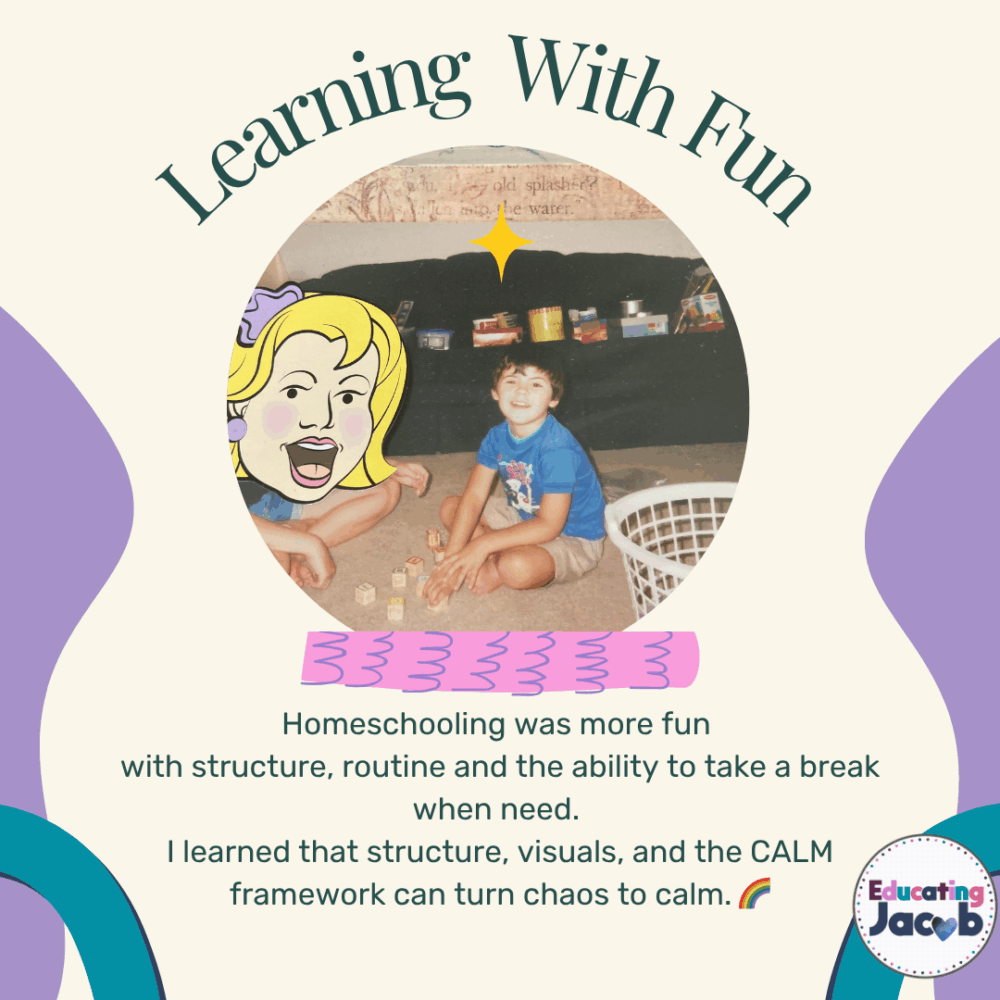
    I learned that structure, visuals, and the CALM framework can turn those calls from chaos to calm. 🌈

    ✨ What Actually Helped:

    Morning Preparation Became Our Superpower

    Before Jacob left for school, we started doing a simple 5-minute visual walkthrough of his day. I’d show him pictures of:

    • The bus
    • His classroom
    • Lunch
    • Recess
    • Coming home

    We’d literally point and say, “First bus, then classroom, then snack…” This wasn’t fancy — I used printed photos in a small binder that went in his backpack.

    The CALM Connection: This is C — Consistent Action Forward. When your child knows what’s coming, their nervous system can relax. Safety isn’t just about physical boundaries; it’s about emotional predictability.

    Try This Today: Take 3 photos on your phone right now — your child’s classroom door, the cafeteria, and your car. Tonight, show them in order and say, “Tomorrow: classroom, lunch, home.” Start simple. How a Visual Schedule for Autism Gave My Son Independence 📅✨

    😩 2. Frustration:  “Why Are They Calling Again?”

    Once Jacob started school, my fear turned into frustration.

    He was first placed in a general special education classroom that wasn’t designed for autism. The teachers were kind, but they didn’t yet understand that behavior is communication. Without structure, Jacob’s anxiety came out through yelling, refusing, or crying — and that’s when my phone would ring.

    At that time, we didn’t have a diagnosis yet. I didn’t know about visual schedules or how powerful predictability could be for him. When Jacob finally transitioned into an autism classroom, everything began to change. His teacher used a visual schedule so he could see what was coming next  and that simple tool lowered his anxiety and gave him stability.

    ✨ What Actually Helped:

    I Started Speaking Their Language

    Instead of waiting for the school to call me, I started reaching out first. Every Monday morning, I’d send a quick email:

    “Hi! This weekend Jacob was dysregulated because we had family over. He might need extra processing time today. His calming strategy is drawing — he has his notebook in his bag.”

    This did two things: It gave teachers context, and it reminded them Jacob wasn’t being “difficult” , he was communicating.

    The CALM Connection: This is A — Always Celebrate Wins, but also Always Advocate with clarity. When you give teachers practical tools and context, you’re setting your child up to be understood, not just managed. 3 Practical Tips For Parents To Boost Schoolwork Motivation Using Effective Schedules

    Try This Today: Send one email to your child’s teacher this week. Keep it short:

    • One thing that might affect their day (good or hard)
    • One strategy that helps them calm down
    • One win you noticed at home recently

    You’re not oversharing — you’re partnering.

    😔 3. Defeat : “Why Do I Even Bother Taking Him?”

    Some mornings, I’d barely make it home before the phone rang again.

    “Can you come pick him up?”

    I’d think, Why do I even bother?

    It’s a helpless feeling  and one that many autism parents know too well. You want your child to belong and succeed, but the system isn’t built for one-on-one attention. I finally realized that even the most dedicated teacher can’t give every anxious child the individualized time they need in a full classroom.

    That realization led me to homeschool Jacob, using the same strategies I later applied as a special education teacher. Visual schedules, routines, and a calm environment became the foundation of our success  and eventually inspired the CALM Framework that I teach other autism parents today.

    autism parent school anxiety support
    Jacob and I have been there, and what changed everything was preparation, structure, and connection.

    ✨ What Actually Helped:

    I Stopped Waiting for School to Be “Enough”

    This was the hardest lesson: School wasn’t going to fix everything. And that wasn’t the school’s fault or mine  it was just reality.

    So I started building structure at home that matched what school was trying to do. I created:

    • A visual schedule on our fridge (breakfast, brush teeth, backpack, bus)
    • A calm-down corner in our living room with a weighted blanket and fidgets
    • A “first-then” card I’d use for everything: “First shoes, then tablet”

    When Jacob came home, he knew what to expect. That consistency helped him hold it together at school because he wasn’t running on empty by 10 a.m.

    The CALM Connection: This is L — Learning to Create Schedules. You can’t control what happens at school, but you can build a foundation at home that gives your child the regulation tools they need to succeed anywhere.

    Try This Today: Pick one part of your morning or afternoon routine that’s chaotic. Make it visual. Draw it, print pictures, use clipart — whatever works. Put it where your child can see it. Do that same routine the same way for one week. Watch what happens.

    💬 What I’ve Learned from Both Sides of the IEP Table

    I’ve been the worried mom in the meeting  and the teacher explaining why the calls happen.

    Here’s what I know now: When teachers call, it’s rarely about blame. It’s about support. They’re asking for partnership, because when a child’s anxiety disrupts learning, no one wins.

    But here’s what I also know: You don’t have to have all the answers when they call. You just need to know your child and be willing to try something new. https://debpreston.com/autism-tantrums-behavioral-strategies/

    The Questions I Started Asking (That Changed Everything):

    When the school called, instead of spiraling, I’d ask:

    1. “What happened right before the meltdown?” (This helped me spot patterns)
    2. “What usually calms him down at school?” (So I could reinforce it at home)
    3. “Can we try [specific visual or routine] tomorrow and see if it helps?” (Partnership, not defensiveness)

    The CALM Connection: This is M — Mindset. The call isn’t a verdict on your parenting. It’s data. It’s feedback. It’s a chance to collaborate and figure out what your child needs next.

    Try This Today: Write down these three questions and keep them by your phone. Next time the school calls, take a breath, and ask them. You’ll feel more in control, and the conversation will shift from crisis to problem-solving.

    🌈 From Chaos to Calm

    If you’re living in that anxious space  waiting for the next school call  take heart. You’re not failing. You’re learning.

    Jacob and I have been there, and what changed everything wasn’t a magic solution. It was preparation, structure, and connection. Visual schedules gave him confidence. Routines gave him peace. And the CALM Framework gave us both a way forward.

    You don’t need to fix everything today. Pick one small thing from this post and try it this week. Send that email. Make that visual. Ask those questions.

    Because here’s the truth: The school calls won’t stop overnight. But your response to them can change. And when you’re calmer, your child feels it too. We need everyone on the team.

    Let’s replace chaos with calm and help our children thrive at home, at school, and everywhere in between. 💛

    P.S. If you’re ready to dive deeper into building these routines and creating real calm at home, the CALM Framework walks you through every step. You don’t have to figure this out alone. 💙
    Read More

  • Mom Guilt Ruling the Day? Have a Plan and CALM for Autism Spectrum.

    mom guilt autism parenting
    Jesus and coffee to start the day CALM!

    🌅 When Mom Guilt Takes Over

    We’ve all been there—the days when everything feels too heavy, the plan didn’t go right, and your child’s emotions are melting right along with yours. On those days, mom guilt can take center stage. You start wondering, “Am I doing enough? Did I just make it worse? Why can’t I keep calm like other moms?”

    If you’re an autism parent, that guilt can hit harder. Because every meltdown, every skipped therapy, and every missed cue feels personal. But here’s what I’ve learned through years of mom guilt autism parenting: the guilt isn’t the problem—it’s the lack of a plan that magnifies it. How to reduce chaos at home with an autistic child using my CALM frameworks.

    That’s where CALM comes in. 💛

    🌤️ C — Consistent Action Forward: Keep Going, Not Perfect

    When Jacob was younger, mornings were chaos. Breakfast battles, getting dressed, and transitions to school often ended in tears—sometimes his, sometimes mine. I used to think every meltdown meant I’d failed.

    Then I learned the secret: consistent action forward is better than perfection.

    If breakfast doesn’t go as planned, it’s okay. I just move forward with what’s next on our visual schedule. Jacob sees that I’m calm and that the day still has structure.

    When we show up with consistency—even in messy moments—our children learn that the world is still safe. That alone can quiet the guilt and bring back our peace. Parenting a Child with Autism Level 2-3 Can Be Ra Ra Rough! Stay CALM

    💛-mom-guilt-autism-parenting
    Small steps and a simple plan go a long way!

    ☀️ A — Always Celebrate Wins (Even Tiny Ones!)

    Mom guilt can make us focus on what went wrong, not what went right. But celebrating small wins has the power to change your whole day—and your child’s confidence.

    Last week, Jacob brushed his teeth without prompting. That’s a huge win in our world. We celebrated with a “What in the world!” high-five (his favorite phrase).

    If you’re deep in mom guilt autism parenting, I want you to try this today: write down one thing your child did well and one thing you did right. Even if it’s just, “I didn’t yell this morning.” That counts.

    CALM isn’t about control—it’s about connection and grace.

    🌻 L — Learning to Create Schedules that Bring Peace

    Structure is your best friend when guilt and anxiety try to rule your day. For us, visual schedules aren’t optional—they’re essential. They take the guesswork out of what’s next and reduce both our stress levels.

    On hard days, I pull out Jacob’s visual schedule, which includes a few safe tasks: taking out the garbage, then listening to his favorite music, or watching a short video to help him calm down.

    It gives him a sense of control—and gives me a few deep breaths. That’s CALM in action.

    If you’re stuck in mom guilt autism parenting, start with one small visual schedule: breakfast-to-lunch or after-school-to-bedtime. Simple routines bring big peace.

    Try a First-Then Schedule to get started:

    • First: Breakfast 🍳
    • Then: Get Dressed 👕

    These simple structures help you through the parts of the day that usually create chaos.

    🌈 M — Mindset: From Shame to Strategy

    Mindset is the heartbeat of the CALM system. It’s the shift from “I’m failing” to “I’m learning.”

    When Jacob was first diagnosed, I thought I needed to do everything right all the time. Now I know that calm doesn’t come from perfection—it comes from having a plan.

    When guilt starts to creep in, I stop and pray. ☕🙏 Coffee and Jesus are essential in making my plans and creating my CALM! I remind myself that God entrusted me with Jacob for a reason. He doesn’t need a perfect mom—he needs one who keeps showing up, creating safety, and building a world where he can thrive.

    That mindset shift also means planning for me. If I schedule things like a haircut, manicure, or time to rest, I’m not forced to cram them in when I’m already exhausted from a long week at school.

    When I plan ahead, Jacob isn’t melting down because I’m rushed or reacting. His sensory needs are supported—and so are mine. https://marvelouslysetapart.com/2018/06/26/redirectingstims/?utm_medium=social&utm_source=pinterest&utm_campaign=tailwind_tribes&utm_content=tribes&utm_term=383815566_12575362_431166

    Structure-saves-the-day-on-Autism-Island-🗓️-
    Use a simple first-then schedule! Start small, quick wins!

    🌻 Final Thoughts: Grace Over Guilt

    If mom guilt has been ruling your days lately, it’s time to take your power back.

    Create a plan, even if it’s small. Use our CALM foundations as we’ve shared on this site. Write out your visual schedule. Celebrate progress. And when the day doesn’t go as planned, remind yourself—it’s not about perfection, it’s about Consistent Action Forward.

    On Autism Island, peace isn’t found in perfection. It’s found in the plan.
    In the visual schedule.
    In staying CALM. 🌴💛

    Read More

  • 🎃 3 Fun Halloween Decorating: Autism Sensory Activities at Home

    🎃-Autism-Island-Halloween-Fun-🏝️
    Let the fun Begin!

    🎃 Fun Decorating: Autism Sensory Activities at Home

    As parents on Autism Island 🏝️, we know life can feel heavy and overwhelming at times. But I’ve also learned that choosing joy and making room for fun matters just as much as structure and therapy. For our family, decorating for the holidays—especially Halloween 🎃—has become one of the ways we turn ordinary days into something Jacob looks forward to. Give Your Child with Autism a Visual Schedule, Create CALM Days! 📅✨

    This season, I want to share some DIY sensory activities for autistic children and how creating a sensory-friendly space at home has given us calm, joy, and connection 💜, even during the busiest or hardest moments.


    🖌️ DIY Sensory Activities for Autistic Children

    Sensory play doesn’t have to be complicated. Some of the most effective (and fun!) activities are things you can do with what’s already at home:

    • Pumpkin Fun 🎃
      Jacob doesn’t always want to carve a pumpkin, but he loves the choice of how to decorate it—whether that’s drawing a silly face with markers ✏️, painting it with bright colors 🎨, or scooping out the seeds and feeling the textures. On good days, we’ll roast the seeds afterward for a crunchy snack, turning the sensory mess into a tasty reward.
    • Halloween House Decorating 🏠🍬
      This year we discovered something new at our Fresh Market grocery store: a Halloween house kit (think gingerbread house but spooky 👻). It’s full of candies, sprinkles, and chocolate pieces from other countries 🌎. Jacob and I get to explore textures and tastes while practicing patience as we put it together—though a few candies usually disappear along the way!
    • Candy Sorting & Trick-or-Treat Prep 🍭🍫
      Jacob doesn’t dress up much anymore, but he enjoys helping organize candy for trick-or-treaters. Sorting by color, type, or size is not just fun—it’s also a calming activity that taps into his love of order. When trick-or-treaters arrive, sometimes his dad dresses up as Darth Maul or The Dark Knight 🦇, and the laughter from kids at the door helps Jacob engage too.

    These activities let us practice the C in CALM—Consistent Action Forward. Even if Jacob only participates a little, he knows what to expect and looks forward to the traditions every year. Parenting a Child with Autism Level 2-3 Can Be Ra Ra Rough! Stay CALM

    🏡 Creating a Sensory-Friendly Space at Home

    Not every day is easy. There have been years when I’ve been too overwhelmed, too tired, or too stuck in the weight of life on Autism Island 🏝️ to even pull decorations out of storage. That mom guilt creeps in fast 😔.

    But I’ve learned that the A in CALM—Always Celebrate Wins—applies here too. Even if I only set out one pumpkin 🎃 or light a fall-scented candle 🕯️, it creates a sensory-friendly reminder that joy still has a place in our home.

    Here are a few ways we make spaces calmer and more engaging for Jacob:

    • Lighting Choices 💡: Instead of flashing lights or spooky strobes that overwhelm, we use soft orange string lights or a glowing pumpkin lamp to keep the vibe cozy.
    • Quiet Corners 🛋️: When trick-or-treating or Halloween parties become too much, Jacob knows he can retreat to his sensory space with a weighted blanket and his favorite movie 🎥.
    • Seasonal Journaling ✍️📖: I use my own notebook or calendar to reflect, pray 🙏, and notice where God has carried us through tough times. Writing helps me shift my mindset (the M in CALM) and reminds me that Jacob is growing, even if the progress feels slow some days.


    Autism Sensory Activities at Home
    🏠 New tradition this year: decorating a Halloween house with Jacob! (Like gingerbread, but spooky 🎃👻).

    💜 Embracing Gratitude and Holiday Joy

    I want Jacob to have the happy memories that his brother Nicholas had when he was younger. Our circles may be smaller now, but that doesn’t mean life is less full. Holidays give us a reason to pause ⏸️, breathe 🌬️, and enjoy each other.

    This season has been a little overwhelming for me. I’m back in the classroom full time 🍎, still keeping EducatingJacob going 🏝️, and trying to hold together our schedules so Jacob feels calm and secure. Between being tired and stressed about things I can’t control, I’ve had to remind myself of this truth: God is in control 🙏. When I stop, breathe, and trust, I can calm myself enough to enjoy the moment instead of letting stress steal it away.

    I’ve also learned that I always need a plan. On Autism Island, being reactive only leads to chaos and frustration. When I plan even in small ways it sets Jacob and me up for success. That’s really the heart of the CALM framework in action. https://www.merakilane.com/autism-parenting-8-tips-cope-caregiver-fatigue/

    So whether Jacob is drawing a pumpkin face 🎃, sneaking candy 🍬 while decorating a Halloween house, or standing by the door 🚪 to watch the costumes parade by, these are the moments that matter.

    To other parents: think of things your child will truly enjoy, whether that’s drawing, painting, carving, or just supervising with a smile 😊 and include them in the fun. Even the smallest traditions can create the biggest memories.

    This is how we live out the L in CALM—Learning to Create Schedules. We make space for joy, plan sensory-friendly activities, and allow flexibility for however much our child wants to engage. Looking for a better way? Visual Schedules reduce Chaos!

    ✨ Final Thought

    Life on Autism Island can be overwhelming, especially when you’re juggling work, family, and the never-ending schedules but decorating and fun remind us that joy belongs here too. Let’s pause, trust God’s plan, and celebrate the little things because these are the memories our kids will carry forward 💜.


    Read More