schedules

  • Create an autism friendly summer schedule for your child!


    summer-fun-is-on-the-schedule
    Jacob having fun at Barnes and Noble!

    Summer break should be a time of joy, not chaos. Here’s how one special education teacher transformed her family’s summers—and how you can too.

    The Summer Struggle Is Real

    Picture this: It’s the first week of summer break. Your child with autism, who thrived on school routines, is now melting down at every transition. Your carefully planned “relaxing summer” has turned into a battlefield of confusion, resistance, and exhaustion. Summer Structure = School Success: Why Kids with Autism Need Predictable Routines Now!

    I’ve been there—both as a special education teacher watching my students struggle with summer transitions, and as Jacob’s mom, witnessing firsthand how the loss of structure can derail our entire family’s peace.

    The truth? Children with autism and learning differences don’t just want structure—they need it to feel safe, confident, and capable.

    I figured out how to create autism friendly routines:

    Autism-friendly-summer-routine
    This is a typical daily summer schedule during the week.

    Why Summer Schedules Are Game-Changers for Autism Families

    Calm Through Predictability

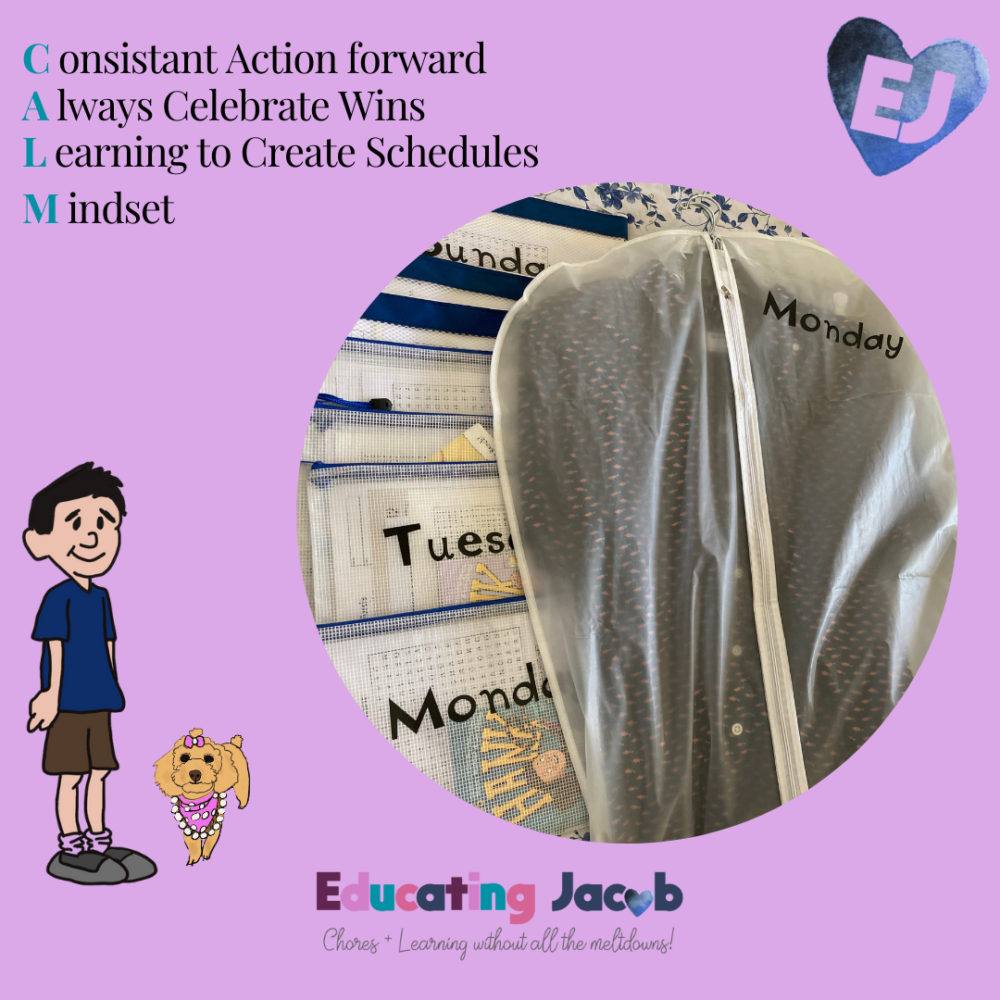
    When Jacob was younger, asking him to do anything without warning guaranteed a meltdown. His brain needed time to process transitions, and verbal demands felt overwhelming. A visual schedule became our Calm strategy—creating peaceful transitions by showing rather than telling. Craving CALM? 3 ways our CALM system turns autism’s behavior challenges into progress.

    Authentic Communication Without Words

    Schedules became Jacob’s voice when words failed him. Instead of struggling with verbal instructions, he could see his day laid out clearly. This Authentic approach honored his communication style and reduced daily friction.

    Learning That Builds Independence

    Every successful schedule completion built Jacob’s confidence. These Learning opportunities weren’t just about following rules—they were about developing the life skills he’d need as an adult.

    Meaningful Structure That Grows With Your Child

    Our schedules evolved from simple “First-Then” boards to complex monthly planners. This Meaningful progression showed Jacob (and us) how capable he truly was.

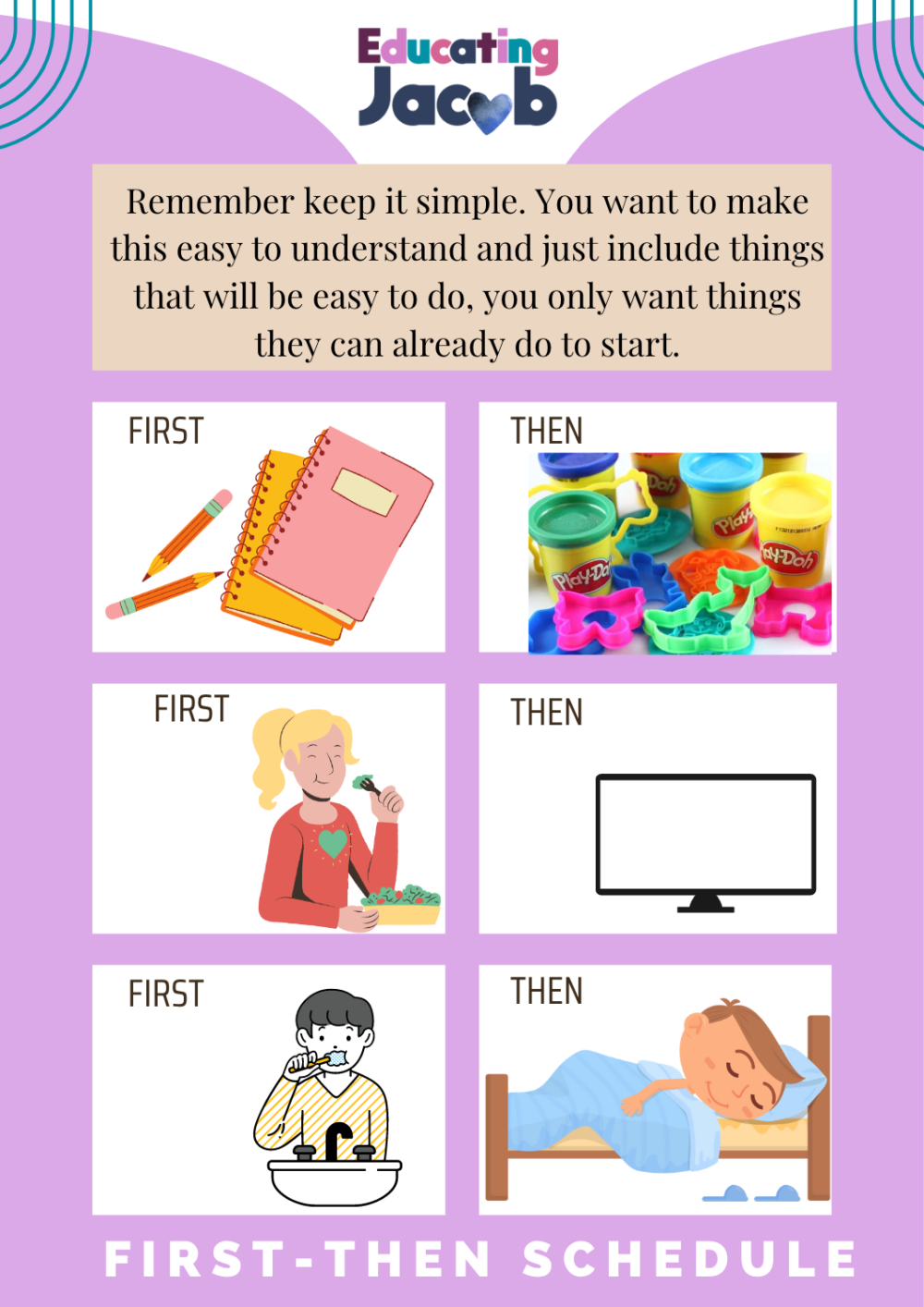
    To start, my first summer schedule was a : First – Then schedule.

    Organized-schedule-for-autistic-children
    Simple First Then Schedule

    To start, my first schedule was a First – Then. Meaning, first you do this…. Then you get this. After this is accomplished and your child is successful, then you can add another task. You can make a list and use pictures. There are so many different ways you can create a schedule and make it fit your life and your child’s needs.

    Jacob’s daily work schedule always has a small chapter book of some kind to keep him reading. During the summer Barnes and Noble usually offers free books to kids who read and turn in their list. Why Most Visual Schedules Fail (And How to Fix Yours)


    Organized-schedule-for-autistic-children-during-summer
    List daily schedule and add in specials so your child knows whats coming in days ahead!

    The CALM Summer Schedule System: From Chaos to Confidence

    Phase 1: Start Simple with First-Then Schedules

    Your first summer schedule should be beautifully simple:

    • First: Complete one preferred activity
    • Then: Earn one highly motivating reward

    Example: First breakfast, then iPad time.

    This builds success patterns and trust in the system before adding complexity. https://www.popsugarcafe.com/blogs/news/summer-schedule-ideas-autistic-children-calm-visual-and-family-friendly

    Phase 2: Expand to Daily Routines

    Once your child masters First-Then, expand to a full daily schedule:

    Jacob’s Typical Summer Weekday (Elementary Years):

    • 8:00 AM – Breakfast
    • 9:00 AM – Reading time (chapter book)
    • 10:00 AM – Educational activity
    • 11:00 AM – Free choice time
    • 12:00 PM – Lunch
    • 1:00 PM – Quiet time/rest
    • 2:00 PM – Outdoor activity
    • 3:00 PM – Structured play
    • 4:00 PM – Help with dinner prep
    • Evening routine…

    Phase 3: Master Monthly Planning

    Jacob at 27 still uses monthly schedules that include:

    • Daily routines and self-care reminders
    • Special events and appointments
    • Family schedule integration
    • Independent living skills practice

    Pro Tips for Schedule Success

    Make It Visual

    • Use photos of your actual child doing activities
    • Include pictures of preferred items and places
    • Consider apps like First-Then Visual Schedule or Choiceworks

    Build in Flexibility

    • Include “choice time” slots
    • Have backup activities ready
    • Allow for spontaneous family moments

    Celebrate Progress

    • Acknowledge schedule completion
    • Take photos of successful days
    • Let your child help update their schedule

    Real-Life Summer Schedule Ideas

    Learning Activities That Don’t Feel Like School:

    • Library visits and reading challenges
    • Cooking projects that teach math and following directions
    • Nature scavenger hunts
    • Art projects with step-by-step visual guides

    Sensory-Friendly Summer Fun:

    • Morning walks before it gets hot
    • Water play with scheduled breaks
    • Quiet indoor activities during peak sun hours
    • Evening family bike rides

    Community Connection:

    • Regular grocery store trips to practice social skills
    • Playground visits at less crowded times
    • Special needs swimming programs
    • Structured playdates with understanding families
    Summer Chaos Free:
    Summer-family-fun-on-the-schedulecreate-autism-friendly-schedules
    Pic’s of the family over the years during summer!

    When Schedules Go Wrong (And How to Fix Them)

    Problem: Your child resists the schedule completely. Solution: Start smaller. Maybe begin with just morning routine, then gradually add activities.

    Problem: Meltdowns still happen at transition times. Solution: Add visual countdown timers and “almost finished” warnings to your schedule.

    Problem: Siblings feel left out or resentful of the structure. Solution: Create family schedules that include special one-on-one time with each child.

    The Long-Term Payoff

    Jacob is now 27, and our early investment in summer schedules has paid dividends. He independently manages his daily routines, anticipates appointments, and even helps his younger cousins understand their schedules when they visit.

    The real magic? Those chaotic summer days transformed into our family’s favorite memories—beach trips Jacob could anticipate and prepare for, structured camping adventures he could pack for independently, and quiet reading mornings that became our special tradition.

    Your Next Steps: Creating Your CALM Summer

    1. Choose one transition that’s currently causing stress
    2. Create a simple First-Then schedule for just that moment
    3. Use pictures of your child and their actual environment
    4. Practice for three days, then celebrate success
    5. Gradually add one more scheduled activity per week

    Remember: Progress Over Perfection

    Every child with autism is beautifully unique. Your schedule might look different from Jacob’s, and that’s exactly how it should be. The goal isn’t perfect compliance—it’s creating a framework where your child can thrive, learn, and enjoy their summer alongside the whole family.

    Summer doesn’t have to be about surviving until school starts again. With the right CALM approach, it can become the season where your child’s confidence blooms and your family finds its rhythm.

    About the Author

    As both a special education teacher and autism mom, I’ve spent over two decades discovering what actually works for families like ours. My CALM strategies have helped thousands of families move from surviving to thriving. Connect with me at EducatingJacob.com for more practical autism parenting resources

    Read More

  • When Migraines Hit: How This Autism Mom Survived the Day (And You Can Too)

    Autism-Parent-Stress-Management
    Self-care for autism parents!

    How This Autism Mom Survived the Day


    Picture this: You wake up and your skull feels like it’s in a vise grip. Your teeth are throbbing. Even the thought of light makes you nauseous. But there’s no calling in sick when you’re parenting a child with autism. 😵‍💫

    Sound familiar? Why Hurting My Back and Foot Was So Scary: A Parent’s Journey with Autism

    I lived this exact scenario last Tuesday—and here’s what saved both my sanity and our day. These autism parent stress management techniques became my lifeline when I needed them most. 🛟

    Autism Parent Stress Management
    Autism Daily Routines = Independence

    The Reality of Autism Parenting: There Are No Sick Days 🚫🏠

    Here’s what most people don’t understand about raising a child with autism: every single day requires intention. Good days need structure. Hard days need structure. Days when you can barely lift your head off the pillow? They need the most effective autism parent stress management strategies you can find. 📅

    Research shows that children with autism are more likely to experience migraines and headaches than their neurotypical peers—but what about the parents? Between the constant vigilance, sensory overwhelm from our children’s needs, and chronic stress of navigating systems that weren’t built for our families, developing strong autism parent stress management skills becomes crucial for survival. 🧘‍♀️

    When my migraine hit, I had two choices: panic or rely on the autism daily routines and stress management systems I’d already built. ⚖️

    I chose systems. ✅

    The CALM Framework: Proven Autism Parent Stress Management 🌟

    Let me share what actually worked—not the Instagram-perfect version, but the real, messy truth of surviving when your body says “no” but your child still needs you. This autism parent stress management approach is battle-tested! 💯

    C: Consistent Routines Already in Place 🔄

    Jacob has Level 2/3 autism. He communicates through short phrases, movie quotes, and lots of pointing. On a good day, this requires patience. On a migraine day? It could have been a disaster without proper autism parent stress management in place. 😰  Summer Structure = School Success: Why Kids with Autism Need Predictable Routines Now!

    But here’s the thing: we’d already practiced this through our autism daily routines. 🎯

    ✅ His work bags were prepped for the entire week (Sunday prep saves Wednesday chaos) 📦 ✅ Visual schedules were posted and familiar 📋 ✅ His daily routine was so predictable that he could navigate it independently 🚶‍♂️

    When I curled up on the couch with an ice pack, Jacob didn’t panic. He looked at his visual schedule, grabbed his work bag, and got started. No meltdowns. No confusion. Just calm consistency. This is what effective autism parent stress management looks like in action! 🧊💙

    The Reality Check: When Preparation Saves You ⚠️

    I’ll be honest—there have been days, even recently, when I didn’t do what I should have. The zippered work bags weren’t put together in advance. The haircut that was scheduled got ignored. Sometimes you can get away with that and survive because you have wiggle room in your autism daily routines. 🤷‍♀️

    Once the routine is built and everyone understands how to work through the schedule, things can be changed without bad results. If I had woken up with that migraine and Jacob wanted a haircut, I could have easily changed the schedule to reflect another day without much of a problem—if his hair wasn’t overgrown and the cut hadn’t already been put off. In other words, if it wasn’t already on his nerves. 💇‍♂️

    But here’s what would have been a disaster: if he had come to me with an empty work bag while I was dealing with a pounding headache. I would have had to put that together even though I wasn’t feeling well, probably making both of us stressed and frustrated. 😵‍💫

    The Truth About Autism Parent Stress Management:

    We are human and things won’t get done sometimes. But if we stop being prepared consistently, it will not end well. We WILL get caught on days when we desperately need a break, and then the whole family will experience the chaos. This is why building these autism daily routines isn’t just helpful—it’s essential for effective stress management. 🌪️➡️☮️

    A: Always Celebrate Small Wins 🎉

    That day, “winning” looked like: 🏆

    • Jacob following his schedule without prompting ✨
    • Getting pizza heated up without burning down the house 🍕
    • Both of us making it through the day without major meltdowns 😌

    These weren’t small wins—they were everything for successful autism parent stress management! 💪

    L: Learning Through Visual Supports 👀📚

    Jacob’s communication challenges mean that verbal directions on a migraine day would have been impossible. But visual schedules? They speak his language perfectly and are essential components of both autism daily routines and autism parent stress management. 🗣️

    His picture schedule showed: 📸

    • Morning routine ☀️
    • Independent work time 💼
    • Lunch break 🥪
    • Quiet activity time 🤫
    • Evening routine 🌙

    No interpretation needed. No repeated explanations required. 🙌

    M: Mindset Shift: Progress Over Perfection 🧠💭

    The old me would have pushed through the migraine, probably making myself sicker and definitely making Jacob’s day harder. The new me with effective autism parent stress management? I accepted that survival mode was enough. 🛡️

    We ate frozen pizza. We watched more screen time than usual. Jacob did his work independently while I rested. And you know what? It was exactly what we both needed—successful autism parent stress management in real life! 🍕📺✨

    Why Autism Parent Stress Management Matters for Your Family 👨‍👩‍👧‍👦💙

    Whether your child is 3 or 30, whether they’re newly diagnosed or you’ve been on this journey for years—you need autism daily routines and stress management strategies that work even when you don’t. 🔧

    Recent research indicates that approximately 20 to 50% of individuals on the autism spectrum suffer from migraine or frequent headaches, and the stress of autism parenting significantly increases the risk for parents too. This makes developing strong autism parent stress management skills absolutely essential! 📊⚡

    This isn’t about being a “perfect” autism parent. This is about being a human one with effective stress management tools. 💝

    Your Next Steps: Building Stress-Proof Routines 🛠️📝

    Start where you are with these autism parent stress management strategies: 🏁

    This Week: 📅

    • Create one visual schedule for your child’s most challenging time of day 📋✨
    • Prep something ahead (snacks, activities, anything that removes decisions from hard moments) 🥨🎨
    • Practice one transition when you’re feeling good so it’s automatic when you’re not 🔄

    This Month: 🗓️

    • Build work bags or activity boxes for independent time 📦🎯
    • Establish predictable autism daily routines for mornings and evenings ☀️🌙
    • Create a “stress management plan” for your hardest days (yes, actually write it down) 📝💡

    Beyond: 🚀

    • Remember that teaching independence to your child with autism isn’t just good for them—it’s essential autism parent stress management for your survival as their parent 💪👨‍👩‍👧‍👦

    The Science Behind Autism Parent Stress Management 🧠⚡

    Both autism and migraines involve sensory processing differences and shared neurological patterns. We’re not just imagining that this parenting journey is overwhelming our nervous systems! But here’s what research-backed autism parent stress management teaches us: 🤯

    The same structured, visual, predictable autism daily routines that help our children thrive also create space for us to be human. To have bad days.  Needing to rest. To practice effective stress management. 😴💙

    Your child with autism doesn’t need you to be superhuman. They need you to be consistent, prepared, and present, which is much easier when you have proven autism parent stress management strategies and aren’t forcing yourself to function through preventable chaos. 🦸‍♀️➡️👩‍💼

    routines that support your child with autism
    You need autism daily routines that work even when you don’t. 🔧

    Ready to Master Autism Parent Stress Management? 🌊➡️☮️

    I spent years believing that good autism parenting meant sacrificing my own wellbeing. That stress was just part of the job. That my needs always came last. 😔

    I was wrong. ❌  Parenting a Child with Autism Level 2-3 Can Be Ra Ra Rough! Stay CALM

    Building autism daily routines that support your child with autism AND create space for your humanity isn’t selfish—it’s strategic autism parent stress management. It’s how we go from surviving to thriving, even on the days when your head is pounding and you can barely see straight.  https://www.funsensoryplay.com/how-to-make-a-sensory-room-at-home/💡🎯

    Because here’s the secret: when you take care of yourself using proven autism parent stress management techniques, you’re modeling something crucial for your child with autism. You’re showing them that everyone, even caregivers has limits, needs support, and deserves care. 🤗💕

    That’s not just good parenting. That’s good life preparation. 🌱📚


    Want to dive deeper into building autism-friendly routines that work for the whole family? The CALM framework has transformed not just our hardest days, but our everyday life. Because every autism family deserves autism daily routines and stress management strategies that support both the child and the parent—especially when life throws you curveballs. 💙🏡✨

    Read More

  • How We Celebrate ASD Communication: Beyond Just Words

    autism-communication-strategies
    Your love and presence count more than the special degree you have!

    Because Connection Doesn’t Always Sound Like a Conversation

    If you’re an autism parent drowning in daily chaos, exhausted from trying to talk your child through meltdowns, transitions, and overwhelming routines… this post is your lifeline.

    Because sometimes words just aren’t the bridge to autism communication strategies that actually work.

    When Traditional Communication Strategies Fall Short

    I used to think that if I just kept talking, explaining, and redirecting, Jacob would eventually understand. But all my talking felt like white noise to him—and let’s be honest, it made both of us more frustrated and stuck in that familiar cycle of autism anxiety.

    Jacob, my incredible son with level 2-3 autism, doesn’t communicate like most people. Words can be overwhelming, delayed in processing, or completely bypassed when anxiety is high. And trust me, high anxiety was our baseline for a long time—that suffocating feeling where every day felt like survival mode.

    The turning point? Realizing that autism communication strategies go far beyond words. And Jacob? He was already communicating—through behavior, gestures, looks, routines, and preferences.

    I just needed to listen differently and learn his language.

    Your Parent Bond is More Powerful Than Any Degree

    Here’s something I wish someone had told me back then: You don’t need a degree to connect with your child using effective autism communication strategies.

    Yes, I went back to school and got my degree in special education after Jacob’s diagnosis—but that paper didn’t unlock the magic. What really mattered was learning to see Jacob’s world, his signals, and his communication—his way.

    And guess what? You already have something more powerful than any credential:

    ➡️ The unbreakable bond you have with your child ➡️ Your commitment to figuring out what works ➡️ Your daily, relentless love that doesn’t quit

    You don’t need to be perfect. You need to be present and willing to try autism communication strategies that meet your child where they are.

    A-visual-schedule-gave-Jacob-a-language-he-could-understand
    Visual Schedules = Independence

    What We Celebrate in Our Autism Communication Journey 🎉

    We celebrate communication in all its beautiful, non-traditional forms:

    Pointing to the schedule. ✅
    Taking your hand to lead you. ✅
    Using a picture card or tapping on a device.✅
    Even repeating phrases they heard on YouTube (yep, echolalia counts—it has purpose!).✅

    And when Jacob started following his visual schedule consistently using our autism communication strategies—that’s when everything shifted. That’s when the chaos began to melt. That’s when the daily power struggles transformed. That’s when we finally started feeling like a team instead of opponents.

    Here’s another site you might like:https://specialedresource.com/keep-your-child-calm-while-at-home-with-adhd-autism-high-energy

    Our Game-Changing Autism Communication Strategies: Visual Schedules 📅

    Jacob thrives with fewer words and more structure. Why? Because visual schedules take the mystery out of his day and become one of the most effective autism communication strategies we’ve ever implemented.

    They give him:

    • A sense of control over his environment
    • Crystal-clear expectations
    • Immediate anxiety relief
    • No more guessing games about what’s next

    That’s why I built our CALM System, starting with the L: Learning to Create Schedules. It’s not just about stickers and pictures—it’s about creating a roadmap your child understands using proven autism communication strategies.

    structure-in-action-CALM
    Structure = Calm

    How Our CALM Framework Transformed Our Daily Life

    Our autism communication strategies helped us:

    Getting Started: Simple Autism Communication Strategies You Can Try Today

    If you’re reading this wondering where to begin with autism communication strategies, start here:

    Step 1: Observe Your Child’s Natural Communication

    Watch how your child naturally communicates—remember, behavior IS communication! Notice their patterns, triggers, and what they’re trying to tell you.

    Step 2: Reduce Words, Add Visuals

    Even just 3-4 picture steps can be a complete game-changer. Less talking, more showing.

    Step 3: Celebrate Every Small Win

    Eye contact, a pointed finger, following one step of a routine—every step forward is still forward, and these small wins build into major breakthroughs.

    Step 4: Stay Consistent

    Autism communication strategies work best when they’re part of your daily routine, not just crisis management tools.  How to reduce chaos at home with an autistic child using my CALM frameworks.

    You’re Not Alone in This Autism Communication Journey

    If you’re ready to ditch the chaos and implement autism communication strategies that actually work, grab our free CALM Visual Schedule Starter Kit and start creating a calm foundation at home today.

    This isn’t about perfection—it’s about connection, understanding, and giving your child the tools they need to thrive.

    Final Thoughts from One Autism Mom to Another ❤️

    Friend, I’ve been exactly where you are—sitting in the parking lot crying, wondering if anything will ever get easier, questioning if these autism communication strategies will work for YOUR child.

    But slowly, with the right tools, support, and faith in your child’s abilities, it does get easier. The chaos transforms into calm. The power struggles become partnerships. And those autism communication strategies that felt impossible? They become second nature.

    You’ve got this, and you’re not walking this path alone. 💙

    Ready to transform your daily chaos into calm? Download our free CALM Visual Schedule Starter Kit and start implementing these autism communication strategies today.

    Read More

  • How a Visual Schedule for Autism Gave My Son Independence 📅✨

    Visual-schedules-for-autism
    Visual Schedules were our golden ticket! 🎟️

    Visual Schedule for Autism=Independence 📅

    When Jacob was little, our house felt like a pressure cooker ready to explode at any moment. Every morning started with me mentally preparing for battle, would today bring three meltdowns or five? Would I be able to get him dressed, fed, and out the door without both of us in tears?

    Parenting a child with level 2–3 autism means routines matter but no one tells you how much structure your child actually craves until you’re drowning in meltdowns and overwhelm. I remember standing in my kitchen at 7 AM, Jacob screaming because I’d put his toast on the wrong plate, and thinking, “There has to be a better way.” Looking for a better way? Visual Schedules reduce Chaos!

    The smallest changes sent our world spinning. If we ran out of his favorite cereal, if his usual shirt was in the wash, if we had to take a different route to school—chaos. Language was too much for him to process. Transitions triggered anxiety that rippled through our entire day. New experiences led to meltdowns that left us both exhausted and defeated.

    I felt like I was failing him. I felt like I was failing myself. We were all running on empty, and I was desperate for something—anything—that would help my son feel safe in his own world.

    That’s when I discovered the power of a visual schedule for autism—and it truly changed everything for our family.

    A-visual-schedule-gave-Jacob-a-language-he-could-understand
    I used less language that would cause meltdowns! Win-Win!

    Why Visual Schedules Work When Language Doesn’t

    Here’s what I wish someone had told me earlier: Jacob’s brain wasn’t broken. It was just wired differently. He struggles with processing delays and speech-language challenges that make verbal instructions feel like trying to catch water with your hands. Even the simplest directions—”Jacob, time to get dressed”—felt like too much information coming at him too fast.

    But when I showed him his day in pictures, something amazing happened. It was like watching a light switch flip on.

    ✅ He understood what was coming next
    ✅ He felt safer and less anxious
    ✅ He started transitioning without meltdowns
    ✅ He began seeking out his schedule independently

    A visual schedule gave Jacob a language he could understand—a system that made his unpredictable world suddenly predictable. For the first time, he could see his entire day laid out in front of him, and that visibility brought him peace.

    The science backs this up too. Children with autism often process visual information more effectively than auditory information. When we remove the language barrier and communicate through pictures, we’re literally speaking their brain’s preferred language.

    Visual Schedules for autism
    Make Visual Schedules part of the daily routine and watch the magic happen!

    It’s More Than Just Pictures—It’s Power

    Once we started using a visual schedule for autism, I could finally communicate Jacob’s day without overwhelm—for either of us. But here’s what surprised me most: it wasn’t just about reducing meltdowns. It was about giving Jacob power over his own life.

    We added everything to the schedule, and I mean everything:

    • 🧩 Schoolwork (using labeled zipper bags with visual task cards)
    • 🧼 Chores (with step-by-step picture checklists he could follow independently)
    • 🧺 Laundry routines (with garment bags and sorting visuals)
    • 💊 Medications (organized by day with a color-coded pill box)
    • 🎮 Free time (his favorite activities clearly depicted)
    • 🧃 Mealtimes and snacks (with options he could choose from)
    • 🛍️ Store trips and errands (with social stories about what to expect)
    • 🛁 Self-care routines (brushing teeth, washing hands, getting dressed)

    Every part of the day became clear and simple. But most importantly—Jacob had choice. He could see his options laid out visually and feel in control of his decisions. That built confidence and independence in ways I never expected.

    I watched him start making choices about the order of his activities. He’d move his schedule cards around, deciding whether to do math before or after his snack. He began taking ownership of his day instead of just surviving it.

    Visual Schedules = Confidence and Calm

    Using a visual schedule gave us so much more than peace—it gave Jacob:

    Independence – He could complete routines without constant prompting
    Predictability – His world finally made sense
    A role within the family – He became an active participant, not just a passenger
    A way to understand new routines – Changes became manageable instead of catastrophic
    Self-advocacy skills – He learned to communicate his needs through the schedule

    We even used the schedule to prep for upcoming changes like doctor visits, family outings, or holiday disruptions. It became our tool to reduce anxiety and build success before challenges even arose. When Jacob could see exactly what would happen at the dentist’s office—from checking in to sitting in the chair to getting his sticker—the unknown became known.

    And you know what? I got something too.

    I got my sanity back. I got to take a shower without planning a crisis management team. I got calm in the chaos. I got to be Jacob’s mom again, not just his crisis manager. Parenting a Child with Autism Level 2-3 Can Be Ra Ra Rough! Stay CALM

    For the first time in years, I could breathe. I could plan. I could even enjoy moments with my son instead of constantly bracing for the next meltdown. https://themonterabbi.com/help-nonverbal-autistic-kid-speak/

    You Don’t Need to Be Perfect—You Just Need to Start

    Here’s the thing, friend. If you’re reading this at 2 AM after another difficult day, feeling like you’re drowning in the overwhelm of autism parenting, I see you. I’ve been exactly where you are.

    And here’s what I want you to know: it doesn’t have to be complicated.

    You don’t need fancy laminated cards or Pinterest-perfect organizational systems. Start with sticky notes. Use printed photos from your phone or simple symbols drawn on index cards. Take pictures of your child doing their actual routines in your actual house—those work better than generic stock photos anyway.

    Don’t wait for the perfect system—start with what your child can understand today. Maybe it’s just three pictures: breakfast, play, nap. Maybe it’s showing them what comes after their current activity. Small steps count.

    Visual schedules for autism aren’t about perfection. They’re about giving your child a lifeline—and giving yourself room to breathe.

    At educatingjacob.com, we teach parents exactly how to create these life-changing visual systems. We show you how to identify what your child needs, how to create schedules that actually work, and how to build independence step by step. Because every child deserves to feel confident and every parent deserves to feel calm. Stop Morning Chaos: How to start using Visual Schedule for Autism and CALM

    Remember: Every visual schedule you create is another step toward independence for your child, less anxiety in their daily life, and more peace for your entire family. We’re cheering you on! 💙

    💬 Tell Me: Have You Tried a Visual Schedule?

    Drop a comment or DM me @educatingjacob. I’d love to know what’s worked for your child—and what hasn’t. What part of your day feels most chaotic right now? Let’s build this village together, one calm routine at a time. 💛

    Because you’re not alone in this journey, and your child’s success is worth every small step you take today.

    Read More