Blog

  • šŸŽƒ 3 Fun Halloween Decorating: Autism Sensory Activities at Home

    šŸŽƒ-Autism-Island-Halloween-Fun-šŸļø
    Let the fun Begin!

    šŸŽƒ Fun Decorating: Autism Sensory Activities at Home

    As parents on Autism Island šŸļø, we know life can feel heavy and overwhelming at times. But I’ve also learned that choosing joy and making room for fun matters just as much as structure and therapy. For our family, decorating for the holidays—especially Halloween šŸŽƒā€”has become one of the ways we turn ordinary days into something Jacob looks forward to.Ā Give Your Child with Autism a Visual Schedule, Create CALM Days! šŸ“…āœØ

    This season, I want to share some DIY sensory activities for autistic children and how creating a sensory-friendly space at home has given us calm, joy, and connection šŸ’œ, even during the busiest or hardest moments.


    šŸ–Œļø DIY Sensory Activities for Autistic Children

    Sensory play doesn’t have to be complicated. Some of the most effective (and fun!) activities are things you can do with what’s already at home:

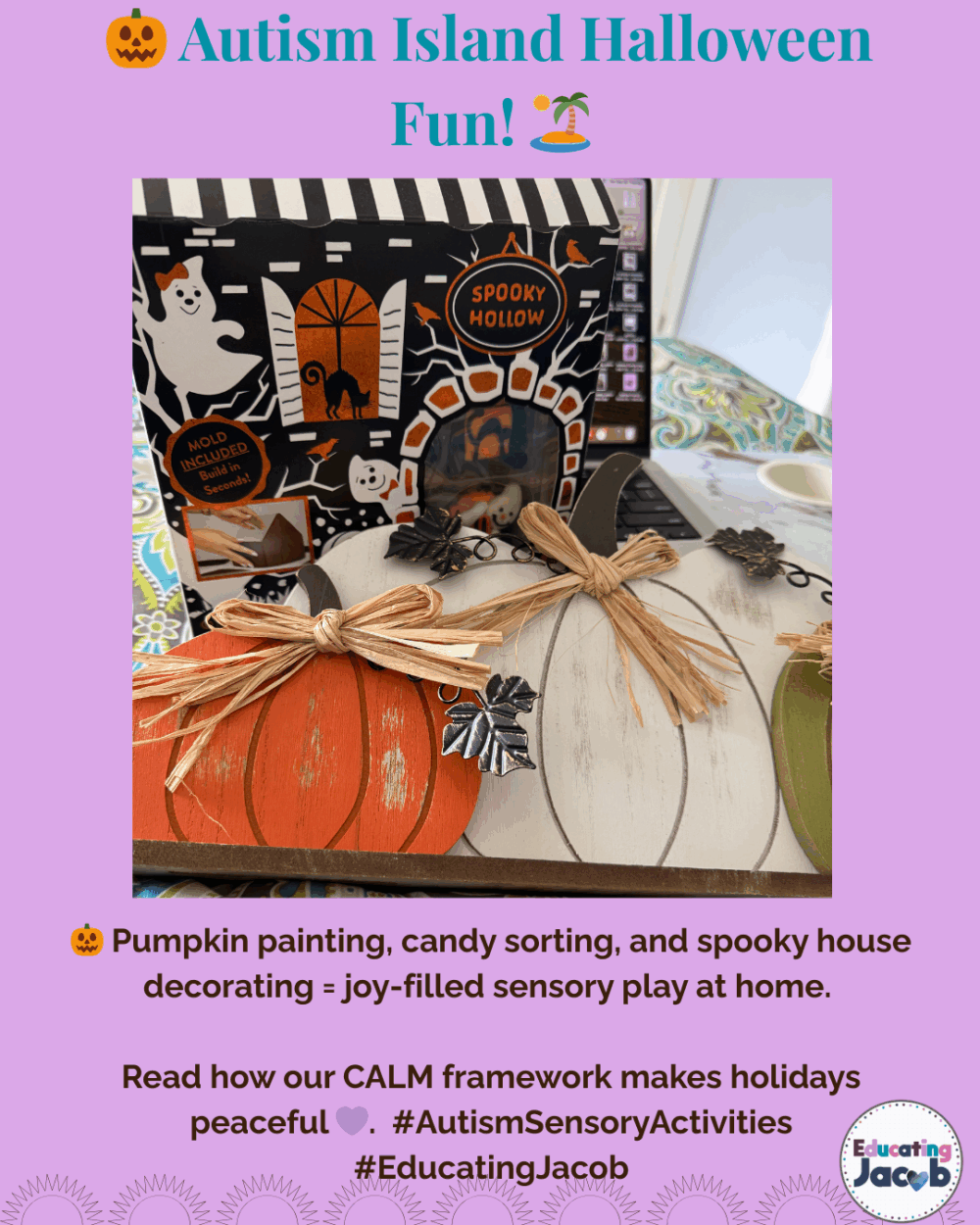
    • Pumpkin Fun šŸŽƒ
      Jacob doesn’t always want to carve a pumpkin, but he loves the choice of how to decorate it—whether that’s drawing a silly face with markers āœļø, painting it with bright colors šŸŽØ, or scooping out the seeds and feeling the textures. On good days, we’ll roast the seeds afterward for a crunchy snack, turning the sensory mess into a tasty reward.
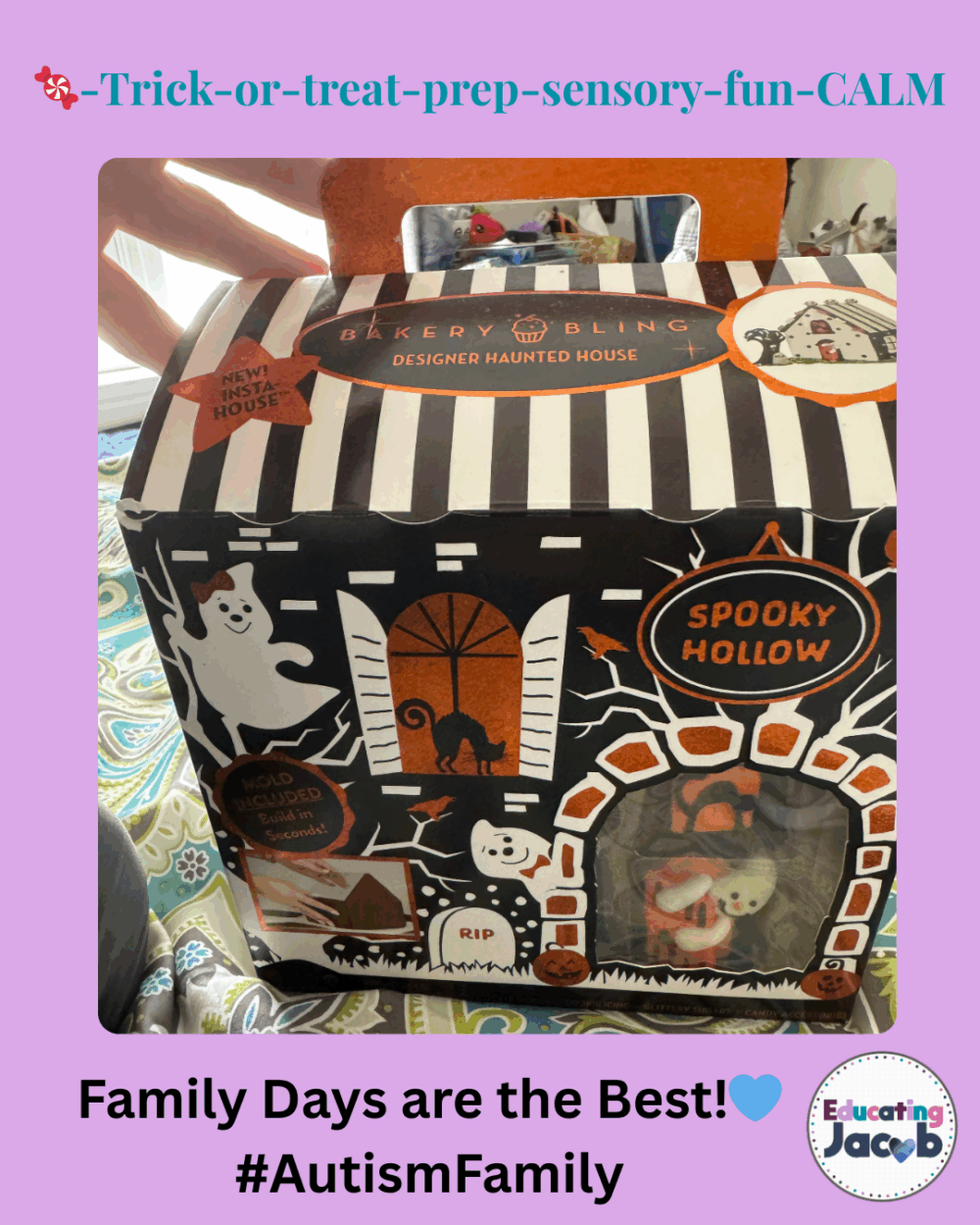
    • Halloween House Decorating šŸ šŸ¬
      This year we discovered something new at our Fresh Market grocery store: a Halloween house kit (think gingerbread house but spooky šŸ‘»). It’s full of candies, sprinkles, and chocolate pieces from other countries šŸŒŽ. Jacob and I get to explore textures and tastes while practicing patience as we put it together—though a few candies usually disappear along the way!
    • Candy Sorting & Trick-or-Treat Prep šŸ­šŸ«
      Jacob doesn’t dress up much anymore, but he enjoys helping organize candy for trick-or-treaters. Sorting by color, type, or size is not just fun—it’s also a calming activity that taps into his love of order. When trick-or-treaters arrive, sometimes his dad dresses up as Darth Maul or The Dark Knight šŸ¦‡, and the laughter from kids at the door helps Jacob engage too.

    These activities let us practice the C in CALM—Consistent Action Forward. Even if Jacob only participates a little, he knows what to expect and looks forward to the traditions every year.Ā Parenting a Child with Autism Level 2-3 Can Be Ra Ra Rough! Stay CALM
    šŸ” Creating a Sensory-Friendly Space at Home

    Not every day is easy. There have been years when I’ve been too overwhelmed, too tired, or too stuck in the weight of life on Autism Island šŸļø to even pull decorations out of storage. That mom guilt creeps in fast šŸ˜”.

    But I’ve learned that the A in CALM—Always Celebrate Wins—applies here too. Even if I only set out one pumpkin šŸŽƒ or light a fall-scented candle šŸ•Æļø, it creates a sensory-friendly reminder that joy still has a place in our home.

    Here are a few ways we make spaces calmer and more engaging for Jacob:

    • Lighting Choices šŸ’”: Instead of flashing lights or spooky strobes that overwhelm, we use soft orange string lights or a glowing pumpkin lamp to keep the vibe cozy.
    • Quiet Corners šŸ›‹ļø: When trick-or-treating or Halloween parties become too much, Jacob knows he can retreat to his sensory space with a weighted blanket and his favorite movie šŸŽ„.
    • Seasonal Journaling āœļøšŸ“–: I use my own notebook or calendar to reflect, pray šŸ™, and notice where God has carried us through tough times. Writing helps me shift my mindset (the M in CALM) and reminds me that Jacob is growing, even if the progress feels slow some days.


    Autism Sensory Activities at Home
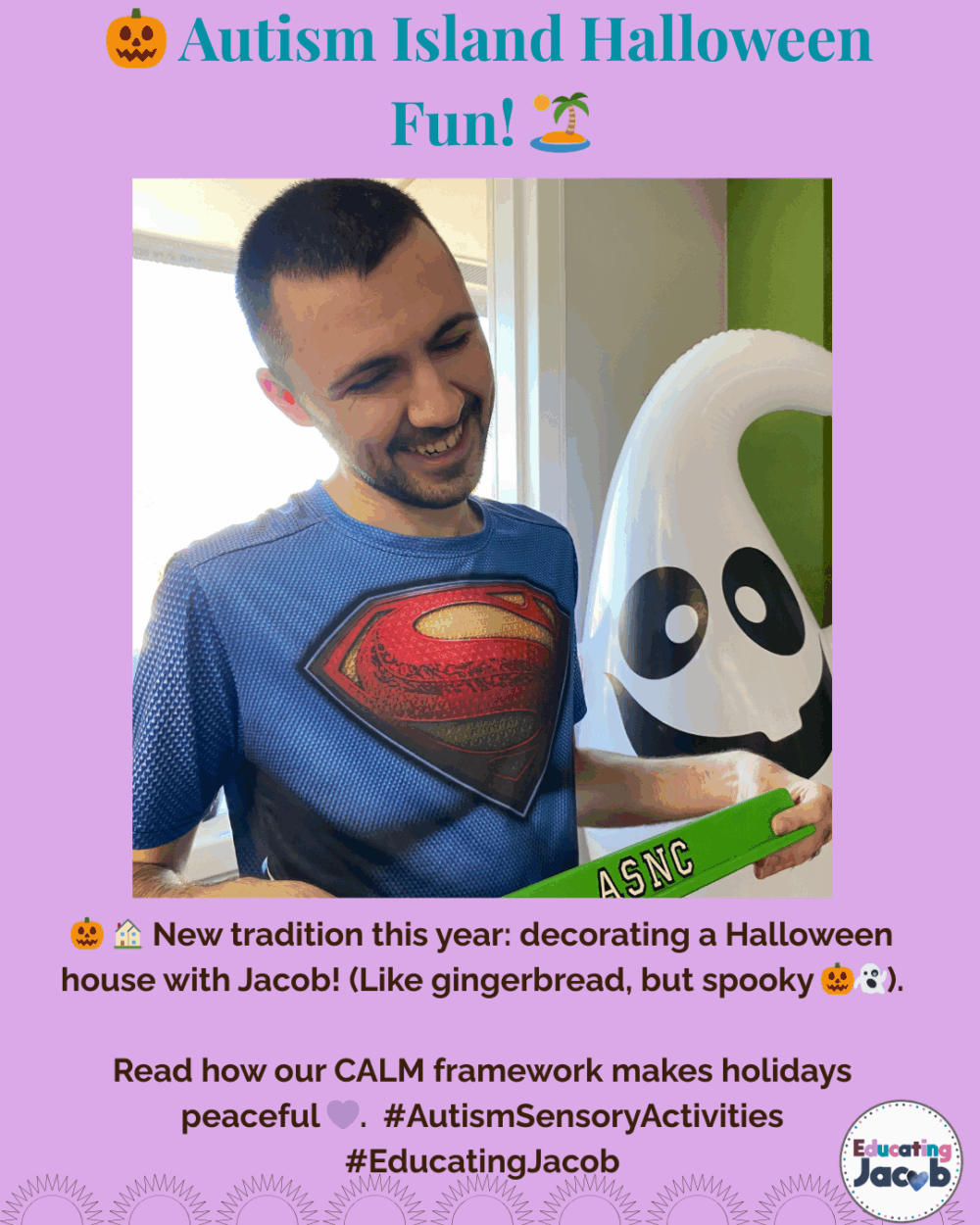
    šŸ  New tradition this year: decorating a Halloween house with Jacob! (Like gingerbread, but spooky šŸŽƒšŸ‘»).

    šŸ’œ Embracing Gratitude and Holiday Joy

    I want Jacob to have the happy memories that his brother Nicholas had when he was younger. Our circles may be smaller now, but that doesn’t mean life is less full. Holidays give us a reason to pause āøļø, breathe šŸŒ¬ļø, and enjoy each other.

    This season has been a little overwhelming for me. I’m back in the classroom full time šŸŽ, still keeping EducatingJacob going šŸļø, and trying to hold together our schedules so Jacob feels calm and secure. Between being tired and stressed about things I can’t control, I’ve had to remind myself of this truth: God is in control šŸ™. When I stop, breathe, and trust, I can calm myself enough to enjoy the moment instead of letting stress steal it away.

    I’ve also learned that I always need a plan. On Autism Island, being reactive only leads to chaos and frustration. When I plan even in small ways it sets Jacob and me up for success. That’s really the heart of the CALM framework in action.Ā https://www.merakilane.com/autism-parenting-8-tips-cope-caregiver-fatigue/

    So whether Jacob is drawing a pumpkin face šŸŽƒ, sneaking candy šŸ¬ while decorating a Halloween house, or standing by the door 🚪 to watch the costumes parade by, these are the moments that matter.

    To other parents: think of things your child will truly enjoy, whether that’s drawing, painting, carving, or just supervising with a smile 😊 and include them in the fun. Even the smallest traditions can create the biggest memories.

    This is how we live out the L in CALM—Learning to Create Schedules. We make space for joy, plan sensory-friendly activities, and allow flexibility for however much our child wants to engage.Ā Looking for a better way? Visual Schedules reduce Chaos!

    ✨ Final Thought

    Life on Autism Island can be overwhelming, especially when you’re juggling work, family, and the never-ending schedules but decorating and fun remind us that joy belongs here too. Let’s pause, trust God’s plan, and celebrate the little things because these are the memories our kids will carry forward šŸ’œ.


    Read More

  • 3 Practical Tips For Parents To Boost Schoolwork Motivation Using Effective Schedules

    Monday_Friday_Work_Schedule_Pouches
    This is a picture of Jacob’s Monday-Friday zippered pouches that hold his work!

    Hello Autism Island Parents,

    Let’s talk about a battle we all face, boosting autism homework schedules.

    On Autism Island, getting through schoolwork can feel like climbing a mountain with flip-flops on. šŸ˜… The tears, the resistance, the ā€œI don’t want to do it!ā€ā€”sound familiar?Ā https://pmc.ncbi.nlm.nih.gov/articles/PMC2926912/

    But here’s what we’ve learned with Jacob: the secret isn’t forcing the work, it’s building a schedule that makes schoolwork feel doable, predictable, and even motivating.

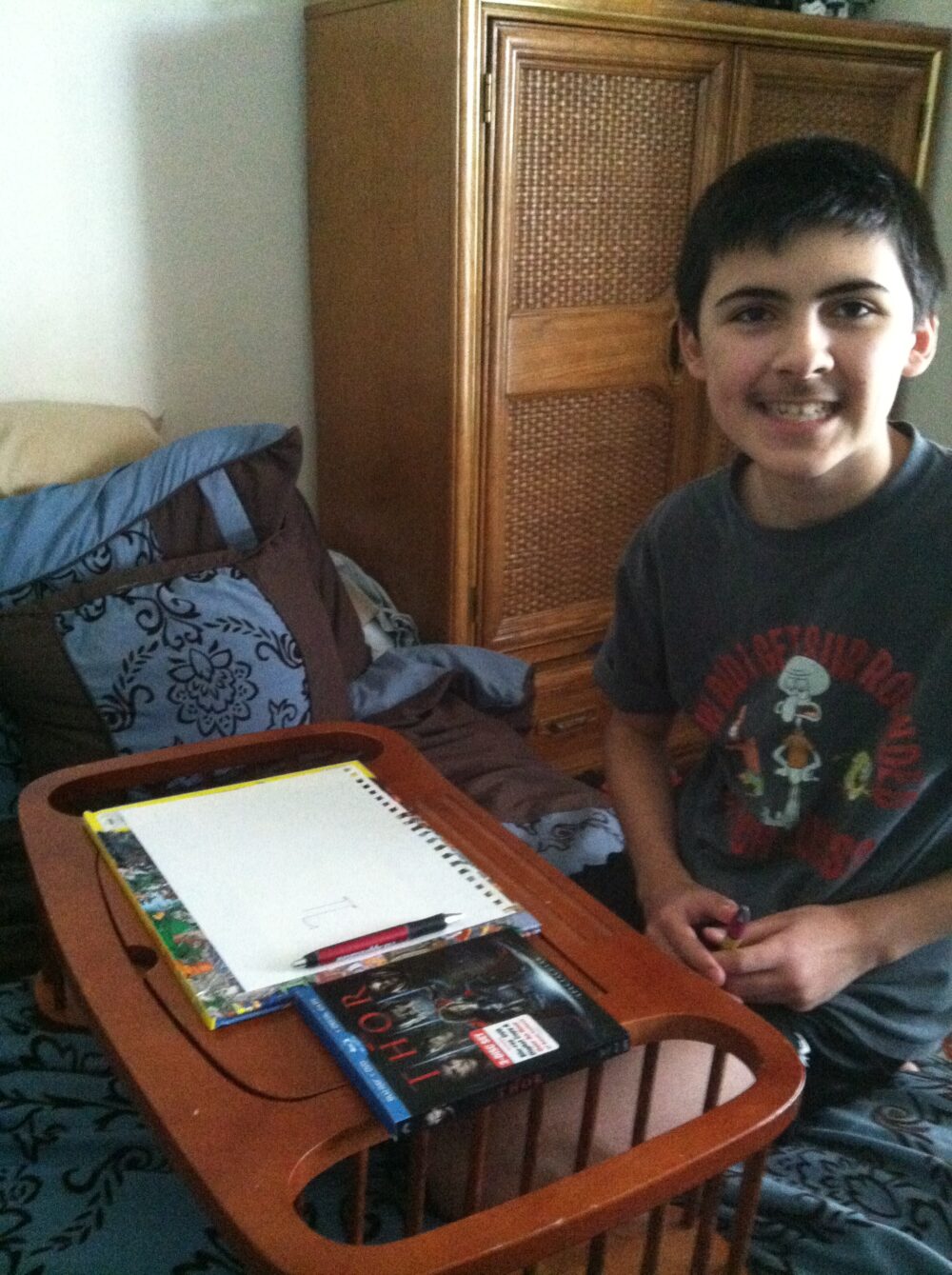
    Here are 3 practical tips for boosting autism homework schedules that have worked in our home, powered by our CALM Framework.In the picture below Jacob is drawing after completing a work assignment, the first assignment was math and not that enjoyable but the next thing on this schedule was free time for drawing or watching a movie of his choice.Ā How a Visual Schedule for Autism Gave My Son Independence šŸ“…āœØ

    movies_drawing_fum
    This is Jacob drawing something from a movie cover after homework is complete!

    1. āœļø Engaging and Personalized Schedule Creation

    Children on the spectrum thrive when they can see and predict what’s coming. That’s why creating a visual schedule together makes all the difference.

    When Jacob was younger, we used first-then schedules—a math worksheet icon followed by a picture of play-doh or his favorite DVD cover for break time. Seeing the reward built in made the harder work less overwhelming.

    Even today, I still let him choose. He may start with math (not his favorite), but he knows drawing or movie time comes right after. That balance keeps him motivated.

    šŸ’” CALM Strategy – C: Consistent Action Forward
    Schedules don’t have to be perfect—they just need to move forward. Jacob knows that every assignment is followed by something he enjoys, which keeps him from stalling out completely.Ā Looking for a better way? Visual Schedules reduce Chaos!

    schedule-fun-jacob-is-the-hulk-barnes-and-noble
    Jacob having fun at Barnes and Noble after a week of completed work!

    2. šŸŽ‰ Reward and Recognition System

    Schedules alone aren’t magic—celebrating wins is what makes them powerful.

    In our home, rewards have looked different over the years:

    • šŸ• A trip to Panera or his favorite pizza place
    • šŸ“š A trip to Barnes & Noble to pick a new book
    • šŸ–ļø Extra time drawing or watching a favorite movie

    Just recently, after finishing a week’s worth of work bags, Jacob earned his bookstore trip. He walked in with the biggest smile—that moment was worth every bit of planning.

    šŸ’” CALM Strategy – A: Always Celebrate Wins
    Jacob doesn’t always love the process, but he thrives when we celebrate his progress. These rewards remind him that effort matters. Even small wins deserve big celebrations.Ā Inside Our Day: A Calm Autism Routine That Works

    Jacob_reading_when_he_first_started_using_schedules
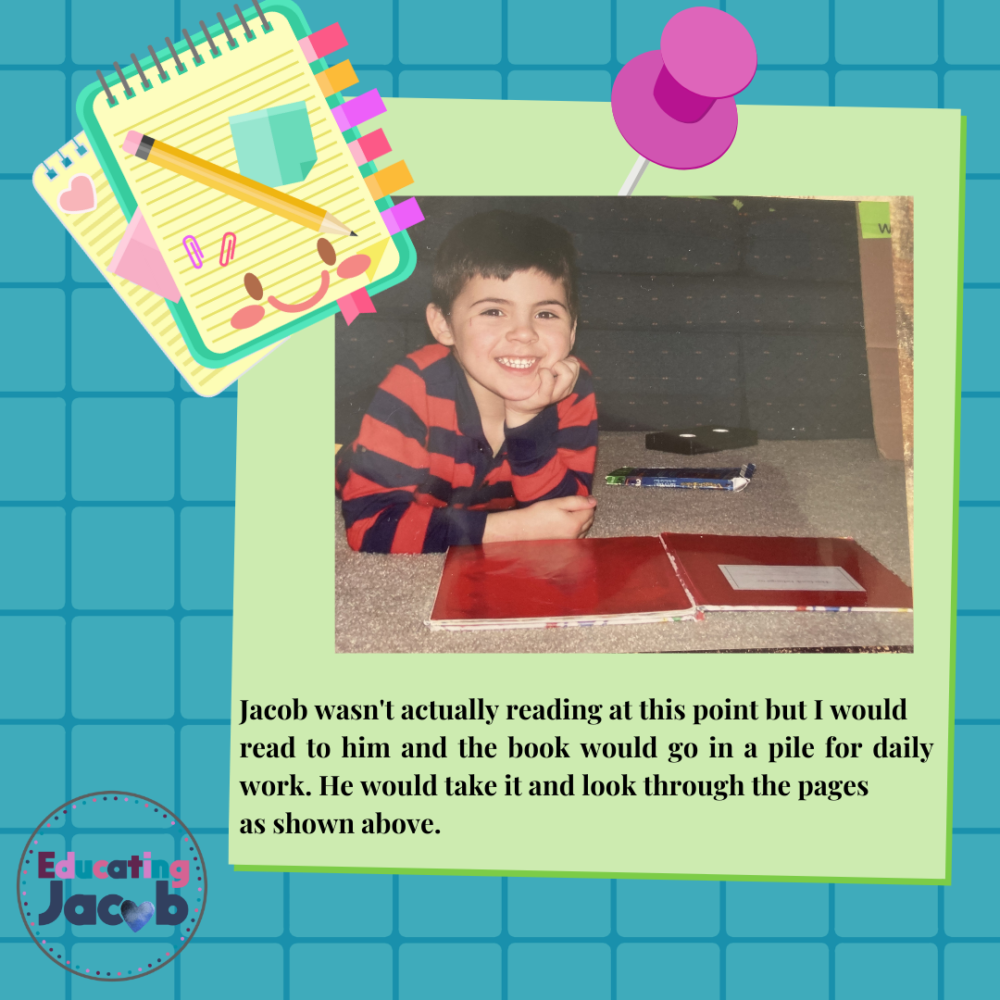
    This is Jacob reading a story book that was in his first_then work schedule!

    3. šŸ¤ Consistent Support and Encouragement

    Homework is not a solo journey it’s teamwork.

    There were days Jacob fought every bit of the schedule. But instead of turning it into a power struggle, I sat with him. I offered support, reminders, and reassurance: ā€œYou can do this, I believe in you.ā€

    Consistency matters. By showing up and keeping the schedule steady, Jacob learned that:

    • Work time is temporary
    • Breaks are coming
    • Mom is calm (well, most of the time šŸ˜…)

    šŸ’” CALM Strategy – L: Learn to Create Schedules & M: Mindset
    Jacob thrives when the schedule is steady and when I stay calm. The mindset shift for me was realizing it’s not about forcing schoolwork—it’s about teaching him that he’s capable, even when the task feels hard.

    šŸ“– Why Schedules Work for Autism Motivation

    Motivation in children can be intrinsic (they love the subject) or extrinsic (they’re working for a reward). For many kids on the spectrum, schoolwork falls into the ā€œextrinsicā€ camp at first.

    That’s okay! With consistent schedules, praise, and structure, your child can build confidence and even discover moments of intrinsic motivation.

    When Jacob was little, his first-then picture schedules gave him the courage to finish math and move on to something fun like play-doh. Over time, he began to expect success, not failure, which grew his willingness to try.

    🌟 Final Thoughts from Autism Island

    Boosting autism homework schedules isn’t about perfection. It’s about giving your child predictability, balance, and small wins that add up to big confidence.

    Every time Jacob finishes his work bags without frustration—or earns his bookstore trip—I’m reminded: the schedule isn’t just about schoolwork. It’s about teaching him life skills, building resilience, and creating calm for our whole family.

    So mama, grab those markers, build that visual schedule, and don’t forget to celebrate the small victories. Because every checkmark, every smile, every calm moment—those are the steps to long-term success. šŸ’™

    Read More

  • 3 Ways Labor Day, Thanksgiving, and Christmas All Have Issues on Autism Island!

    The Holidays Are Coming… and So Is Chaos (Unless You Plan!)

    Let’s talk about autism holiday routine tips: Labor Day, Thanksgiving, and Christmas are meant to be joyful, restful, even sacred.

    But if you’re parenting a child on the autism spectrum, especially a Level 2 or Level 3, then you already know: holidays often bring the perfect storm of disruption.

    I call it Autism Island Weather. šŸŒŖļø One minute it’s sunshine and visual schedules, the next, you’re elbow-deep in meltdown management.

    Whether it’s Labor Day’s long weekend, Thanksgiving’s full house, or Christmas’s gift-wrap sensory overload, here are three reasons holidays are hard—and how our CALM Framework keeps our home grounded. Looking for a better way? Visual Schedules reduce Chaos!

    1. šŸ—“ļø Routine and Schedules? What Are Those?

    Our kids thrive on structure. Jacob lives by his visual schedule—and when holidays hit, that reliable rhythm? Out the window.

    Just this past Labor Day weekend, things looked promising. Nicholas, everyone’s favorite big brother, came home Saturday yay! But even good change is still change on Autism Island. We had it on the calendar. We talked it through. Jacob was ready.

    But then I got sick. Sinus, allergies, migraine—the whole trifecta. By Sunday, I was in bed, vomiting, texting my husband David to come home from work because I couldn’t feed Jacob. Nicholas had to head back to Raleigh. The plan was off track.

    The only thing that saved us? Everything else was in place.

    • āœ… Jacob’s work bags were ready for the week
    • āœ… His visual schedule was still visible
    • āœ… Favorite meals like pizza and burgers were already cooked
    • āœ… He could see what to expect—even when I wasn’t functioning

    šŸ’” CALM Strategy – C: Consistent Action Forward
    Even when the plan shifted, the structure didn’t. We had consistently built routines he could fall back on. That consistency helped him navigate the weekend without falling apart even when I was.

    Autism holiday routine tips
    Chloe sticks close to make sure I’m feeling better! Having routines helps when I’m sick!

    2. 🤧 Someone’s Always Sick (Usually Me)

    If you’re a parent, you know this story: the minute you take time off for rest, your immune system collapses. For me, this long weekend meant a migraine from the underworld that knocked me flat.

    And let’s be real: when you’re raising a child with autism, being sick isn’t just inconvenient it’s dangerous to the delicate balance of your household.

    Jacob was expecting Panera Bread on Sunday, like always. That’s our thing. Our outing. A marker in his routine. And when I didn’t get out of bed, you could see the wheels turning—“This is different.”

    But he didn’t panic. He didn’t scream or melt down.

    Why?

    Because his schedule still had anchors. Panera didn’t happen—but burgers did. David heated up the food. The evening played out like the visual cues suggested.

    šŸ’” CALM Strategy – L: Learn to Create Schedules
    Years ago, missing Panera would’ve sent us all into a spiral. But we’ve learned to build schedules that don’t rely on me being Supermom every second. That structure—visual, repeatable, consistent—isn’t just for Jacob. It’s for me, too. It keeps all of us afloat.

    autism-parenting-be-prepared
    Sick = Chaos if you’re not prepared. It makes a bad day worse!

    3. šŸŽ‰ Anticipation Doesn’t Cancel Out Anxiety

    Jacob adores Nicholas. He counted down the days to see his big brother. But excitement and anxiety walk hand-in-hand on Autism Island.

    This is true for every holiday. Christmas might mean presents, but it also means wrapping paper, different food, visitors, noise, and surprises. Thanksgiving might mean pumpkin pie, but it also means smells, textures, unfamiliar faces, and overstimulation.

    Even with the best of intentions, holiday joy can feel like chaos.

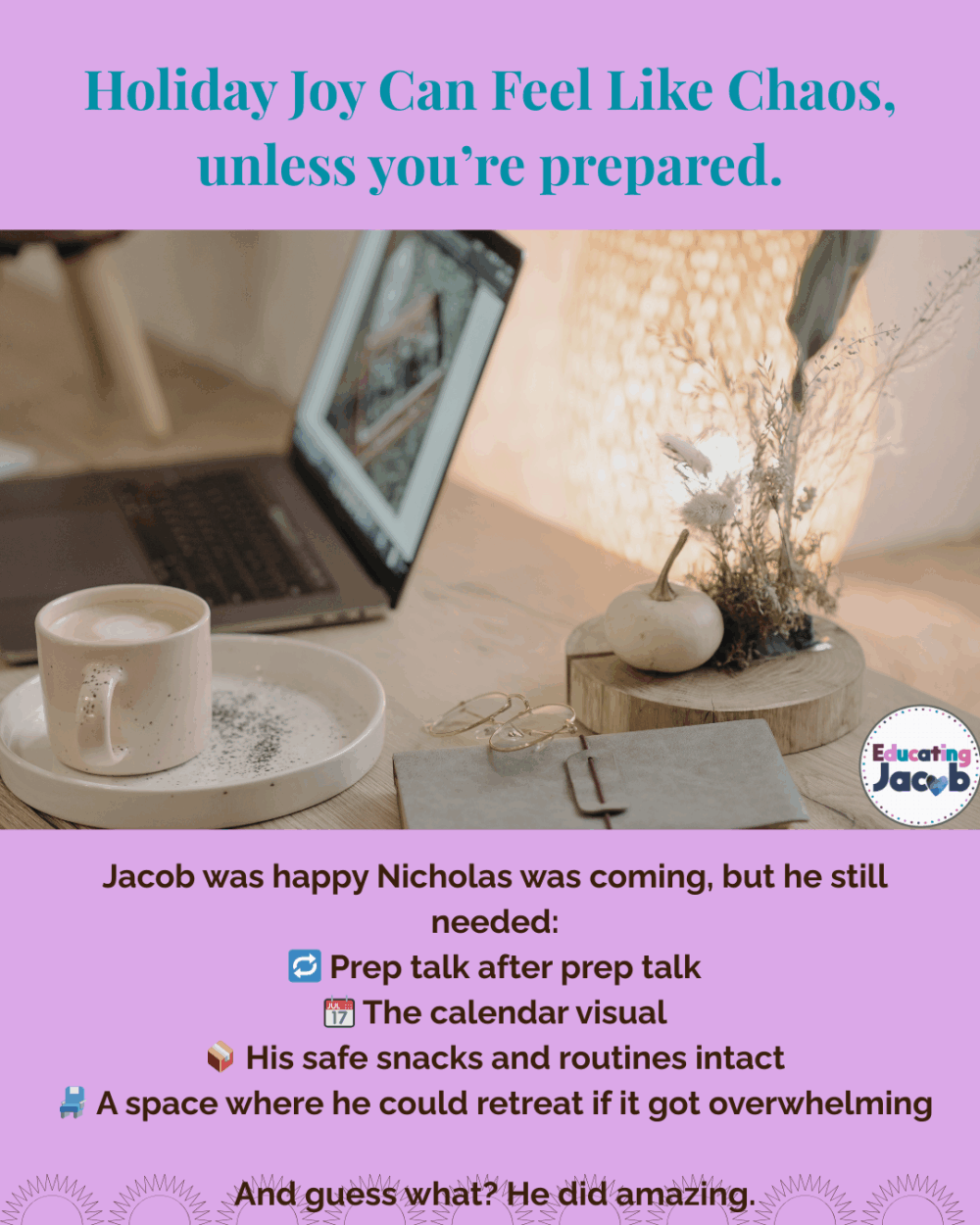
    Jacob was happy Nicholas was coming, but he still needed:

    • šŸ” Prep talk after prep talk
    • šŸ“† The calendar visual
    • šŸ“¦ His safe snacks and routines intact
    • šŸ’ŗ A space where he could retreat if it got overwhelming

    And guess what? He did amazing.

    No meltdown. No shutdown. Just calm—even when the plan had holes.

    šŸ’” CALM Strategy – M: Mindset for You and Your Child
    You have to shift the mindset: your child might look forward to the holiday, but they still need support to handle it. Just because they love their brother doesn’t mean they can emotionally process all that change without help.

    And you need grace, too. It’s okay to mourn the perfect moment you imagined. We didn’t get family movie night. I was asleep. But we got peace—and sometimes that’s the win worth celebrating.Ā This too shall pass, how we changed our mindset on autism island!

    šŸ’” What You Can Do Before the Next Holiday:

    • āœ… Build visual countdowns to holidays, starting several days out
    • āœ… Prep favorite meals or snacks early—your child’s comfort food matters!
    • āœ… Keep some routines the same, even if others shift
    • āœ… Set realistic expectations for yourself and your family
    • āœ… Celebrate the small wins—a meltdown-free morning is a victory!

    If you’re on Autism Island, just know you’re not alone.
    You’re not doing it wrong. The holidays are just hard. But you don’t have to let them sink your ship. Here’s an article I found if you are new to autism, check back on my older blog posts too.Ā  https://www.merakilane.com/how-to-cope-9-parenting-tips-for-overwhelmed-autism-moms/

    With the CALM Framework, even the biggest disruptions can be softened into manageable transitions. And the good news? Your child doesn’t need perfect. They just need you—CALM, prepared, and present.


    Read More

  • When the Guilt Hits Hard: Autism Level 2–3, Meltdowns and Mom Regret

    autism-parenting-emotional-burnout
    Some days the mom guilt never stops!

    Autism Parenting Emotional BurnoutĀ 

    If you’re parenting a child with level 2 or 3 autism, you probably know this feeling all too well:

    • “Did I choose the right therapy?”
    • “Should I have pushed harder… or backed off?”
    • “Am I failing them?”
    • “Will they ever be able to live independently?”
    • “Can I survive this long term?”

    Mom guilt and emotional burnout are real and they’re heavy. They sneak in at 2am after a meltdown or after you say something with too sharp a tone. They show up at the IEP meeting, at the grocery store, when friends post graduation photos or college acceptance letters.

    We carry the weight of every choice, and every what if. But here’s the truth I’ve learned, walking this road for 27 years: Guilt is not a strategy. Structure is.

    Why Autism Parenting Burns Us Out

    Level 2–3 autism often means:

    • Limited communication
    • High support needs
    • Behavioral challenges
    • Constant supervision
    • Uncertainty about the future
    • Sensory overload management – Many parents become hypervigilant about environmental triggers, adding another layer of mental load
    • Social isolation – When meltdowns happen in public or social events become impossible, parents often withdraw, increasing feelings of loneliness
    • Financial strain – Therapies, specialized equipment, and potential loss of income from caregiving demands create additional stress

    Unlike typical parenting, there’s no “aging out” of hands-on caregiving. And that reality paired with the relentless decision making creates a perfect storm of anxiety, burnout, and crushing guilt.

    The truth? You are already doing more than most people could imagine. But doing everything without support or systems is a recipe for collapse.

    You’re Not Alone in the Hard Moments

    Let’s be honest about what this journey really looks like. Meltdowns can be physically and emotionally exhausting for both you and your child. Some days, you’ll watch your child struggle and feel your heart break all over again that grief is real and it’s okay to feel it.

    There will be days where you’re just surviving, not thriving. Days when getting everyone fed and safe feels like a victory. Days when you question everything and wonder if you’re strong enough for this long road ahead.

    You are. And it’s okay to have those hard days.

    Remember: self-care isn’t selfish it’s necessary for sustainable caregiving. You can’t pour from an empty cup, and taking care of yourself is actually taking care of your child too.

    autism-parenting-emotional-burnout
    A routine and schedule doesn’t have to be overwhelming, it’s CALMING!

    CALM: The Antidote to Emotional Overload

    At Educating Jacob, we live by the CALM framework because it helps us reclaim peace in the middle of chaos. It’s not just for our kids—it’s for us, too.

    šŸ’› C – Consistent Action Forward

    Guilt says: “You’re failing.” CALM says: “What small step can I take today?”

    You don’t need to overhaul your life overnight. Start by implementing a visual schedule. Create a daily flow. Make one decision now that your future self will thank you for. Even prepping clothes in a labeled garment bag or setting up pill boxes can lighten your mental load.Ā Beyond the Chaos: Scheduling 101 Class for Special Needs Children

    Consider preparing for challenging moments: create a calm-down kit with sensory tools, have backup plans for outings that might not go as expected, or establish a simple evening routine that signals bedtime is coming.

    Small, consistent actions create progress and calm.

    šŸŽ‰ A – Always Celebrate Wins

    You may not have a big breakthrough this week—but did your child sit through a task without bolting? Did you avoid yelling even once? Did you get dressed and try again?

    That’s a win. Celebrate it.

    Guilt shrinks when we start noticing and naming progress. It’s not toxic positivity it’s intentional gratitude. And it’s powerful. Remember, progress isn’t always linear, setbacks don’t erase the growth that’s happened.Ā https://hes-extraordinary.com/gfcf-diet-for-autism

    🧩 L – Learning to Create Schedules

    Structure isn’t just for your child it’s for you. Schedules help reduce anxiety, lower decision fatigue, and turn chaos into clarity.Ā How a Visual Schedule for Autism Gave My Son Independence šŸ“…āœØ

    Even if your child resists at first, keep it visual. Keep it simple. Keep it flexible.

    We’ve used everything from zippered bags, photos of routines, chore charts, to printed schedules taped on doors. Try transition warnings like “5 more minutes,” first/then boards for motivation, or social stories for particularly challenging activities.

    These are tools of independence—not reminders of what’s “wrong.”

    🧠 M – Mindset: Calm Over Chaos

    Here’s the hard truth: You will always question yourself. But mindset reminds you that you’re not alone—and you’re not failing.

    You’re parenting under extreme stress, and it’s okay to be tired. You are allowed to need help. You are not weak for grieving the hard days or the unknown future.

    Start where you are. Use what you have. Ask God to meet you in the middle of your mess.Ā This too shall pass, how we changed our mindset on autism island!

    autism-parenting-emotional-burnout-be-prepared
    Nothing beats being prepared and having schedules and routines!

    Guilt Will Not Raise Your Child. But You Will.

    You are not a bad mom for feeling overwhelmed. You’re not a failure if your child struggles. You are not alone in wondering if you’ll make it.

    But please don’t live in guilt. Step out of it—bit by bit—with tools that build real structure and peace.

    āœ… Create a daily visual schedule
    āœ… Use bins, labels, and pictures
    āœ… Give your child—and yourself—a path to success
    āœ… Connect with other autism parents through online communities or local support groups
    āœ… Remember that advocating for your child while caring for yourself isn’t contradictory—it’s essential

    You’ve got this, mama. One day, one moment, one breath at a time.

    Read More