RFK Jr. HHS Secretary, those offended, Levels 2-3 Autism Affects the Family

How Levels 2-3 Autism Affects the Family
Why is it that when someone speaks an uncomfortable truth about how severe autism affects families, so many rush to shut it down? 🤫
Let’s be honest — families living with Level 2 and Level 3 autism are often carrying invisible weights. These aren’t just social quirks or a lack of awareness training. We’re talking about profound daily challenges that impact every area of life.
We should be able to talk about what’s hard, what hurts, and what might help without being shamed for it. Wanting to prevent suffering, or make our children’s lives more manageable, is not the same as rejecting who they are. It’s love in action. ❤️🩹
The Statement That Ignited a Firestorm 🔥
RFK Jr. is in the headlines again—this time for directly addressing the autism community in a way that has sparked intense reactions.
During a recent appearance, Kennedy promised new studies with preliminary results expected by September, aiming to better understand the alarming rise in autism rates. He noted that in the early 2000s, autism affected 1 in 50 children. Today? It’s 1 in 36, with some reports citing 1 in 31. https://www.statista.com/statistics/1237464/autism-research-funding-united-states-by-nih/
But it wasn’t these statistics that created the backlash. It was this statement:
“Autism destroys families, and more importantly, it destroys our greatest resource, which is our children. These children who should not be suffering like this… These are kids who will never pay taxes, they’ll never hold a job, they’ll never play baseball, they’ll never write a poem, they’ll never go on a date, many of them will never use a toilet unassisted.”
His words were blunt. They were uncomfortable. And yes, they hurt many in the autism community.
But as a mother of a 27-year-old son with moderate autism and epilepsy, I need to say something that might be equally uncomfortable:
For many families like mine, he wasn’t wrong. ❤️🩹
How Levels 2-3 Autism Affects the Family: A Reality Many Don’t See 👨👩👧👦
I’ve spent decades in the trenches of autism—both as a mother and as a special education teacher. I’ve witnessed the spectrum in all its complexity. And I’ve watched autism rates climb steadily throughout my career, far beyond what “better diagnosis” alone could explain.
The reality is that autism isn’t a monolith. It exists on a vast spectrum that includes:
- Those who are verbal, employed, creative, and living independently
- Those who need moderate support but can achieve meaningful independence
- Those who require lifelong, 24/7 supervision and will never experience the milestones most take for granted
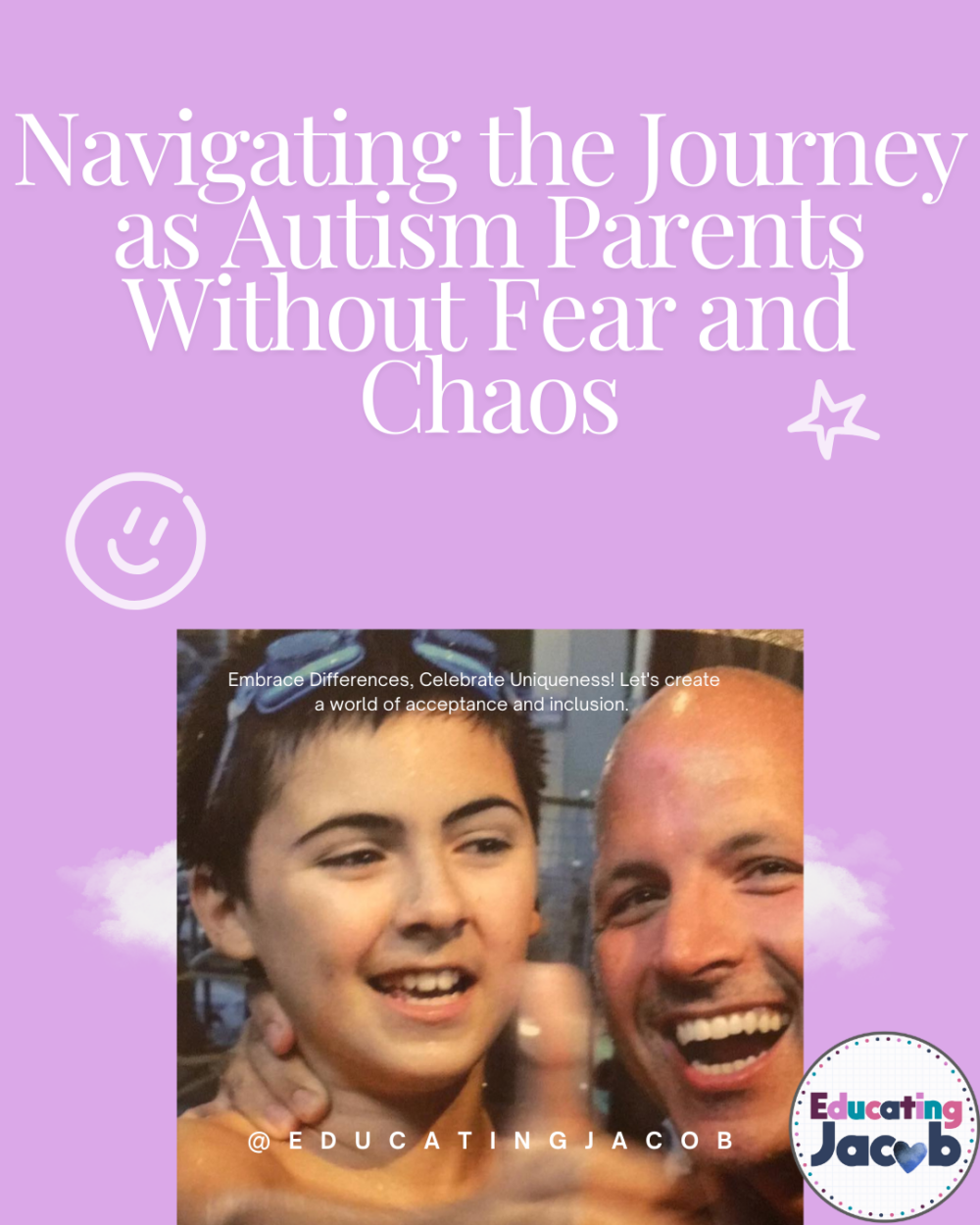
My son Jacob falls into that last category. Despite decades of therapies, interventions, and unwavering love, he:
- Cannot be left home alone 🏠
- Will likely never live independently
- Requires constant support for basic daily functions
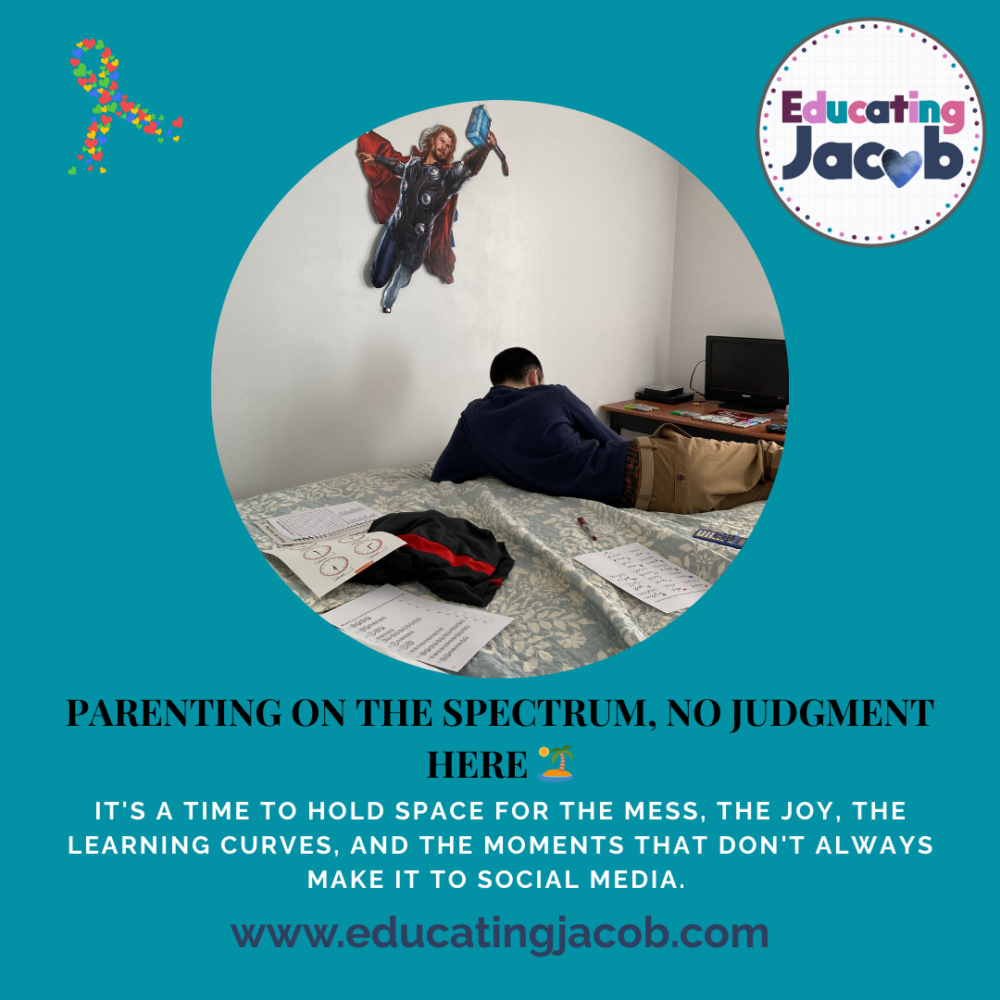
This isn’t because we haven’t tried. This isn’t because we don’t have hope. This is simply the reality of How Levels 2-3 Autism Affects the Family—a reality that’s exhausting, financially devastating, and yes, sometimes feels like it’s destroying the family unit. Autism Awareness Month! Parenting on the spectrum, no judgment here?🏝️
Why We Feel Silenced: The Vaccine Conversation 🔇
Let’s address the elephant in the room. Many parents like me have been effectively silenced when we mention our children’s dramatic regressions following vaccinations.
To be clear: I’m not claiming all autism is caused by vaccines. I’m not even claiming my son’s autism was caused by vaccines. What I am saying is that many of us witnessed our children change dramatically after certain medical interventions. Maybe not the cause but there was harm. As parents we saw:
- Children who had words suddenly lose them 💔
- Children who made eye contact suddenly stop
- Children who developed severe gut issues where none existed before
- Children whose developmental trajectory took a sudden, dramatic turn
And when we mention these observations—even gently, even as part of a complex conversation about multiple potential factors—we’re immediately dismissed with “correlation doesn’t equal causation” signs and accusations of being “anti-science.”
But here’s what those critics don’t understand: We were there. We lived it. We watched our children change before our eyes.
No one can prove to us that vaccines weren’t a contributing factor—just as no one can prove with certainty that they were. But dismissing our lived experience doesn’t help anyone, least of all our children who continue to suffer with communication barriers, sensory processing disorders, and medical complications.
Government Transparency 🔍
Another uncomfortable truth: many agencies that should be protecting us haven’t always been transparent about potential toxins in our medical interventions, foods, and environment.
The history of public health is littered with examples of substances once declared “safe” that later proved harmful:
- Lead in gasoline and paint ⚠️
- Mercury in thermometers and dental fillings
- Asbestos in building materials
- Various pharmaceutical products later pulled from market
I did whatever our doctor suggested when my boys were young because that’s how I was raised. I trusted the system completely. But over the years, my perspective has evolved as I’ve witnessed concerning patterns and learned more about regulatory oversight.
It’s not “anti-science” to ask whether our regulatory agencies have been fully transparent about preservatives in vaccines, the dramatically expanded childhood vaccination schedule, or the cumulative effect of multiple interventions. It’s not wrong to wonder if we could do better as a country.
RFK Jr.’s promise to investigate further doesn’t threaten neurodiversity—it threatens complacency. It challenges the notion that we should simply accept the status quo without asking hard questions about how we might prevent more families from experiencing what ours have.
Beyond “Inclusion,Acceptance”: Why Some of Us Want More 🧩
“Autism doesn’t need a cure, just acceptance and inclusion.”
I’ve heard this refrain countless times and for some I believe that’s true. Their neurodivergence brings gifts along with challenges, and they rightfully want a world that appreciates their unique perspective.
But for families like mine, dealing with the moderate-severe end of the spectrum, this sentiment feels dismissive of our daily reality.
My son hasn’t been “robbed” of just social acceptance. He’s been robbed of:
- The ability to tell me when something hurts 🗣️
- The joy of a conversation where he can share his thoughts and feelings in detail
- The comfort of eating without sensory issues making most foods intolerable
- Freedom from obsessive-compulsive behaviors that consume hours of his day
- Independence that others take for granted
These aren’t just “quirks” that society needs to accommodate. They’re profound challenges that cause my child suffering every single day.
Wanting to ease that suffering—wanting to understand what caused it and how we might prevent it in other children—doesn’t make me ableist. It makes me a mother who can’t bear to see her child struggle when perhaps those struggles could have been prevented.
How autism affects the family goes far beyond needing more inclusive classrooms or workplace accommodations. For us, it means a lifetime of specialized care, medical interventions, behavior management, and constant supervision. It means planning for 50+ years of dependency and worrying what happens when we’re gone.
The Moderate-Severe Autism Family Impact: Realities We Face Daily 📣
When advocates called Kennedy’s comments “eugenic” or “setting the community back,” I have to ask: which community are they speaking for?
Because while I celebrate every person with autism leading a fulfilling, independent life, there’s another community being left behind in this conversation:
- Parents changing adult diapers 👨👩👧👦
- Siblings who’ve become default caregivers
- Marriages crumbling under the financial and emotional strain
- Families planning for 50+ years of dependent care
- Schools struggling with limited resources for severe behaviors
For us, acknowledging the devastating severe autism family impact isn’t offensive—it’s validating. It’s someone finally seeing our daily struggle.
And when Kennedy promises research into environmental factors, rising rates, and potential causes, that’s not an attack on individuals with autism it’s offering hope to exhausted families desperate for answers. ✨
Why “Just Genetics” Isn’t Enough 🧬
The pushback against environmental research frustrates many parents like me. We’re told:
“It’s just better diagnosis.” ❌ “It’s genetic.” ❌ “We’re just more aware now.” ❌
But those of us who’ve worked in education for decades have witnessed this explosion firsthand. I never saw these numbers of severely affected children when I began teaching. Now, special education classrooms are overflowing.
While genetics may certainly play a role, the dramatic rise suggests something more complex at work, perhaps a gene-environment interaction that deserves serious investigation.
The truth is, we know harmful substances exist in our environment, our food, and yes, sometimes in our medical interventions. These chemicals and compounds don’t affect everyone equally, some individuals are more susceptible based on their unique genetic makeup. Acknowledging this complex interplay isn’t anti-science; it’s the very essence of modern scientific inquiry.
Wanting to understand why isn’t eugenic. It’s responsible.
Moving Forward with Heart: Beyond the Division 💞
I don’t write this to create more division in an already divided community. I write this because healing can only begin with honesty.
For too long, parents of severely affected children have been silenced:
- We’re told our observations about regression after medical interventions are invalid
- We’re accused of not accepting our children when we seek to ease their suffering 😔
- We’re labeled as “anti-science” for questioning whether environmental factors played a role
- We’re told to focus solely on acceptance when our children need intensive interventions
But we need to reclaim our voice, because our reality is valid too.
Supporting research into environmental factors doesn’t mean we love our children any less. It means we want to prevent other families from facing the same struggles. It means we want better interventions for those already affected.
And acknowledging the devastating aspects of how autism affects the family doesn’t diminish our children’s worth—it acknowledges their challenges and our sacrifices.

A Path Forward: Beyond the Signs and Slogans 🛣️
Here’s what I believe we need:
- Honest conversation that acknowledges the full spectrum of autism experiences—from mild to profound 🗣️
- Respect for parents’ observations about their own children’s developmental history
- Comprehensive research into both genetic AND environmental factors—without political biases
- Better transparency from regulatory agencies about what goes into our bodies and environment
- Support for those who are suffering without accusations of being anti-neurodiversity
- Recognition that wanting to prevent suffering is not the same as devaluing those with autism
Because at the end of the day, this isn’t about RFK Jr. or political affiliations. It’s not about being pro-vaccine or anti-vaccine. It’s about families like mine who are moving through each day with a smile, trying our best to improve our children’s lives while carrying burdens few can understand.
To the Parents Experiencing Severe Autism Family Impact 💪
If you’re reading this while exhausted from another sleepless night with your severely autistic child…
If you’ve ever watched your child struggle to communicate basic needs… 😢
If you’ve been dismissed when sharing observations about your child’s developmental regression…
If you’ve been made to feel like you’re “part of the problem” for asking questions about environmental factors…
I see you. Your experience is real. Your questions are valid. Your observations matter. 👏
You’re not alone in feeling that parts of Kennedy’s statements—however imperfectly expressed—spoke to your lived reality.
And you’re not wrong for wanting answers, research, and solutions while simultaneously loving your child exactly as they are.
Moving Forward Together 🤝
We need an autism conversation that makes room for everyone:
- Those thriving on the spectrum
- Those moderately affected
- Those severely impacted
- The families supporting them all
And most importantly, we need a conversation that respects parents’ right to share their observations and ask difficult questions without being labeled or dismissed.
Because until we can honestly address the full reality of how all Levels of autism affects the family, including its most challenging presentations and potential cause we can’t truly support the entire community.
It’s time to listen to ALL voices in this conversation, even when what they have to say makes us uncomfortable.