schedules

  • Parenting a Child with Autism Level 2-3 Can Be Ra Ra Rough! Stay CALM

    Autism's level 2-3's can be rough on parenting
    Parent with CALM!

    Autism Level 2-3 Can Be Rough!

    Living on Autism Island? Then you already know what I’m about to tell you…

    If you’re parenting a child with autism level 2-3, this post won’t shock you—but it will encourage you. This one’s for the exhausted parents who need a peek behind the curtain and some practical strategies for not just surviving, but actually thriving on Autism Island. How I made it through the holidays without chaos and anxiety on autism island.

    You know the drill: unpredictable days that start before dawn, public meltdowns that make strangers stare, and that constant feeling of treading water while everyone else seems to be swimming laps.

    Jim Gaffigan nailed it when he said: “We try to be good parents… not that you’d be able to tell. Like if you met one of my sons, you’d think, ‘Oh wow, Jim decided not to parent this one.'”

    Hilarious? Yes. Painfully relatable? Absolutely.

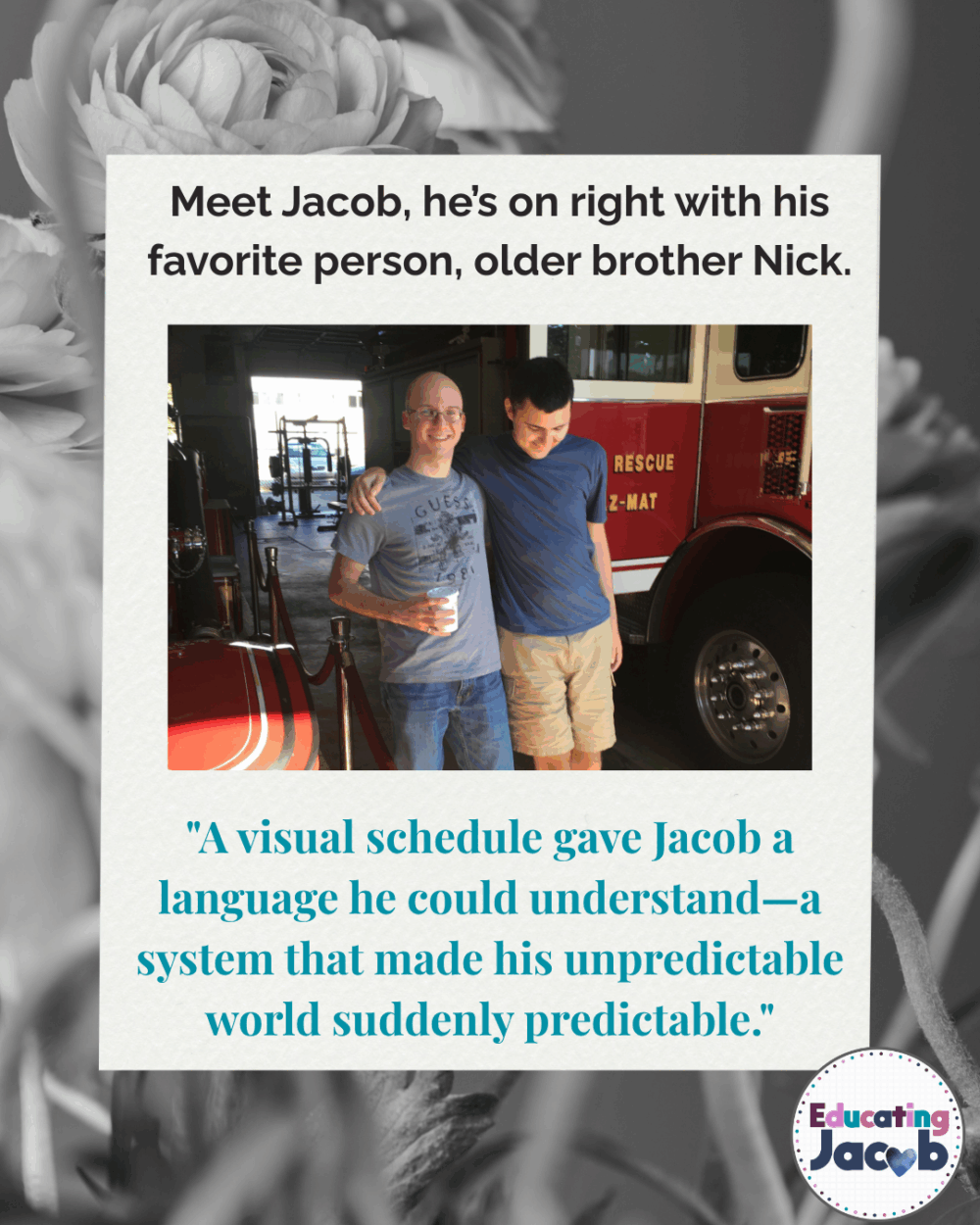
    More than once, I’ve caught those looks—the ones that silently ask, “Is she even trying to parent this child?” The truth is, parenting my son Jacob (now 27, autism level 2-3) has taught me more than any book, class, or degree ever could. But getting here wasn’t easy.

    The Daily Struggle Was Real

    I used to feel like a complete failure—overwhelmed, defeated, and desperate to figure out how to help my son have just one good day, let alone a good life.

    Our mornings looked like this:

    • Getting dressed? A 45-minute battle that left us both in tears
    • Grocery shopping? Forget it—unless I wanted a full-scale meltdown in aisle 3
    • Family gatherings or therapy appointments? Pure anxiety for days beforehand

    I never knew what would set him off. The heartbreaking part? Neither did he. That’s the reality of parenting a child with autism level 2-3—you’re both trying to navigate a world that doesn’t make sense. Autism Awareness Month! Parenting on the spectrum, no judgment here?🏝️

    Use Structure for Autism Levels 2-3
    CALM Framework is all about — four key habits that changed everything for our family.

    The Turning Point: When Everything Changed

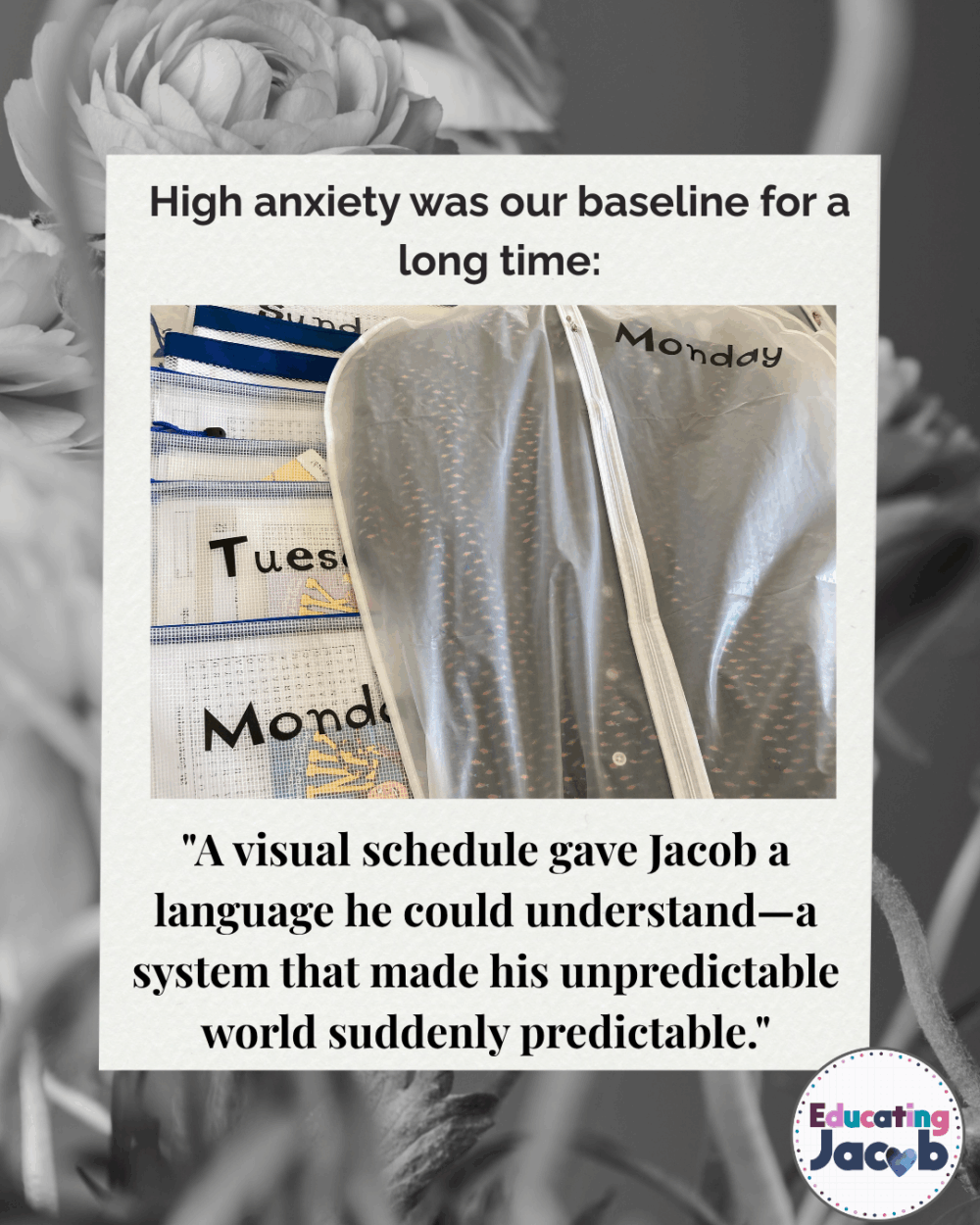
    What finally turned the corner for us wasn’t a miracle cure or expensive therapy. It was something beautifully simple: visual schedules.

    A mentor from UNC TEACCH at Chapel Hill introduced me to structured supports that actually made sense to Jacob’s brain. Little by little, with unwavering consistency, we began to see his anxiety decrease. Jacob started feeling more in control of his world.

    And I? I began to breathe again.

    Here’s the thing—we still use visual schedules today. Even as a young adult, Jacob needs that structure to understand his day and feel safe in it. And you know what? There’s absolutely nothing wrong with that.

    CALM: The Framework That Saved Our Sanity

    Parenting a child with autism level 2-3 means accepting that support is needed long-term. It also means learning to create your own version of calm in the chaos.

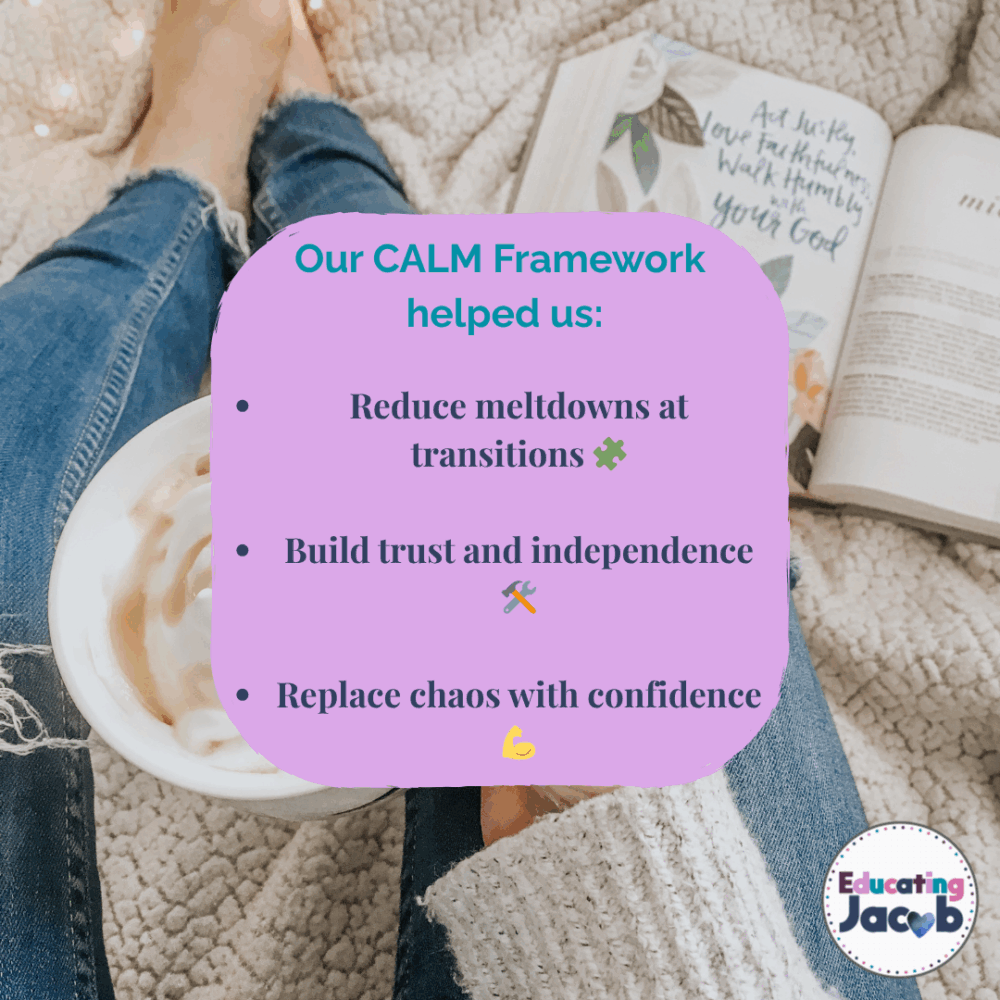
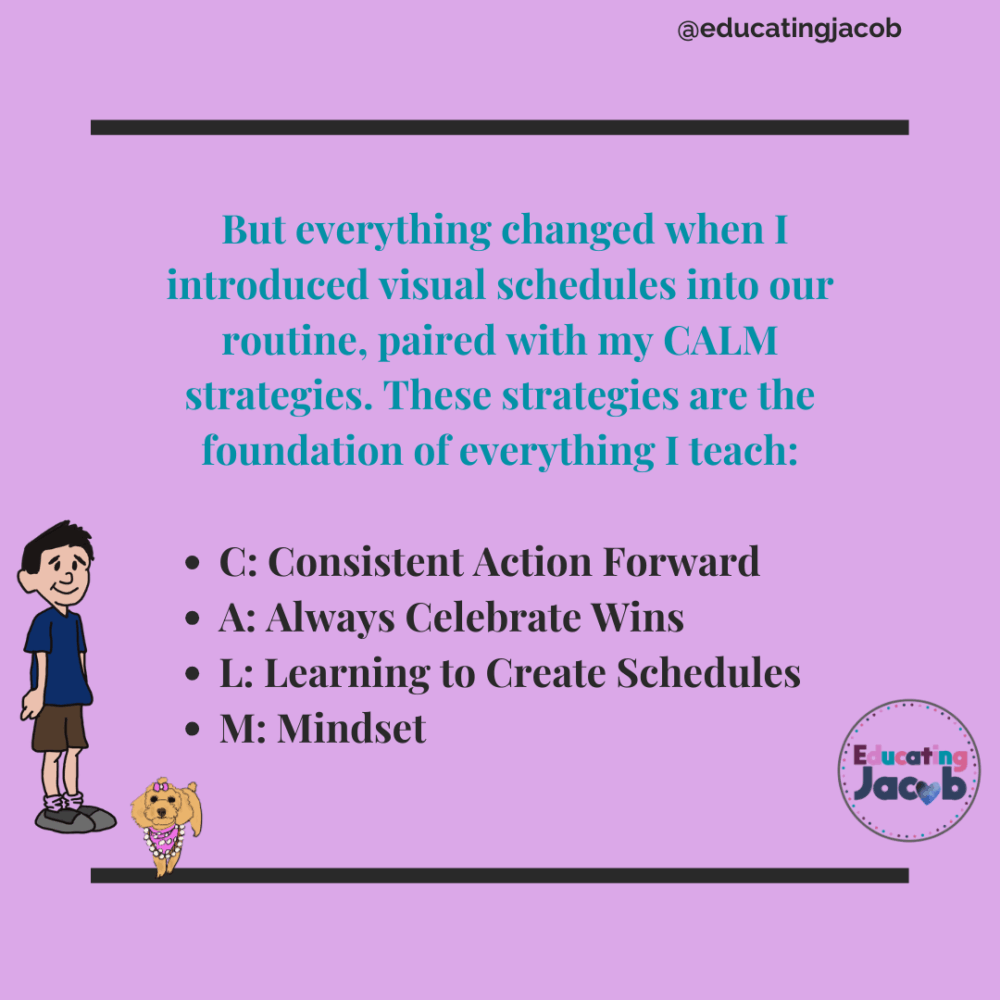
    That’s where our CALM Framework comes in—four key habits that transformed our family’s daily life:

    C – Consistent Action Forward

    Stop trying to fix everything at once. You’ll burn out faster than a birthday candle in a hurricane.

    Instead, choose one thing that’s disrupting your peace and create a simple schedule around it. Start ridiculously small. Repeat it daily. Build momentum like you’re training for a marathon, not sprinting to the finish line.

    Those tiny wins? They stack up and create a ripple effect for both you and your child.

    A – Always Celebrate Wins

    Every. Single. Win. Counts.

    • Got dressed without a meltdown? 🎉 Victory dance time!
    • Used a visual cue to ask for help? 🎉 That’s communication gold!
    • Made it through Target with only one minor incident? 🎉 You deserve a medal!

    When you focus on what’s working and celebrate it (even if it feels small), you’re rewiring your brain to notice progress. Your child feels that pride and confidence too—and starts believing in their own capabilities.

    L – Learning to Create Schedules

    Visual schedules aren’t just for classrooms or little kids. They’re for anyone who needs predictability, independence, and reduced anxiety. (So basically, all of us.)

    Start with 2-3 simple tasks your child already knows how to do. Build in something they love. Add one small challenge. Follow it with another preferred activity.

    The magic formula: Familiar + Preferred + Challenge + Preferred = Success

    This isn’t about rigid control—it’s about guidance, ownership, and helping your child feel safe in their own skin.

    And no, you don’t need a special education degree to do this. I didn’t have one when I started! I eventually got my degree because I wanted to understand Jacob better, but what really taught me was the daily experience of parenting him.

    M – Mindset

    Here’s the truth bomb: You can do this.

    But your mindset has to shift from reactive to proactive:

    • Reactive = chaos, burnout, feeling like you’re always putting out fires
    • Proactive = preparation, structure, and actual peace in your home

    Your calm becomes their calm. Your belief that they can succeed (with the right support) is what helps them actually succeed.

    You’re Not Failing—You’re Learning

    If you’re parenting a child with autism level 2-3, I need you to hear this:

    💛 You’re not a bad parent. You’re learning to parent differently.
    💛 Your child is not broken. They’re wired differently and need different supports.
    💛 You absolutely can have calm and happiness, even on Autism Island.

    Is it always easy? Not even close. But can you build peace, structure, and genuine joy into your days? Absolutely yes. Here’s a post from someone else you might like: https://marvelouslysetapart.com/2018/08/24/10-positives-of-autism/

    Your Next Step Starts Now

    Ready to begin your CALM journey? Here’s what you do:

    1. Choose one challenge that’s disrupting your peace
    2. Build one simple visual schedule around it
    3. Celebrate one win when you see progress

    That’s it. Start there. Build momentum. Trust the process.

    Want more support on this journey? Join the Autism Thrive Tribe—my membership community where parents use the CALM framework to bring real peace and purpose into daily life. We share wins, support each other through the tough days, and celebrate every step forward together.

    Because parenting a child with autism level 2-3 doesn’t have to mean constant chaos. Let’s build CALM—and a future full of possibility.

    Remember: Every visual schedule you create is another step toward independence for your child, less anxiety in their daily life, and more peace for your entire family. We’re cheering you on! 💙

    Read More

  • Craving CALM? 3 ways our CALM system turns autism’s behavior challenges into progress.

    Autisms-Behavior-Challenges
    Use our CALM system to create a foundation for progress!

    3 Ways Our CALM System Turns Autism’s Behavior Challenges into Progress 🌟

    When autism’s behavior challenges leave you exhausted and desperate for answers, you’re not alone. I’ve been in that trench—crying in parking lots, surviving IEP meetings, and wondering if peace would ever visit our dinner table again. 😔

    Our CALM system didn’t come from a book or professional toolkit. It came from living this life and refusing to stay stuck in survival mode. What started as a desperate experiment has now become a repeatable system that helps families like mine—and like yours—breathe again. ✨ Inside Our Day: A Calm Autism Routine That Works

    My Breaking Point with Autism’s Behavior Challenges 💔

    I still remember the day I hit rock bottom with Jacob.

    That supermarket meltdown that left me sobbing in the car. 🛒 The IEP meeting where I couldn’t hold back the tears as I described the chaos of our mornings. The family dinners that became battlegrounds. 🍽️

    Every transition was a fight. Every unexpected event was a disaster. Outings felt like danger zones. Holidays? Forget it. Even activities I thought Jacob would love became overwhelming due to sensory or social components.

    I was where you might be right now—tired, overwhelmed, and desperate to find something that would bring peace back into our home. 😰

    But we didn’t stay there. And neither will you. 💪

    But here's what I learned: predictability creates clarity and peace.📅
    Predictability, Clarity and Peace! ❤️

    From Chaos to Connection: How Our CALM System Was Born 🌱

    The CALM System wasn’t created in a classroom. It was born from necessity—one messy moment at a time. We built something that worked using simple tools and small steps. Nothing complicated. Because when you’re just trying to survive the day, complicated doesn’t cut it. 🎯

    Now I teach this same system to autism parents who are ready for progress—not perfection. 📈

    Here’s how it works. 👇

    The 4-Step Process for Managing Autism’s Behavior Challenges 🗺️

    Step 1: Identify Your Most Disruptive Behavior 🎯

    Jacob’s early autism’s behavior challenges came at us fast:

    • Anxiety storms out of nowhere ⛈️
    • Meltdowns during transitions 🔄
    • Refusing to get dressed in the morning 👕
    • Sensory overload at stores and appointments 🏪
    • Sleep patterns that broke us 😴

    Sound familiar? 🤔

    Here’s your first step: Don’t try to fix everything. Just pick the one behavior causing the most stress and start there. Mastering one gives you tools to handle the next. 🔑

    Step 2: Understand the Behavior Before You Intervene 🕵️‍♀️

    You don’t need a degree in behavior analysis to figure out what’s going on. Just start observing. 👀

    Look for the “Setting Events” 🏗️

    These are things behind the scenes that make autism’s behavior challenges worse. For Jacob, it was:

    • Chronic digestive pain 🤕
    • Sensory processing issues 🌪️
    • Sleep deprivation 😵
    • Epilepsy ⚡
    • Communication struggles 💬

    These aren’t excuses—they’re part of the picture. 🧩

    Then Watch for the Antecedents 🚨

    These are the things that happen right before the behavior explodes:

    • “Time to turn off the iPad.” 📱
    • “Let’s leave the house.” 🏠
    • “Try a new food.” 🥕
    • “Grandma’s coming.” 👵

    That’s when we started using visual schedules. They helped Jacob see what was coming, giving him back some control. The more predictable things became, the calmer he got. 📋✨

    Step 3: Respond with CALM in the Moment ☮️

    When your child is in meltdown mode, your own nervous system panics too. That doesn’t make you a bad parent—it makes you human. 💕

    Here’s what helped us manage autism’s behavior challenges in real-time:

    During the behavior: 🚨

    • Speak less 🤫
    • Use a low, calm tone 🗣️
    • Point to the visual instead of explaining 👉
    • Focus on safety, not discipline 🛡️

    After the behavior: 🌈

    • Celebrate any progress 🎉
    • “You used your breathing tool!” 🌬️
    • “You pointed instead of yelling. That helped me help you.” 👍
    • “You followed the schedule. That’s amazing!” ⭐

    These moments build trust, resilience, and momentum. 💪

    Step 4: Prepare Like Your Peace Depends on It (Because It Does) 🎒

    I used to be embarrassed by my “autism mom bag.” Now I carry it like a superhero utility belt. 🦸‍♀️

    Here’s what’s always inside:

    • Headphones for noisy spaces 🎧
    • A few preferred snacks 🍪
    • Comfort items 🧸
    • Visual cards 📊
    • Sensory toys 🌈
    • Communication tools 💬

    Just last week at the grocery store, Jacob looked up and whispered “baby crying”, okay maybe he didn’t whisper, he spoke loudly! That’s his way of warning me he’s getting overwhelmed. I handed him his headphones. He calmed down. We finished our shopping. 🛒✅

    That wasn’t luck. That was planning. 📝  https://marvelouslysetapart.com/2019/07/26/autistic-child-learning-life-skills/

    The CALM Framework: What Changed Everything for Us 🔄

    Let me break down how this system transforms autism’s behavior challenges:

    C: Consistent Action Forward 🏃‍♀️

    • Do one thing every day ✅
    • Build routines, even tiny ones 🔄
    • Show up, even when it’s messy 💪

    A: Always Celebrate Wins 🎉

    • Acknowledge progress 👏
    • Use specific praise 💬
    • Cheer the little things that feel huge 📣

    L: Learning to Create Schedules 📅

    • Use visuals to reduce anxiety 📊
    • Build routines your child can follow 👣
    • Make their day predictable and safe 🏠

    M: Mindset for the Marathon 🏃‍♀️

    • This isn’t a sprint ⏰
    • Your mental health matters too 🧠
    • Growth happens slowly, then all at once 🌱

    This system works for real families because it’s built around what you can actually control—your mindset, your preparation, and your daily rhythms. 🎯

    Your Next Step: Start Small, Start Now 🚀

    Maybe you’re thinking, “This sounds amazing, but we’re beyond help. Nothing works for our autism’s behavior challenges.” 😟

    I get it. I really do. I’ve lived those hopeless-feeling days. 💔

    But I’m here to tell you: Your child is not too far gone. And neither are you. 💖

    Start with:

    • One picture schedule for the hardest time of day 📋
    • One calm response instead of a panicked one 😌
    • One smile when your child makes progress 😊

    Because that’s where change begins. ✨

    Every small win matters. 🏆 Every quiet transition is a miracle in motion. 🌟 Every time you choose calm, you create connection. 💕

    You are not alone. 🤗 Looking for a better way? Visual Schedules reduce Chaos!

    3 Ways Our CALM System Turns Autism’s Behavior Challenges into Progress

    Here’s your roadmap to transformation:

    1. Use the CALM System Apply the framework consistently: Consistent Action Forward, Always Celebrate Wins, Learning to Create Schedules, and Mindset for the Marathon. This isn’t just theory—it’s your daily practice for turning chaos into connection.
    2. Start Small, Start Now Don’t wait for the perfect moment or try to fix everything at once. Pick one behavior challenge, create one visual schedule, celebrate one small win. Progress begins with that first small step you take today.
    3. Go Deep and Stay Accountable Join Autism Thrive Tribe or get coaching to maintain momentum. Inside the community, you’ll get step-by-step implementation guides, weekly group coaching calls, a supportive community of parents who truly get it, and resources you can use immediately.  https://www.facebook.com/groups/autismthrivetribe

    Because the journey doesn’t have to feel this heavy. You can learn to parent with peace, even when life is unpredictable.

    Let’s do this together. CALM is possible—and it starts with you being brave enough to start! 💙

    Read More

  • Looking for a better way? Visual Schedules reduce Chaos!

    Did-you-know-Visual-Schedules-Reduce-Chaos-🧩
    Visual Schedules Reduce Chaos! 🧩

    Visual Schedules Reduce Chaos! 🧩

    “Is she crazy? I have so many problems on Autism Island🏝️—why is her message ‘visual schedules’?”

    👋 Mama, I get it. I was you. I am you.

    When I say Visual Schedules Reduce Chaos, I’m not tossing around a trendy parenting tip. I’m handing you a battle-tested, mom-approved lifeline—the same one I clung to when I was trying to survive life with my amazing, autistic, strong-willed son, Jacob. The child who ran the house like a cruise director on caffeine (and we were not on vacation).

    Let me tell you what changed everything…
    👉 It wasn’t a new therapy, gadget, or even a perfect parenting plan.

    It was a visual schedule and the foundation that made it work was something I now call the CALM Framework.

    The CALM Framework That Helped My Family Breathe Again

    At Educating Jacob, we teach parents the CALM Framework, a simple system to bring peace and progress into your daily life.

    • C – Consistent Action Forward
    • A – Always Celebrate Wins
    • L – Learning to Create Schedules
    • M – Mindset That Moves You Forward

    This blog post focuses on the “L” for Learning to Create Schedules—because one of the first things I learned is that Visual Schedules reduce Chaos, especially in homes with autistic children who crave structure and predictability. Why Visual Schedules Are a Game Changer for Moderate and Severe Autism

    visual-schedule-and-CALM-
    Visual Schedules Reduce Chaos 📅

    How Visual Schedules Reduce Chaos in Real Life

    Jacob needed control to manage his anxiety, but he didn’t have the words to say, “Mom, I’m overwhelmed.”

    So instead?

    💥 Meltdowns
    💥 Power struggles
    💥 Screaming over socks, cereal, or a trip to the store

    Sound familiar?

    When we started using visual schedules—just simple pictures that showed him what to expect—everything shifted.

    ✅ He could see what was coming
    ✅ He felt calmer
    ✅ Our home started to feel less like a battlefield

    Visual Schedules reduce Chaos. It’s that simple.

    Quick-Tip-to-prevent-shopping-meltdowns-quoteVisual Schedules Reduce Chaos During Outings and Errands

    Grocery store meltdowns were once the norm. Then we prepped with a schedule:

    🛒 A picture of the grocery cart
    🎧 Headphones
    🥤🍪 A bag of snacks and drinks
    🎁 A reward image at the end

    Jacob knew the plan. He helped with the cart. He even reminded me what was next. Just by seeing it all laid out, he was able to stay calm and participate.

    School and Home Routines That Build Trust

    At school, verbal instructions overwhelmed him. Once his teacher started using visuals to show the routine?

    ✅ He moved from task to task
    ✅ He could track his day
    ✅ He began to participate

    The same system worked at home. Predictable routines made him feel secure in both places. And guess what? It didn’t take 27 steps or a fancy board. I started with 3 pictures and built from there.

    Let your child choose a favorite activity. Add a reward. Communicate visually. You are giving them control in a safe, structured way—and that’s powerful.

    Life Isn’t Perfect, But It Can Be Calmer

    Visual schedules don’t cure epilepsy or sensory challenges. But they help Jacob remember to take his meds. They’ve made meal times predictable. They give him more independence.

    He now takes his own medication from a labeled AM/PM box. We even use visual schedules to introduce new skills by watching videos first so he knows what to expect.

    Once he sees it and knows where it fits in the day, he’s much more open to learning. Feeling isolated, broke, and chaos within the family? You’re not alone!

    Start Small and Stick With It

    Mama, if you take one thing from this post, let it be this:

    ✅ Start the schedule
    ✅ Keep it simple
    ✅ Watch anxiety fade

    Your child will begin to trust the routine. You will breathe easier. That chaos you’re living in right now? It starts to quiet down.

    Because Visual Schedules reduce Chaos.

    You Don’t Have to Do This Alone

    This is the beginning of something better. You can do this. And you don’t have to do it alone.

    🎉 Join us inside Autism Thrive Tribe, where we support each other with CALM tools, real talk, and small wins worth celebrating.

    You’re not behind. You’re just getting started. And I’m right here with you. Here’s another read you might like:  https://veryspecialtales.com/prevent-autistic-child-wandering/

    Final Thought 💙

    “Every visual schedule you create is one more step toward independence for your child, less anxiety in your home, and a whole lot more peace for both of you. I’m cheering you on.”

    Check list Here!

    Read More

  • 5 ways to regain my calm when my special needs child is dancing on my last nerve!

    #SmallActsOfCalm #SpecialLove
    Sometimes just a hug and redirection will calm strong emotions.

    Regain Your Calm With Your Special Needs Child 

    Parenting can sometimes feel like a never-ending circus—juggling tasks, managing emotions, and keeping everything from crashing down. Throw in raising a special needs child, and it’s like adding a high-wire act to the mix. Trust me, I’ve been there. But instead of letting the chaos consume you, let’s talk about how you can regain your calm using tools from the CALM framework and some good old-fashioned humor.  https://wordtoyourmotherblog.com/autism-parenting-tips/

    This is where mindset and a solid toolkit come into play. These five strategies will help you pause, reset, and return to parenting with a clear head.

    #parentingtip
    Help them find their calm.

    Finding Calm in the Chaos: Using the CALM Framework

    At EducatingJacob, we focus on CALM strategies, where the “M” stands for Mindset. Maintaining the right mindset is critical for parenting success and emotional well-being. It’s not about perfection; it’s about progress and learning to shift from reactive chaos to responsive calm.

    These strategies are part of the broader framework that includes visual schedules, which reduce anxiety and create structure for your child—and you. Let’s explore five ways to get back on track when your nerves are frayed.


    📝 Gratitude Journal Prompts for Special Needs Parents
    “What moment made me smile today?”

    1. The Gratitude Journal Getaway ✍️

    When you feel your patience slipping, retreat to your room with a gratitude journal. Writing down even the smallest victories can refocus your mindset.

    • Why It Works: A gratitude journal helps you shift from frustration to appreciation, reminding you of how far you’ve come.
    • How to Start: Jot down three things you’re grateful for daily—no matter how small. For example, “Jacob followed his visual schedule today!”

    Gratitude is a powerful tool to regain calm and confidence, reinforcing your ability to handle the challenges of autism parenting. How to achieve CALM on Autism Island, daily life on the spectrum.


    2. The Bath-Time Escape 🛁

    Sometimes, the best way to calm your mind is by soothing your body. A warm bath, a glass of wine, and relaxing candles can work wonders for your stress levels.

    • Why It Works: Relaxation lowers cortisol (your stress hormone) and gives you the mental reset needed to parent effectively.
    • Add a Twist: Listen to an audiobook, like a personal development book or a calming podcast, while you soak.

    A relaxed parent can approach challenges with more patience and creativity—key ingredients in implementing the CALM framework.


    3. Movie Magic with a Twist 🎥

    When Jacob’s movie-quote marathon tests my last nerve, I’ve found that turning to the magic of movies can be a great reset for both of us.

    • For You: Escape into a comedy or action-packed Marvel film to distract and recharge.
    • For Your Child: Use a favorite movie quote to redirect them during transitions or moments of frustration. This ties into their comfort zone and helps shift the mood.

    Visual schedules can even incorporate favorite movie times, creating a calming anchor in your child’s day.


    4. The Reading Retreat 📚

    Books are more than just an escape—they’re a way to recharge your mindset. Whether it’s a suspenseful novel or uplifting scriptures like Psalms and Proverbs, reading can ground you and help you refocus.

    • Why It Works: Reading helps you step outside your current challenges and gain perspective.
    • Bonus Tip: Keep a notebook handy to jot down quotes or ideas that inspire you.

    Incorporate reading time into your visual schedule to model calm, structured habits for your child.


    5. The Great Escape 🌳

    Sometimes, you just need to step away—literally. A quick trip to the grocery store, a cup of tea with a friend, or even a brisk walk can do wonders for your mental health.

    • Why It Works: Changing your environment can reset your perspective and give you the emotional reserves to reengage with your child.
    • For Your Child: Plan an outing that fits their sensory needs, like a quiet park or a familiar store, and include it in their visual schedule to reduce surprises.

    The goal is to return to parenting refreshed and ready to support your child’s needs without feeling overwhelmed. 


    Mindset + Tools = Calm Confidence

    Remember, the CALM framework is your ally:

    • C: Consistent Action Forward – Small, steady steps make all the difference.
    • A: Always Celebrate Wins – Recognize and reward progress, no matter how small.
    • L: Learning to Create Schedules – Use visual schedules to create predictability and ease transitions.
    • M: Mindset is Key – A positive mindset allows you to show up as the confident, calm parent your child needs. How to achieve CALM on Autism Island, daily life on the spectrum.


    Take Care of Yourself, So You Can Care for Them

    Parenting a child with autism is challenging, but you’re not alone, and you don’t have to do it perfectly. These five strategies are simple ways to regain your calm, shift your mindset, and return to parenting with renewed confidence.

    You’ve got this. And when it feels like too much, just remember: a calm, collected parent can change the whole energy of the home—and that starts with you.

    What are your go-to strategies for regaining calm during tough moments? I’d love to hear about them! 🌟

    🧐 Struggling with daily routines and meltdowns?
    🌟 As an autism parent coach, I help you transform chaos into calm by creating strategies that work for your family. 🌟
    📅 Schedule a discovery call
    👉🏼 Visit my contact page to get started: https://educatingjacob.com/contact/

    #autismcoach #autismparentcoaching #autismandepilepsy #autismfamily💙#autismmom😎 #autismboymom😎 #autismchallenges🧩 #AutismParenting #DoctorVisitSuccess #EducatingJacob #AutismSupport #CalmParenting #askmelissa

    Read More