“Is she crazy? I have so many problems on Autism Island🏝️—why is her message ‘visual schedules’?”
👋 Mama, I get it. I was you. I am you.
When I say Visual Schedules Reduce Chaos, I’m not tossing around a trendy parenting tip. I’m handing you a battle-tested, mom-approved lifeline—the same one I clung to when I was trying to survive life with my amazing, autistic, strong-willed son, Jacob. The child who ran the house like a cruise director on caffeine (and we were not on vacation).
Let me tell you what changed everything…
👉 It wasn’t a new therapy, gadget, or even a perfect parenting plan.
It was a visual schedule and the foundation that made it work was something I now call the CALM Framework.
The CALM Framework That Helped My Family Breathe Again
At Educating Jacob, we teach parents the CALM Framework, a simple system to bring peace and progress into your daily life.
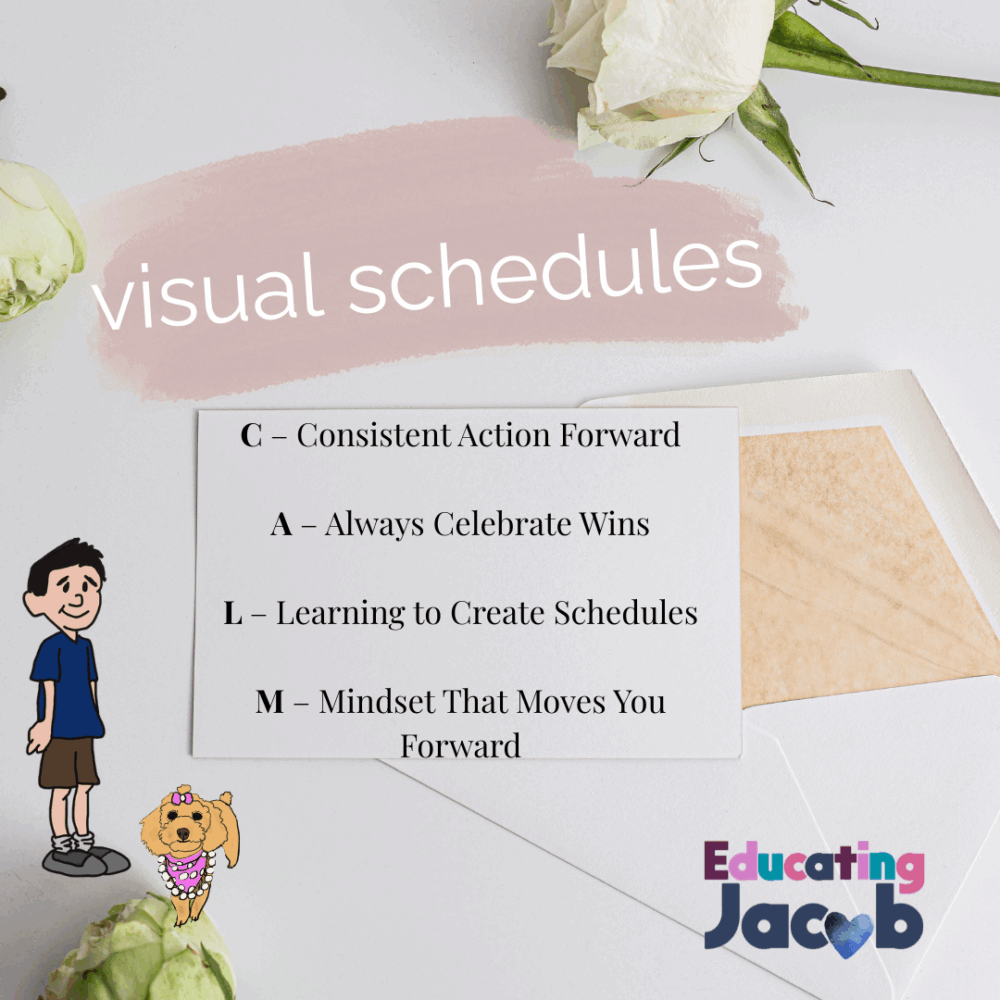
C – Consistent Action Forward
A – Always Celebrate Wins
L – Learning to Create Schedules
M – Mindset That Moves You Forward
This blog post focuses on the “L” for Learning to Create Schedules—because one of the first things I learned is that Visual Schedules reduce Chaos, especially in homes with autistic children who crave structure and predictability. Why Visual Schedules Are a Game Changer for Moderate and Severe Autism
Visual Schedules Reduce Chaos 📅
How Visual Schedules Reduce Chaos in Real Life
Jacob needed control to manage his anxiety, but he didn’t have the words to say, “Mom, I’m overwhelmed.”
So instead?
💥 Meltdowns
💥 Power struggles
💥 Screaming over socks, cereal, or a trip to the store
Sound familiar?
When we started using visual schedules—just simple pictures that showed him what to expect—everything shifted.
✅ He could see what was coming
✅ He felt calmer
✅ Our home started to feel less like a battlefield
Visual Schedules reduce Chaos. It’s that simple.
Visual Schedules Reduce Chaos During Outings and Errands
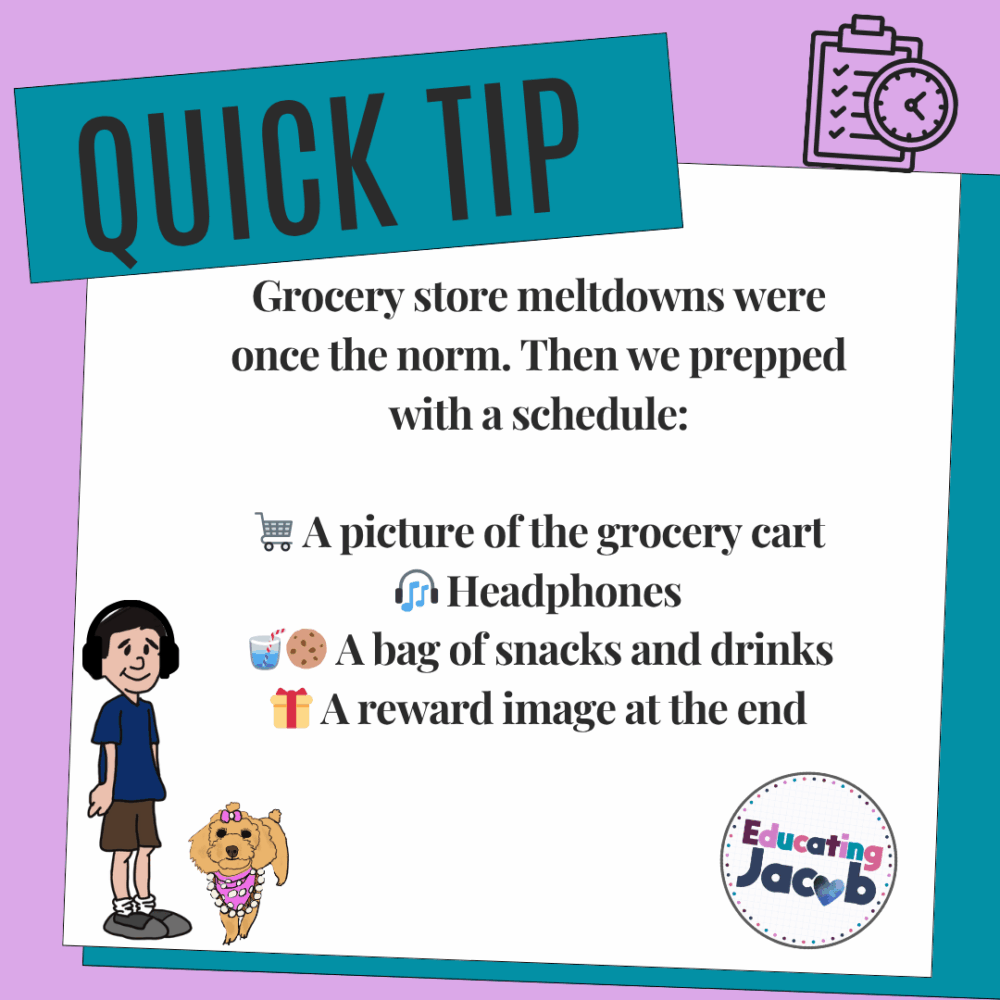
Grocery store meltdowns were once the norm. Then we prepped with a schedule:
🛒 A picture of the grocery cart
🎧 Headphones
🥤🍪 A bag of snacks and drinks
🎁 A reward image at the end
Jacob knew the plan. He helped with the cart. He even reminded me what was next. Just by seeing it all laid out, he was able to stay calm and participate.
School and Home Routines That Build Trust
At school, verbal instructions overwhelmed him. Once his teacher started using visuals to show the routine?
✅ He moved from task to task
✅ He could track his day
✅ He began to participate
The same system worked at home. Predictable routines made him feel secure in both places. And guess what? It didn’t take 27 steps or a fancy board. I started with 3 pictures and built from there.
Let your child choose a favorite activity. Add a reward. Communicate visually. You are giving them control in a safe, structured way—and that’s powerful.
Life Isn’t Perfect, But It Can Be Calmer
Visual schedules don’t cure epilepsy or sensory challenges. But they help Jacob remember to take his meds. They’ve made meal times predictable. They give him more independence.
He now takes his own medication from a labeled AM/PM box. We even use visual schedules to introduce new skills by watching videos first so he knows what to expect.
“Every visual schedule you create is one more step toward independence for your child, less anxiety in your home, and a whole lot more peace for both of you. I’m cheering you on.”
Sometimes just a hug and redirection will calm strong emotions.
Regain Your Calm With Your Special Needs Child
Parenting can sometimes feel like a never-ending circus—juggling tasks, managing emotions, and keeping everything from crashing down. Throw in raising a special needs child, and it’s like adding a high-wire act to the mix. Trust me, I’ve been there. But instead of letting the chaos consume you, let’s talk about how you can regain your calm using tools from the CALM framework and some good old-fashioned humor. https://wordtoyourmotherblog.com/autism-parenting-tips/
This is where mindset and a solid toolkit come into play. These five strategies will help you pause, reset, and return to parenting with a clear head.
Help them find their calm.
Finding Calm in the Chaos: Using the CALM Framework
At EducatingJacob, we focus on CALM strategies, where the “M” stands for Mindset. Maintaining the right mindset is critical for parenting success and emotional well-being. It’s not about perfection; it’s about progress and learning to shift from reactive chaos to responsive calm.
These strategies are part of the broader framework that includes visual schedules, which reduce anxiety and create structure for your child—and you. Let’s explore five ways to get back on track when your nerves are frayed.
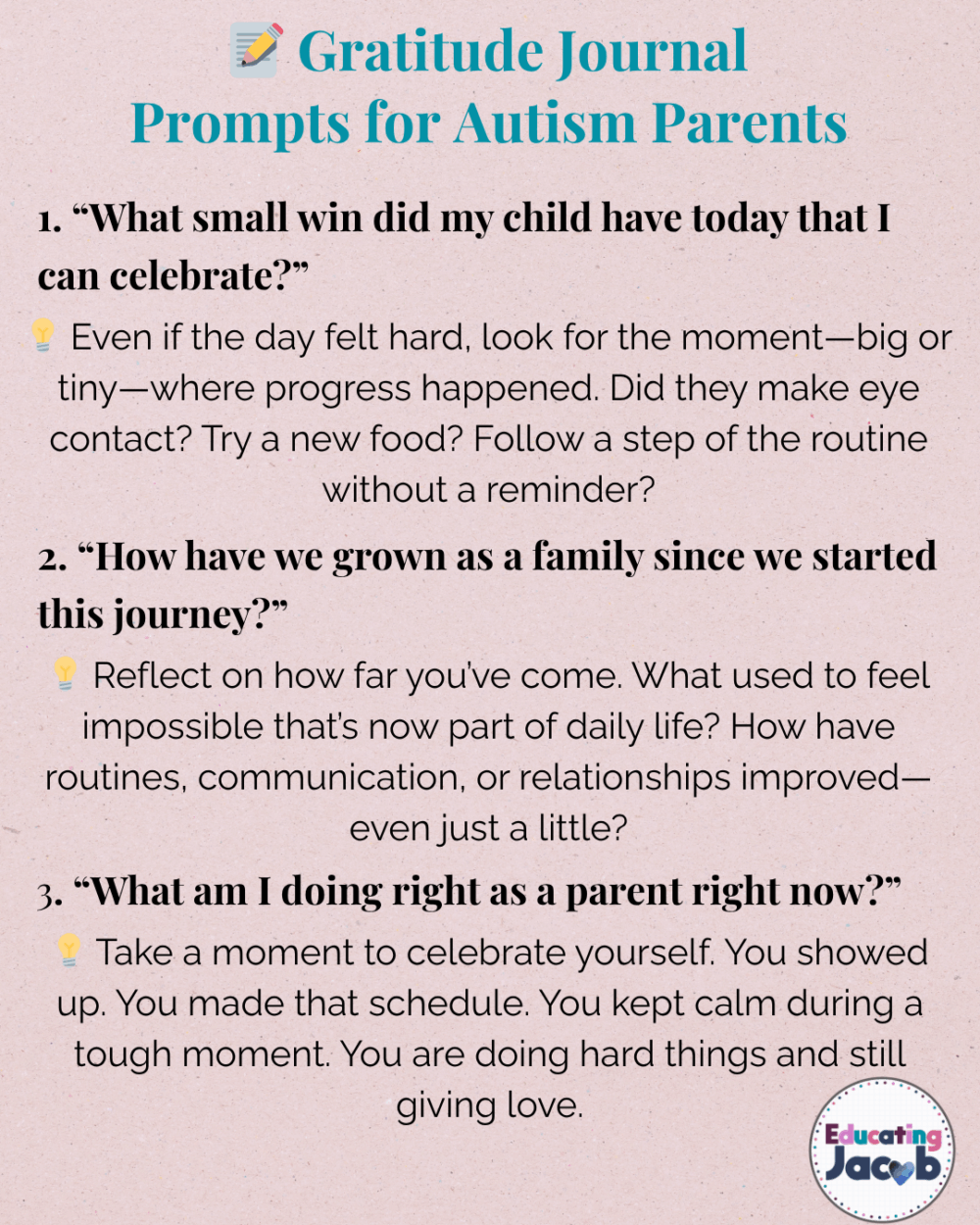
“What moment made me smile today?”
1. The Gratitude Journal Getaway ✍️
When you feel your patience slipping, retreat to your room with a gratitude journal. Writing down even the smallest victories can refocus your mindset.
Why It Works: A gratitude journal helps you shift from frustration to appreciation, reminding you of how far you’ve come.
How to Start: Jot down three things you’re grateful for daily—no matter how small. For example, “Jacob followed his visual schedule today!”
Sometimes, the best way to calm your mind is by soothing your body. A warm bath, a glass of wine, and relaxing candles can work wonders for your stress levels.
Why It Works: Relaxation lowers cortisol (your stress hormone) and gives you the mental reset needed to parent effectively.
Add a Twist: Listen to an audiobook, like a personal development book or a calming podcast, while you soak.
A relaxed parent can approach challenges with more patience and creativity—key ingredients in implementing the CALM framework.
3. Movie Magic with a Twist 🎥
When Jacob’s movie-quote marathon tests my last nerve, I’ve found that turning to the magic of movies can be a great reset for both of us.
For You: Escape into a comedy or action-packed Marvel film to distract and recharge.
For Your Child: Use a favorite movie quote to redirect them during transitions or moments of frustration. This ties into their comfort zone and helps shift the mood.
Visual schedules can even incorporate favorite movie times, creating a calming anchor in your child’s day.
4. The Reading Retreat 📚
Books are more than just an escape—they’re a way to recharge your mindset. Whether it’s a suspenseful novel or uplifting scriptures like Psalms and Proverbs, reading can ground you and help you refocus.
Why It Works: Reading helps you step outside your current challenges and gain perspective.
Bonus Tip: Keep a notebook handy to jot down quotes or ideas that inspire you.
Incorporate reading time into your visual schedule to model calm, structured habits for your child.
5. The Great Escape 🌳
Sometimes, you just need to step away—literally. A quick trip to the grocery store, a cup of tea with a friend, or even a brisk walk can do wonders for your mental health.
Why It Works: Changing your environment can reset your perspective and give you the emotional reserves to reengage with your child.
For Your Child: Plan an outing that fits their sensory needs, like a quiet park or a familiar store, and include it in their visual schedule to reduce surprises.
The goal is to return to parenting refreshed and ready to support your child’s needs without feeling overwhelmed.
Mindset + Tools = Calm Confidence
Remember, the CALM framework is your ally:
C: Consistent Action Forward – Small, steady steps make all the difference.
A: Always Celebrate Wins – Recognize and reward progress, no matter how small.
L: Learning to Create Schedules – Use visual schedules to create predictability and ease transitions.
Parenting a child with autism is challenging, but you’re not alone, and you don’t have to do it perfectly. These five strategies are simple ways to regain your calm, shift your mindset, and return to parenting with renewed confidence.
You’ve got this. And when it feels like too much, just remember: a calm, collected parent can change the whole energy of the home—and that starts with you.
What are your go-to strategies for regaining calm during tough moments? I’d love to hear about them! 🌟
🧐 Struggling with daily routines and meltdowns? 🌟 As an autism parent coach, I help you transform chaos into calm by creating strategies that work for your family. 🌟
Picture this: It’s the first day of school in September. While other parents are dealing with typical back-to-school jitters, you’re watching your child walk confidently into their classroom, knowing exactly what to expect from their day. They’ve already mastered the art of following schedules, taking on age-appropriate responsibilities, and moving through their routines with ease.
🌟 Why Jacob (and Your Child) Thrives with Autism-Friendly Summer Schedules
Let me tell you about Jacob. Like many children with autism, Jacob doesn’t just prefer structure—he needs it to feel happy and in control. Without predictable routines, his world feels chaotic and overwhelming. But when he knows what’s coming next, when he can count on consistent expectations, something magical happens: Jacob transforms from anxious and reactive to confident and capable.
Your child likely experiences the same transformation with structure. They’re not being “difficult” when they struggle with unexpected changes—they’re showing us exactly what they need to succeed.
🏖️ The Summer Advantage: Building Autism Success Before School Starts
Summer offers us something precious: uninterrupted time to build the foundation our children need. Instead of waiting for school to impose structure on our kids, we can teach them these vital skills in the comfort and safety of home.
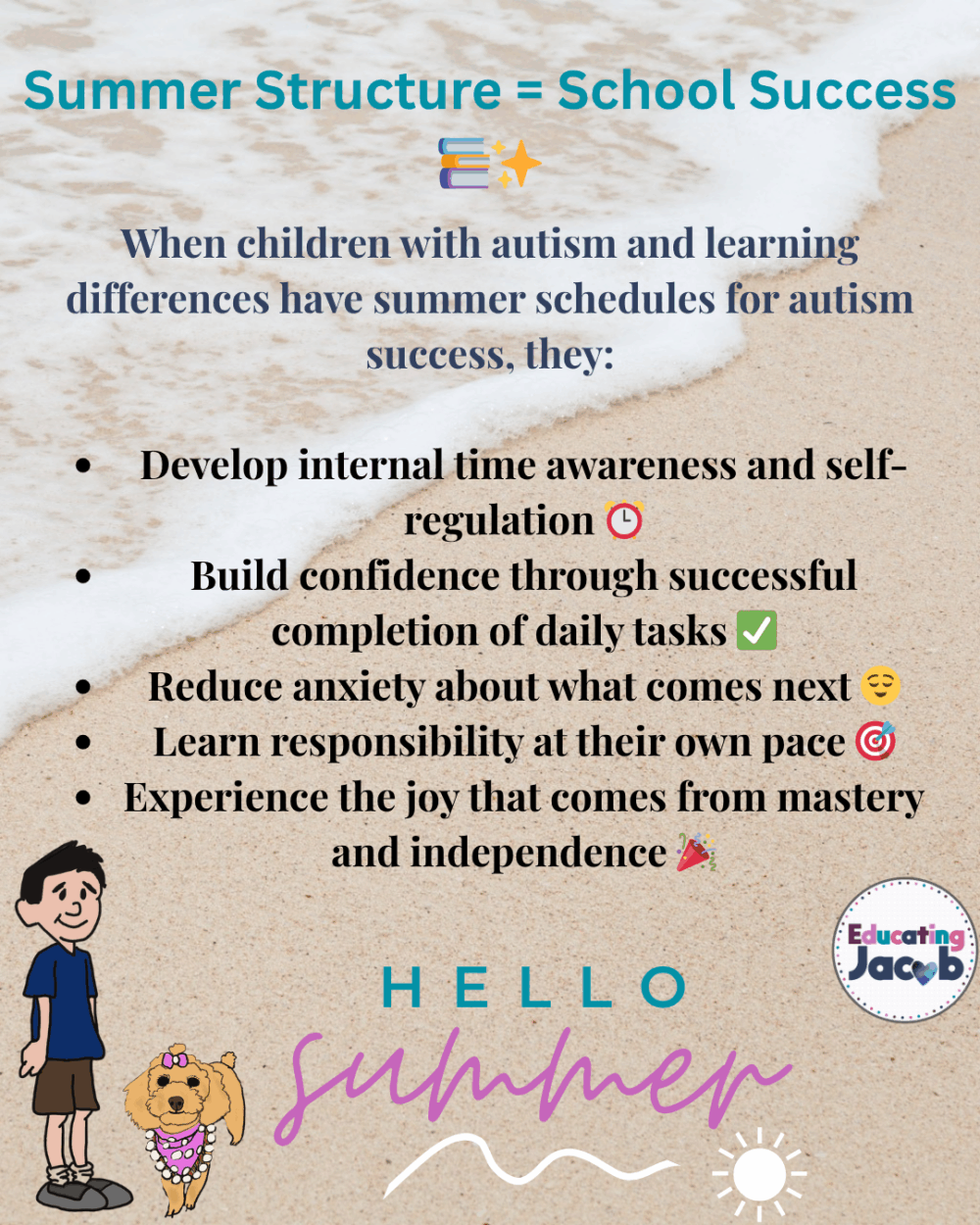
When children with autism and learning differences have summer schedules for autism success, they:
Develop internal time awareness and self-regulation ⏰
Build confidence through successful completion of daily tasks ✅
Reduce anxiety about what comes next 😌
Learn responsibility at their own pace 🎯
Experience the joy that comes from mastery and independence 🎉
🌊 The CALM Framework for Summer Success
The CALM framework isn’t just a catchy acronym—it’s a gentle, proven approach to creating the structured environment your child needs to thrive:
C: Consistent Action Forward Start small. Use schedules every day. You don’t need to create the perfect schedule overnight. Begin with just morning routines or bedtime schedules, then build from there. Consistency in small steps creates big changes over time.
A: Always Celebrate Wins Praise and reward each success. When your child follows their schedule, completes a task, or handles a transition well—celebrate it! These moments of recognition build the confidence they’ll need for school success.
L: Learning to Create Schedules Only add what your child can already do. Teach new skills before putting them on the board. This is crucial: your schedule should set your child up for success, not frustration. Master one routine before adding the next.
M: Mindset You are doing enough. You are making progress. One calm step at a time. Some days will be harder than others, and that’s okay. Every small effort you make toward structure is building your child’s foundation for future success.
When September arrives, your child won’t be starting from zero. They’ll already understand routine.
📖 From Summer Structure to School Success for Kids with Autism
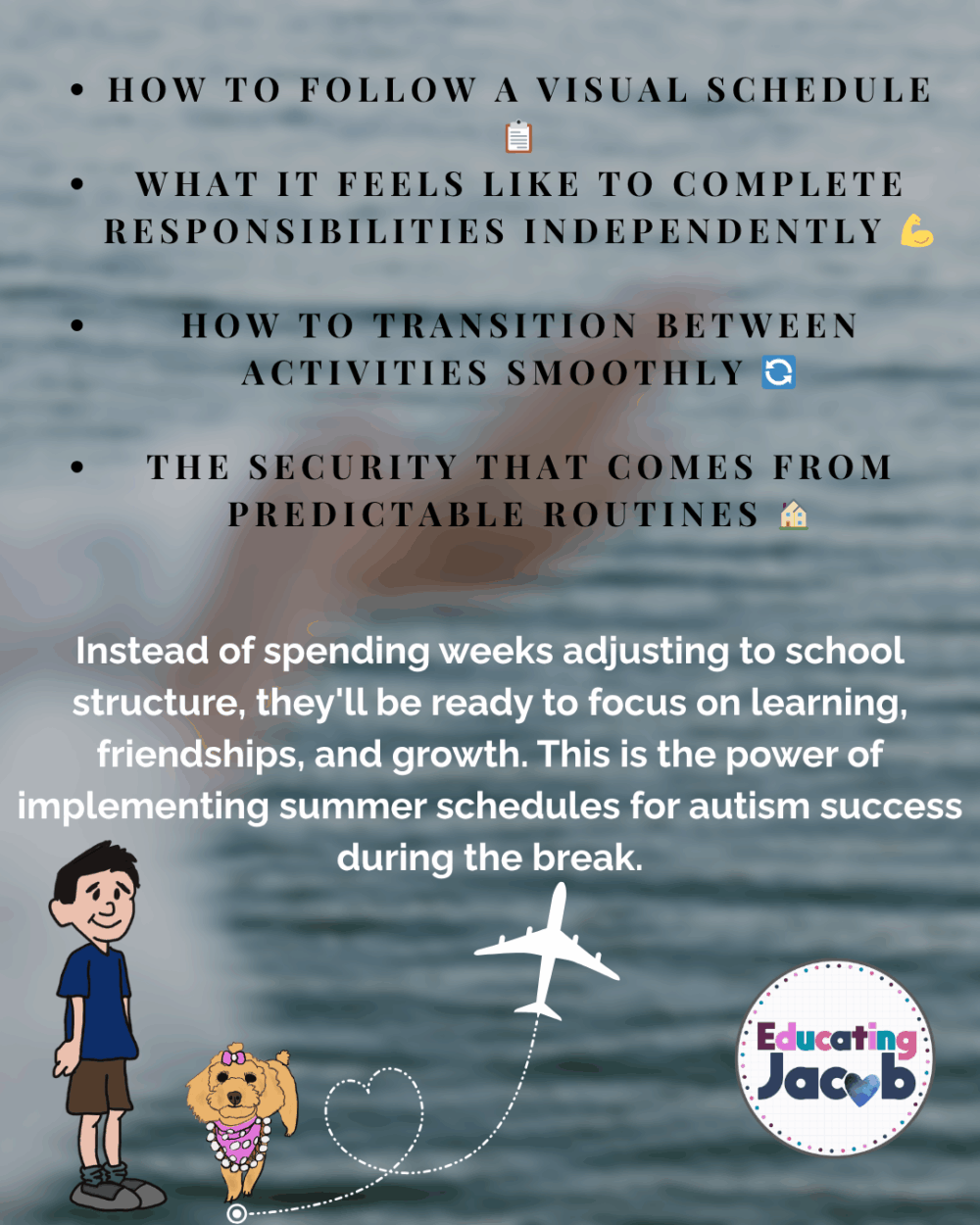
When September arrives, your child won’t be starting from zero. They’ll already understand:
How to follow a visual schedule 📋
What it feels like to complete responsibilities independently 💪
How to transition between activities smoothly 🔄
The security that comes from predictable routines 🏠
Instead of spending weeks adjusting to school structure, they’ll be ready to focus on learning, friendships, and growth. This is the power of implementing summer schedules for autism success during the break.
🏡 Creating Your Family’s CALM Summer Schedule
Start small and build gradually. Maybe begin with a simple morning routine visual schedule. Once that’s mastered, add afternoon structure. Remember, the goal isn’t perfection—it’s progress and building your child’s confidence in their ability to handle structure successfully.
Consider creating a family calendar where everyone can see the week’s activities. Let your child help plan special outings or choose between structured activity options. When children participate in creating their structure, they’re more likely to embrace it.
👨👩👧👦 The Ripple Effect: When One Child’s Success Lifts the Whole Family
Jacob’s need for structure has actually blessed our entire family. When Jacob feels secure and happy in his routines, family life becomes more peaceful for everyone. Siblings benefit from the predictability too, and parents feel more confident and less stressed.
You don’t have to navigate this journey alone. The Autism Thrive Tribe is a community of parents who understand the unique joys and challenges of raising children with autism and learning differences. We share practical strategies, celebrate victories (big and small), and support each other through the tough days.
In our community, you’ll find:
Detailed guides for implementing CALM frameworks in your home 📋
Printable visual schedules and routine charts 🖨️
Monthly live Q&A sessions for troubleshooting challenges 💬
A supportive network of parents who truly understand your journey 💙
📖 A Special Adventure Awaits: Jacob and Chloe’s Summer Structure Story
Coming next week: Join Jacob and his sister Chloe as they discover the magic of summer schedules! When Jacob feels worried about all the unstructured summer days ahead, Chloe helps him create a special summer adventure calendar. Together, they learn that structure doesn’t limit fun—it makes room for even bigger adventures! 🌟
Follow along as Jacob and Chloe show kids and families how CALM summer routines can lead to the most amazing summer ever. Perfect for reading together and helping your own children understand why structure helps everyone thrive. 👫
Remember, every small step toward structure is a victory worth celebrating. Your child’s future school success is being built right now, one summer day at a time. 🎉
What summer schedules for autism success will you start with first? Share your plans in the comments below—we love celebrating every family’s unique journey toward CALM! 💭
Picture this: It’s Tuesday morning, and you’re already dreading the meltdown that’s coming. Your child doesn’t know what’s happening next, you’re scrambling to explain, and everyone ends up frustrated. Sound familiar?
I’ve been there. More times than I care to count.
When Jacob was younger, our mornings felt like chaos. He’d have a complete meltdown every time we needed to leave the house because he had no idea what was coming next. The anxiety in his little face broke my heart, and honestly, I felt like I was failing him every single day.
🌟 What Is a Visual Schedule for Autism (And Why Does It Matter)?
A visual schedule for autism is simply a series of pictures or symbols that show your child what’s happening throughout their day, step by step. Think of it as a roadmap for their world.
For children with autism, the unknown can feel terrifying. Their brains work differently, processing information in ways that make sudden changes overwhelming. When Jacob couldn’t predict what was coming next, his fight-or-flight response would kick in, leading to those heartbreaking meltdowns we all know too well. Beyond the Chaos: Scheduling 101 Class for Special Needs Children
But here’s what I learned: predictability creates clarity and peace.
When Jacob could see his day laid out in pictures, something beautiful happened. The anxiety melted away because he knew what to expect. No more surprises. No more confusion. Just calm understanding.
💡 The Simple Truth About Visual Schedules
You don’t need fancy software or expensive materials. Mom’s you don’t need a degree in special education. You just need to start where you are, with what you have.
I remember feeling so overwhelmed when I first heard about visual schedules. Where do I even begin? What if I do it wrong? What if it doesn’t work for Jacob?
But here’s what nobody tells you: there’s no perfect way to do this. There’s only your way, for your child, in your home.
📋 Your Step-by-Step Guide to Creating a Visual Schedule for Autism
Step 1: Pick Your Battle 🎯
Don’t try to schedule their entire day right away. Choose one part of your child’s routine that consistently causes stress. For us, it was our morning routine—getting Jacob dressed, fed, and out the door without tears (his and mine).
Maybe for you it’s:
Bedtime routines that stretch on forever 🌙
Grocery store trips that end in meltdowns 🛒
Transitions between activities ↔️
Getting ready for school 🎒
Start there. Master one area before moving to the next.
Step 2: Think Like Your Child 🧠
What visuals will make sense to them? Jacob responds best to actual photographs—pictures of him brushing his teeth, getting dressed, eating breakfast. Your child might prefer:
The “perfect” visual is the one your child understands and connects with.
Step 3: Create the Flow ➡️
Map out the sequence in the order it happens: “Wake up → Use bathroom → Get dressed → Eat breakfast → Brush teeth → Get backpack → Leave for school”
Keep it simple. If a step feels too big, break it down further. “Get dressed” might become “Put on underwear → Put on shirt → Put on pants → Put on socks.”
Step 4: Make It Accessible 👀
Place the schedule where your child can easily see and reach it. We started with Jacob’s schedule on the refrigerator at his eye level. Some families use:
A clipboard that travels with them 📋
A poster board in the child’s bedroom 🏠
Laminated cards with velcro strips 📎
A simple notebook 📖
The best location is wherever your child will actually look at it.
Step 5: Walk Through It Together 👥
This isn’t about perfection—it’s about practice. Show your child how to use the schedule. Point to each picture as you do the activity together. Make it part of your routine.
At first, Jacob needed me to guide him through every step. Slowly, he started checking the schedule on his own. Now? He follows his morning routine independently, and I get to drink my coffee while it’s still hot. ☕
🚀 Why This Changes Everything
Visual schedules aren’t just about organization—they’re about giving your child power over their world.
For your child:
Anxiety decreases because they know what’s coming 😌
Independence increases as they follow the schedule on their own 💪
Confidence grows from successfully completing tasks ⭐
Communication improves when they can point to what they need 🗣️
For you:
Fewer meltdowns mean less stress for everyone 🕊️
Morning battles become peaceful routines ☀️
You can communicate expectations without constant verbal reminders 🔕
You finally have a tool that actually works ✅
When Jacob started using his visual schedule, I watched him transform from an anxious little boy who fought every transition to a confident child who could navigate his day with ease. But here’s what surprised me most: Jacob became more flexible, not less.
Now when I need to add something new to his day or change our plans, he doesn’t panic. Why? Because he understands that while one thing might be different, the majority of his day is still predictable and safe. He has his foundation of independence and responsibility, which gives him the confidence to handle unexpected moments without the headstrong resistance we used to face.
That’s the beautiful paradox of visual schedules—they create enough security that your child can actually embrace flexibility. Jacob now takes adult direction more easily because he’s not constantly in survival mode, wondering what’s coming next. Why I Started Educating Jacob: Support and Resources for Autism Families
🧠 Let’s Address the Voice in Your Head
Right now, you might be thinking:
“This sounds too complicated” 🤔
“My child won’t use this” 😟
“I don’t have time to make all these pictures” ⏰
“What if I do it wrong?” 😰
I hear you. I had every single one of those thoughts.
But here’s what I wish someone had told me: You don’t have to be perfect. You just have to begin.
Your child doesn’t need a Pinterest-worthy schedule. They need a mom or dad who cares enough to try something new, something that might make their world a little bit easier to navigate.
Remember this: 💪 Your child is worth the effort 💙 You don’t need expertise—you need love and consistency
🙏 You were chosen to be their parent for a reason
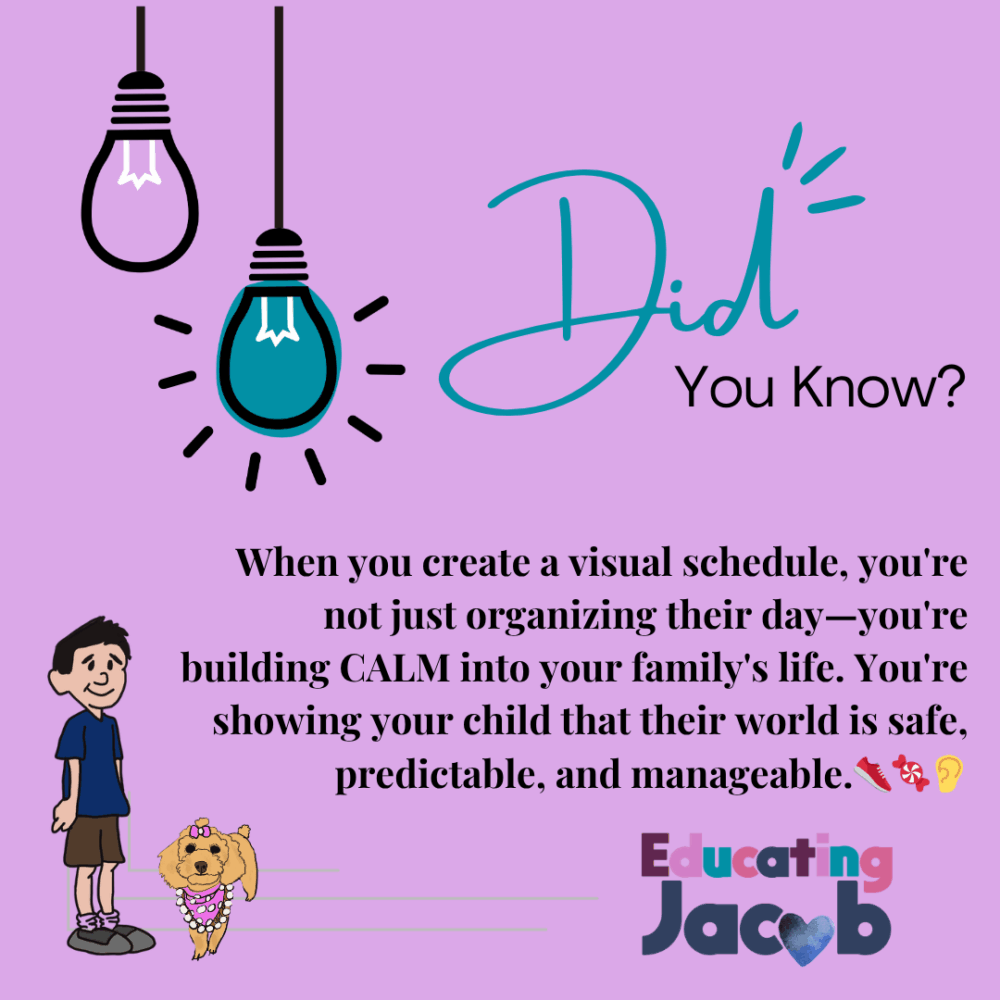
When you create a visual schedule, you’re not just organizing their day—you’re building CALM into your family’s life. You’re showing your child that their world is safe, predictable, and manageable.
🌱 Creating the Habit That Sticks
Start Small: Choose one routine. Master it. Then expand. 🔄
Be Consistent: Use the schedule every day, even when it feels awkward or unnecessary. Consistency builds the habit. 📅
Celebrate Every Win: When your child glances at the schedule, points to a picture, or completes a step independently—celebrate it! High-fives, happy dances, or simple “You did it!” moments create positive associations. 🎉
Guard Your Mindset: There will be days when nothing seems to work. On those days, remember why you started. Protect your peace through prayer, deep breaths, or whatever centers you. 🙏
Give It Time: Jacob didn’t master his schedule overnight. It took weeks of practice, patience, and persistence. But every small step forward was worth celebrating. ⏳
You’re building CALM into your family’s life.
💝 The Bottom Line
This isn’t about creating a perfect system. It’s about giving your child—and yourself—the gift of predictability in a world that often feels chaotic.
Visual schedules work because they speak your child’s language. They provide the structure and security that every child with autism craves, while giving you a practical tool that actually makes daily life easier.
Jacob’s visual schedule didn’t just change his mornings—it changed our entire relationship. Instead of starting each day with stress and struggle, we begin with calm confidence. He knows what to expect, and I know how to support him.
Your child deserves that same peace. And so do you.
Ready to get started? Choose one routine that’s causing stress in your home. Take a photo or find a simple picture for each step. Put them in order where your child can see them. Then walk through it together, one step at a time. 📸
Because sometimes the most profound changes start with the simplest steps.
Remember, every visual schedule you create is another step toward independence for your child, less anxiety in their daily life, and more peace and happiness for your entire home. We’re cheering you on! 💙 Come join our facebook group! https://www.facebook.com/share/g/16NwDKk9Yn/
What routine will you tackle first with your visual schedule? I’d love to hear about your experience—the wins, the challenges, and everything in between. Remember, we’re all figuring this out together, one picture at a time. 📷✨


 Visual Schedules Reduce Chaos During Outings and Errands