Blog

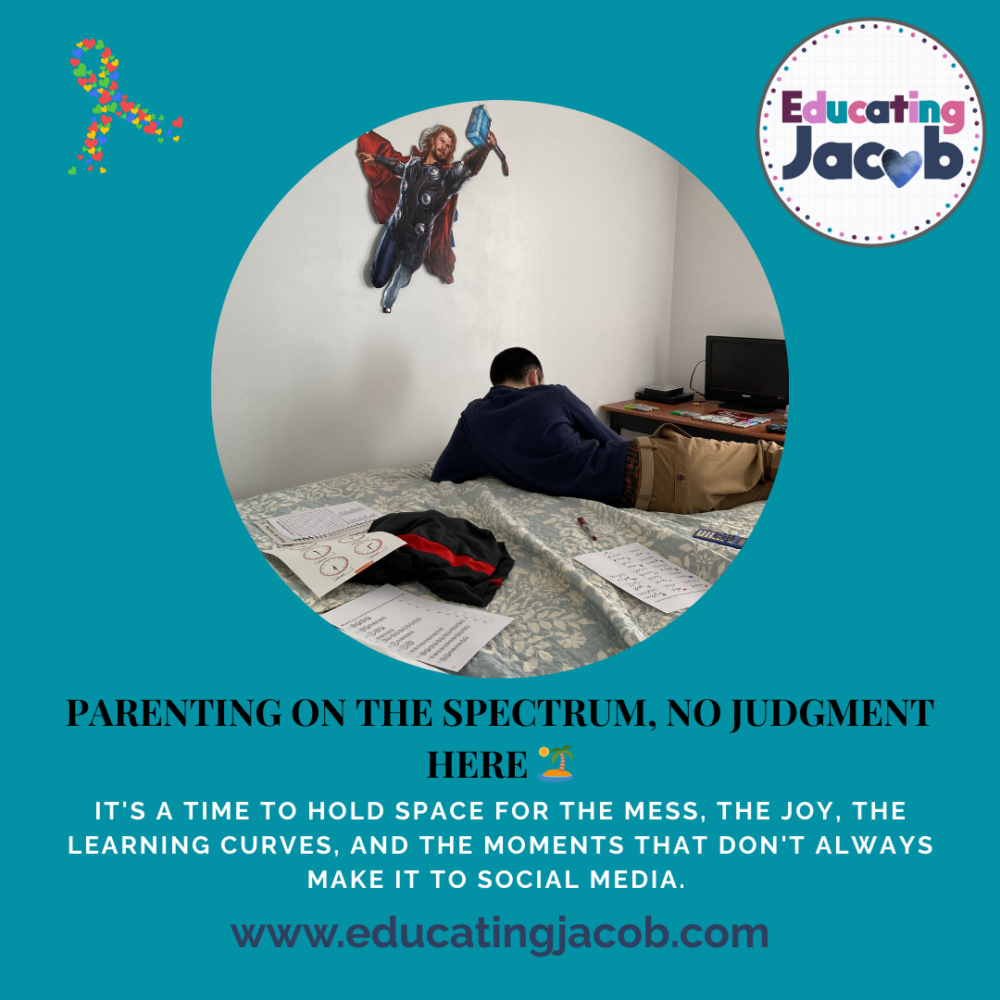
  • Autism Awareness Month! Parenting on the spectrum, no judgment here?🏝️

    World-Autism-Awareness-@educatingjacob
    No More Judgment: A Fresh Take on Parenting on the Spectrum πŸ§©πŸ’™

    Parenting on the spectrum, no judgment here🏝️

    April is Autism Awareness Month. For many families like ours, it’s not just a time to share facts or wear blueβ€”it’s a time to reflect on what parenting on the spectrum truly looks like. It’s a time to hold space for the mess, the joy, the learning curves, and the moments that don’t always make it to social media. And most importantlyβ€”it’s a time to remind ourselves and others: No judgment here. ✨

    We’re all doing the best we can with the tools we have. And if we can agree on one thingβ€”it’s that this journey is not a straight path.Β Come on Autism Thrive Tribe, 3 Ways to ditch chaos and get Happy!

    Finding Balance While Parenting on the Spectrum 🧠❀️

    Parenting-on-the-spectrum-no-judgment-here-🏝️-@educatingjacob
    Learn how natural consequences build resilience and independence in autistic children, without judgment.

    Parenting a child with autism can be a tender balancing act. On one hand, we fiercely advocate for our children’s needs. On the other, we sometimes struggle to know when to step in and when to step back.

    Here’s what I’ve learned: support doesn’t always mean rescue. πŸ›Ÿ

    Sometimes the most supportive thing we can do is let our children experience the natural consequences of their actionsβ€”without shame, without scolding, but also without shielding them from reality. Because constantly protecting them from struggle? That’s not helping. That’s actually robbing them of valuable growth opportunities.

    Natural Consequences: How Our Children Learn πŸ“šπŸŒ±

    Celebrating-Authentic-Growth-πŸŽ‰πŸŒˆ-@educatingjacob
    Let’s be a community that says: “You don’t have to get it perfect, just keep going.” πŸšΆβ€β™€οΈ

    Let’s be clear: all childrenβ€”neurodivergent or notβ€”learn through cause and effect. Natural consequences help them understand how the world works. If we’re constantly jumping in to prevent them from feeling discomfort, frustration, or even failure, we’re not protecting themβ€”we’re disabling them.

    We risk teaching them learned helplessness: the belief that they can’t handle things on their own, so someone else will always fix it.

    That’s not the message we want to instill. πŸ’ͺ

    Real-Life Example: When School Gets Challenging 🏫✏️

    A friend in our community is navigating this right now. Her son is autistic, highly capable, and typically excels in school. But recently, he’s been shutting down. As assignments become more challenging, instead of asking for help or advocating for himself, he’s been putting his head down and refusing to complete his work.

    Naturally, his grades have dropped. That’s the first consequence.

    But here’s where thoughtful parenting comes inβ€”she told her son:

    “If you don’t do the work in class, your teacher will send it home, and you’ll complete it in the evening along with your regular homework.” πŸ“

    Not as punishmentβ€”but as a natural consequence.

    Because sleeping through class isn’t an option in the real world. And the work still needs to be done.

    She also offered another path:

    “If you feel like you’ve tried to get help at school and it’s not working, we’ll find you a tutor. But one way or another, you’re going to learn this material.” πŸ”

    Now he has both a choice and a responsibility. That’s exactly what we’re aiming for.

    Building Resilience Through Appropriate Challenges 🌊🏊

    Letting our kids struggle doesn’t mean we’re abandoning them. It means we trust them enough to build their own resilience. We’re not throwing them into the deep end without a life jacketβ€”but we are letting them kick, float, and figure out how to swim with us beside them instead of always holding them up.

    When we overprotect, we unintentionally communicate: “I don’t believe you can handle this.” ❌

    When we allow natural consequences, we’re saying: “I believe you can learn from thisβ€”and I’m here to support you as you do.” βœ…

    This Autism Awareness Month: Celebrating Authentic Growth πŸŽ‰πŸŒˆ

    This month, let’s raise awarenessβ€”not just about autism, but about what it really means to parent with love and leadership.

    Let’s support our kids by giving them room to learn. Let’s stop judging ourselves and other parents who are figuring it out one day at a time.

    Let’s be a community that says: “You don’t have to get it perfect, just keep going.” πŸšΆβ€β™€οΈ

    And let’s rememberβ€”supporting our autistic children means preparing them to navigate a world that won’t always bend. That doesn’t mean we don’t advocate fiercelyβ€”it means we prepare them to be strong, confident, and resilient humans who can face challenges with tools they’ve learned themselves.Β https://www.desiringgod.org/articles/not-wired-for-this-world

    Even if you have a child like Jacob who won’t be fully independent as an adult, he experiences natural consequences daily as we all do. In our home, if Jacob fails to complete his schedule with chores, work, and daily life activities, he doesn’t earn his Friday Amazon ordering privilege. This isn’t about shameβ€”it’s about understanding that everyone in the family contributes and experiences the natural results of their choices. πŸ‘πŸ‘¨β€πŸ‘©β€πŸ‘¦

    Here’s a pdf I found that you might find useful: //efaidnbmnnnibpcajpcglclefindmkaj/https://heller.brandeis.edu/parents-with-disabilities/pdfs/autism-parent-factsheet.pdf

    You’re Not Aloneβ€”And You’re Doing Amazing Work πŸ€πŸ’«

    If this resonated with you, know you’re not alone. Inside my coaching and community, I help parents navigate the beautiful, challenging journey of parenting on the spectrumβ€”with no judgment, only growth.Β Why I Started Educating Jacob: Support and Resources for Autism Families

    We use the CALM Framework to shift from chaos to confidence:

    C β€” Consistent Action Forward ➑️
    A β€” Always Celebrate Wins πŸ†
    L β€” Learning to Create Schedules πŸ“…
    M β€” Mindset 🧠

    Join us in the πŸ‘‰πŸ–±οΈAutism Thrive Tribe. You don’t have to figure this out by yourself. Together, we can support each other through every step of this journey. πŸ’™πŸ§©

    Read More

  • Three Things I Fear Parenting an Adult Autistic Child Who Can’t Live Alone πŸ˜ŸπŸ’™

    Parenting an Adult Autistic Child: The Fears We Face

    Importance of Family @educatingjacob
    #autismfamily

    Parenting an adult autistic child comes with fears, but when your child can’t live independently, those fears take on a whole new weight. My son Jacob is an incredible young man. He has independence in some waysβ€”he can complete daily tasks, communicate his needs, and engage in activities he enjoys. But the reality is, he cannot live on his own. He has autism and epilepsy, and he needs supervision for things like paying bills, grocery shopping, and managing his health.

    As a parent, my biggest fears for the future revolve around three things: our health and longevity, isolation, and the impact on his older brother, Nicholas. If you’re parenting a child with disabilities, I imagine you’ve had these same worries too.

    1. The Future: Our Health and Longevity πŸ₯

    One of the hardest truths I face is that I won’t always be here. Neither will my husband. And that reality is terrifying. Right now, we are Jacob’s safety net. We manage his daily routine, make sure he’s healthy, and provide the structured support he needs. But what happens when we can’t?

    Jacob’s well-being is dependent on us staying as healthy as possible for as long as possible. We do what we canβ€”exercise, eat well, take care of our mental healthβ€”but we can’t stop time. And when I think about the day when we’re no longer here, I feel an overwhelming responsibility to have everything set up for him. Guardianship, caregiving plans, financial securityβ€”there are so many moving parts.

    For any parent of a child with disabilities, this is one of the most gut-wrenching fears. Who will love and care for our children like we do? And how do we prepare now to make sure they are always safe?

    πŸ“Œ Related Blog Posts to Help You Prepare:

    2. Isolation: The Loneliness of the Autism Journey 🌍

    Astronauts-are-experts-in-isolation-so-are-Autism-Parents-🏝️
    Autism Parents experience isolation too!

    Raising a child with autism means your social life looks different. As a family, we have fewer outings, fewer vacations, and fewer opportunities for connection. When Jacob was little, we could make those decisions for himβ€”strap him in the car, bring along familiar items, and power through. Now that he’s an adult, it’s not that simple. He has preferences, routines, and comfort zones, and I have to respect that.

    But that respect often leads to isolation. Spontaneous trips? Not happening. Large social gatherings? Overwhelming. The reality is, we miss out on things because we have to carefully consider how they will affect Jacob. And when we do go somewhere, we have to ask ourselves, Will he enjoy this? Will this be too much? Do we have someone to watch him if he doesn’t want to go?

    I know we’re not the only family who experiences this. When your child’s world is small, yours often becomes small, too. And while we have learned to embrace this life, it doesn’t mean we don’t grieve the friendships, experiences, and freedoms we thought we would have.

    πŸ“Œ Related Blog Posts on Creating a Supportive Environment:

    3. The Weight on His Brother’s Shoulders 🏑

    brotherly-love-autismfamily-@educatingjacob
    Jake’s future weighs on Nick too! ❀️

    Jacob has one siblingβ€”his older brother, Nicholas. Nicholas is his favorite person, the one who makes him laugh the most, and the person we know will always look out for him. And while it brings me comfort to know that Nicholas loves his brother deeply, I never want him to feel like his future is dictated by responsibility.

    We have had the hard conversations. Jacob will not necessarily live with Nicholas, but he will need to be close enough so that his brother can ensure he is cared for. We want Nicholas to have his own life, his own dreams, and his own family without feeling like his world revolves around his brother’s needs.

    This is a hard balance. As parents, we are supposed to carry the weight. But one day, that weight will shift, and we want to make sure it doesn’t become too heavy for Nicholas. So we are making plans, having open discussions, and doing everything we can to ensure Jacob’s future is secure without sacrificing his brother’s.

    πŸ“Œ A Powerful Read:

    Finding Strength in the Uncertainty πŸ’™

    These fears are real. They keep me up at night. They are always in the back of my mind. But I have learned that I am not alone. Parenting an Adult Autistic Child carries these same worries for all of us, and while the road is uncertain, we can prepare, we can plan, and we can build a community that supports each other.

    πŸ’¬ Let’s Talk: What Are Your Biggest Fears?

    If you have these same fears, I see you. I know how heavy this journey can feel. But you don’t have to do it alone.

    Join us inside the Autism Thrive Tribe community, where we support each other, share real solutions, and create a plan for the future. Let’s navigate this together. πŸ’™πŸ€— Join Us!Β https://hub-8lwnkmevwr.membership.io/registe

    Read More

  • How I learned to handle hidden behavior challenges of autism at Educating Jacob.

     The Hidden Behavior Challenges of Autism 🧩

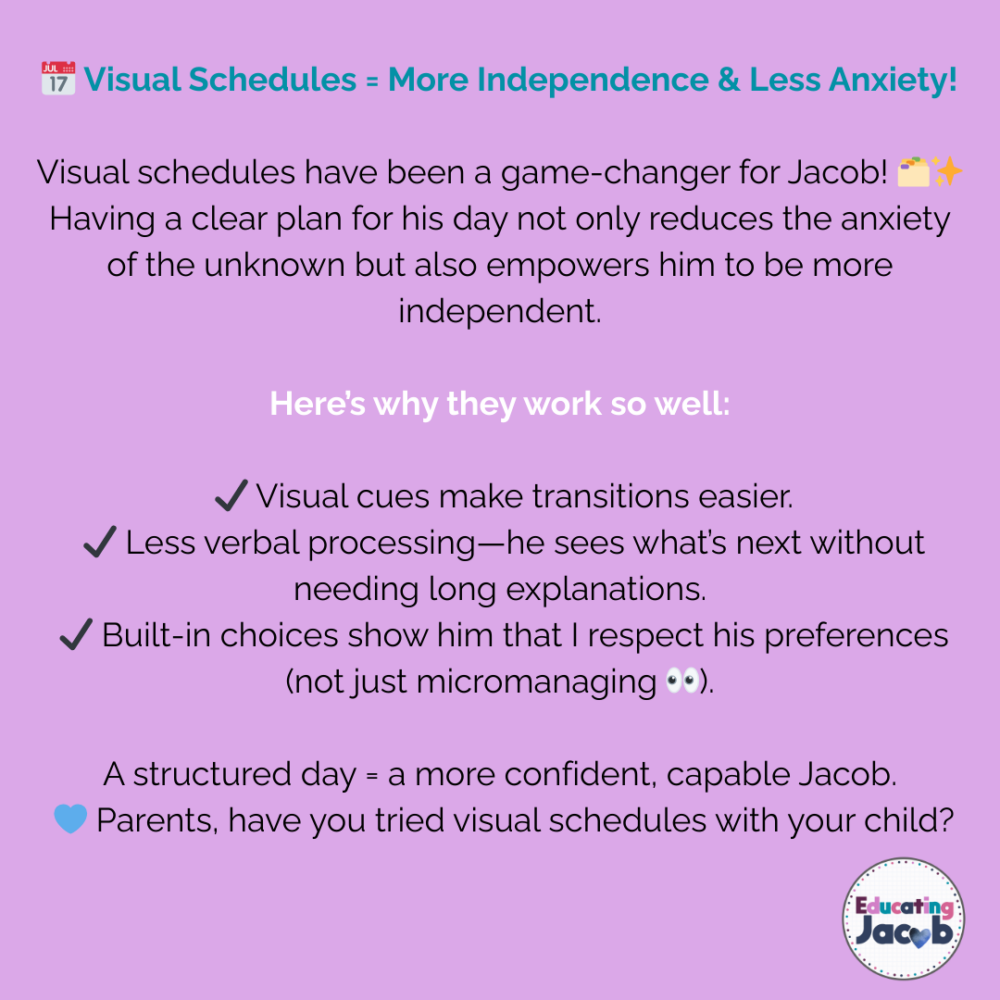
    I didn’t know that creating interactive activities and visual schedules would help Jacob with the hidden behavior challenges of autism. It was, and continues to be, a game changer. πŸ† Not only did having a daily schedule give him a sense of security and predictability, but it also reduced his anxiety, taught him independence, and showed him he was capable of learning and following instructions. βœ…Β 

    In the beginning, I was so distraught over his lack of communication, his difficulty interacting with others, and the struggle to make friends that I couldn’t see how something as simple as structured activities and visual schedules would make such a difference. But let me tell youβ€”boy, did I learn a lot! You don’t know what you don’t know! 🀯

    πŸ“…-Visual-Schedules-More-Independence-Less-Anxiety
    πŸ“… Visual Schedules = More Independence and Less Anxiety!


    The Power of Community and Support in Autism Behavior Management 🀝

    One thing I wish I had back then was a community, a mentor, or a coach. While I had family, I didn’t have someone who had walked the same road. πŸšΆβ€β™€οΈ I found some guidance through teachers and seminars, where I learned about strategies that helped motivate Jacob to work and engage.

    I wanted someone to help my child talk, enjoy his family, make friends, go to regular classrooms, and have peers who genuinely wanted to play with him. But the truth is, navigating the hidden behavior challenges of autism is a long road. πŸ›€οΈ You must be open to trying new things, surrounding yourself with people who understand, and building a plan that works for your family.

    This journey isn’t about finding a quick fix or “curing” autism. It’s about celebrating wins πŸŽ‰, creating peace instead of chaos, and learning what you don’t yet know you need. Until you find ways to lessen those hidden behavior challenges of autism you’ll most likely experience chaos and frustration.

    Give-choices-Let-Them-Choose, Visual Schedules
    Giving choices shows you respect and care about him πŸ™ƒ

    Why Early Intervention Matters for Autism Behavior Management ⏳

    As a teacher, I can tell you that ignoring early diagnosis and waiting for school to handle everything is a nightmareβ€”for both the child and the teacher. 🏫 I’ve seen kids start kindergarten without speaking or interacting, and suddenly, they’re thrown into a structured environment where they’re expected to follow verbal instructions they don’t fully understand.

    Here’s another post you might find helpful:πŸ‘‰Β Β Mastering Autism Behavior Management: 3 Strategies for Success

    hidden behavior challenges of autism
    This is what I’ve seen in my years of teaching.

    “You Don’t Know What You Don’t Know” –

    Most autistic children have receptive and expressive language delays, meaning they struggle with both understanding and expressing their needs. They probably also have some sensory challenges. This leads to frustration, anxiety, and eventually challenging behaviors. ⚠️ Many parents want their child to be treated like everyone else, but the reality is that without support, the child will experience unnecessary stress.

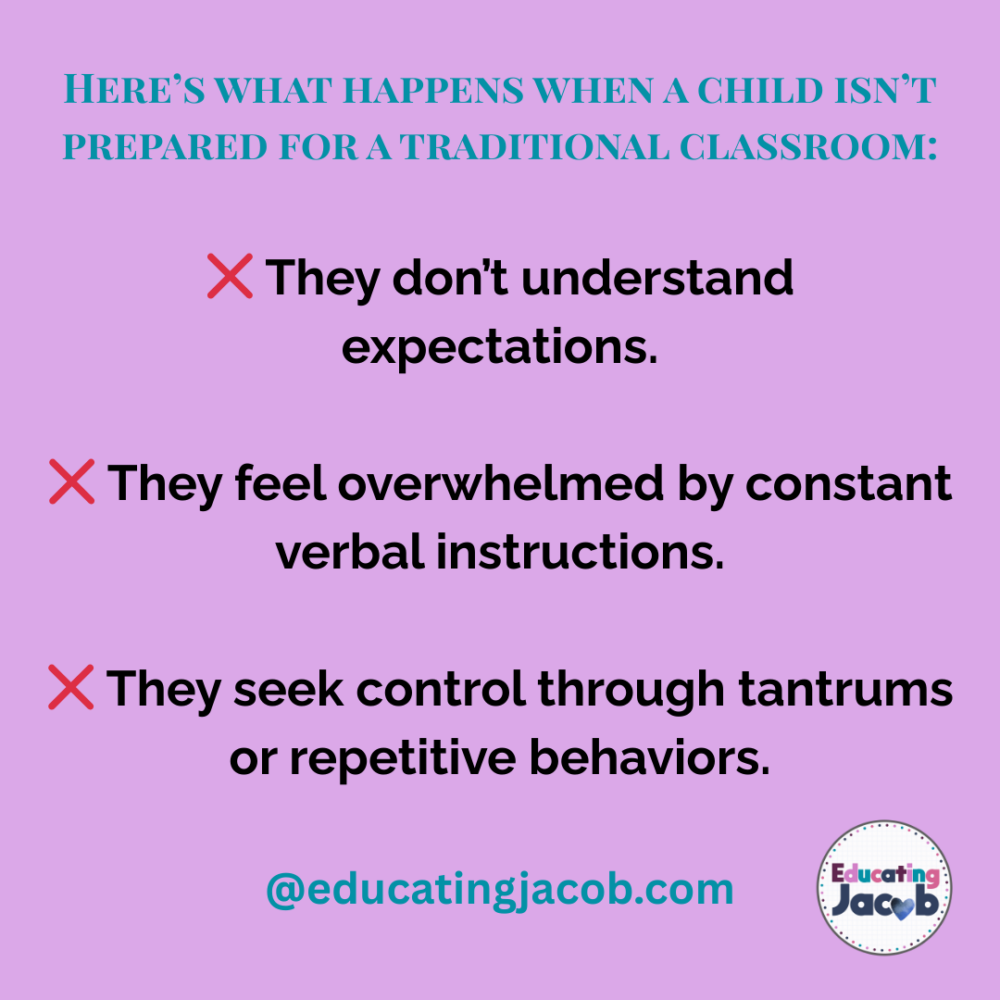
    Here’s what happens when a child isn’t prepared for a traditional classroom:

    • ❌ They don’t understand expectations.
    • ❌ They feel overwhelmed by constant verbal instructions.
    • ❌ They seek control through tantrums or repetitive behaviors.

    Visual Schedules: A Key to Reducing Hidden Behavior Challenges of Autism πŸ“…

    A diagnosis, a plan, and a structured environment are essential. When Jacob was diagnosed at age 4, he was placed in a preschool class for children with learning delays. But even there, his teacher wasn’t prepared for his unique needs. He wouldn’t listen to books being read in a group, he avoided activities, and instead of interacting with other kids, he was fascinated by the bathroom light switch. πŸ’‘

    I put him in that class because I was told to, but I quickly realized that without the right support, it wasn’t helping. After another meeting, he was moved to an autism-specific classroom. That teacher and staff were amazingβ€”they had a visual schedule ready for him on day one, using pictures to communicate his daily routine. πŸ“Έ

    I immediately copied this method at home, using visuals for daily tasks like:

    • 🍽️ Eat dinner
    • 🧸 Playtime
    • πŸŽ₯ Watch a movie
    • 🦷 Brush teeth
    • πŸ› Take a bath

    With consistent structure both at home and at school, Jacob’s anxiety decreased, and he began to thrive. 🌱

    Finding the Right Learning Environment for Autism Success 🏑

    Even with the improvements, the classroom setting still wasn’t the best fit for Jacob, given his high needs. That’s when I made the decision to homeschool him. ✏️ Now, homeschooling is a story for another day, but what I learned is this: structure, reducing anxiety, and creating environments that support interaction and independence are key.

    I had to learn what I didn’t knowβ€”I had to experiment, adapt, and embrace Jacob’s unique way of learning. And you can too! πŸ’‘

    Here’s another post you might find helpful:πŸ‘‰Β Β Why I Started Educating Jacob: Support and Resources for Autism Families

    Final Thoughts πŸ’­

    If you take anything from Jacob’s story, let it be this: Your family has to take action, do something different, and have grit! πŸ’ͺ Autism is not a one-size-fits-all journey, but when you start implementing schedules, reducing anxiety, and creating supportive environments, you’ll see a difference. You don’t have to wait until things get worseβ€”start today! 🏁

    πŸ‘‰Β Join Autism Thrive Tribe! 🌍

    Navigating the hidden behavior challenges of autism isn’t something you should do alone. That’s why I created πŸ‘‰Β Autism Thrive Tribeβ€”a community for parents who need support, guidance, and real solutions from someone who has been there.

    You don’t have to figure this out on your own. Join us today and start learning what you don’t yet knowβ€”because your child’s future depends on it. πŸ’™πŸ€—

    Here’s another post you might find helpful:πŸ‘‰Β  https://autismlittlelearners.com/autism-and-behavior/

    Read More

  • Teaching short term and maintenance goals for daily life with autistic son.

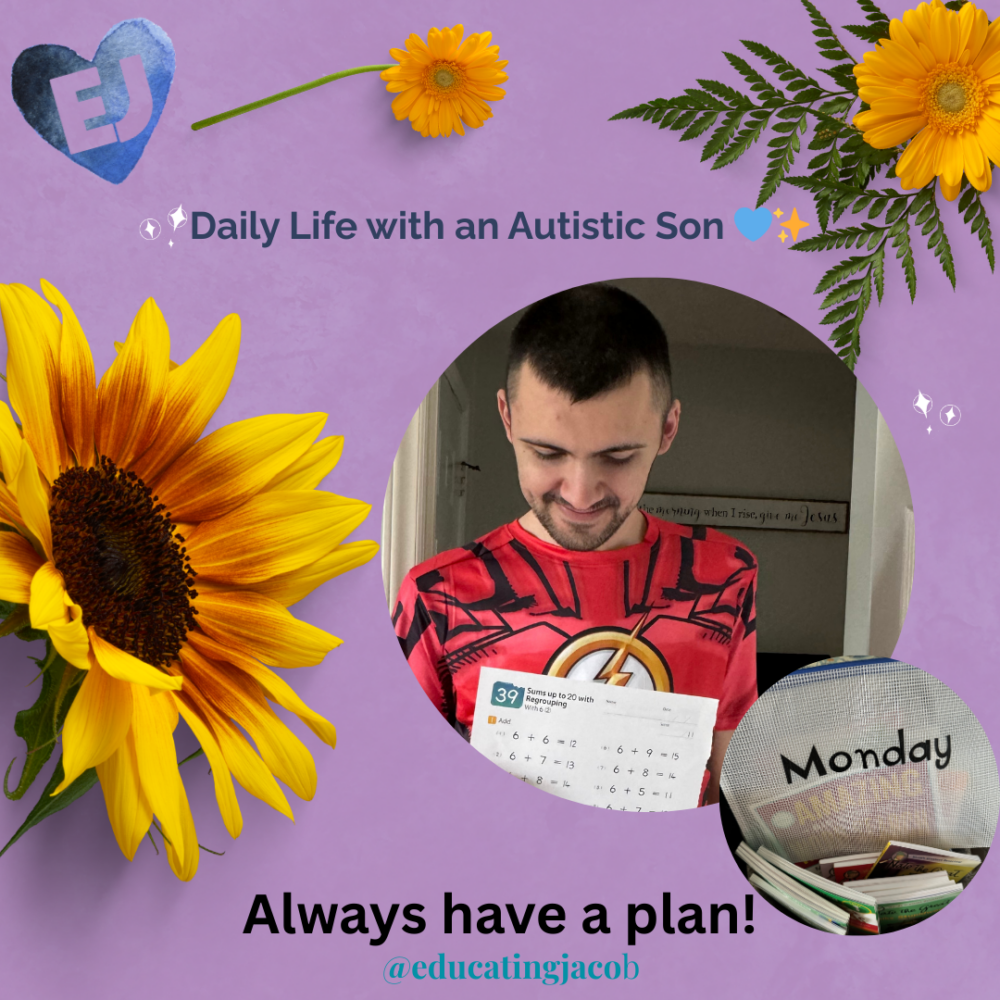
    Daily Life with an Autistic Son πŸ’™βœ¨

    Daily-life-with-my-autistic-son-@educatingjacob
    Always have a plan! 🫢

    Daily life with an autistic son started off with overwhelm and chaos. But, parenting a child with autism can be a journey filled with love, learning, and, let’s be realβ€”challenges. But after 27 years with Jacob and 14 years in public schools, I’ve learned that living chaos-free is possible! With the right approach, we can create calm, structure, and a thriving home for everyone.

    From Overwhelm to Clarity: Our Autism Parenting Journey πŸŒ€πŸ’‘

    When we first started our autism journey, our home was filled with constant stress, frustration, and unpredictability. Every day felt like we were bracing for impact, never knowing when the next meltdown would happen. We were always reacting instead of being proactive, and it was exhausting.

    My husband and I, along with our older son, Nicholas, felt the impact of this chaos just as much as Jacob did. The emotional toll was heavy, and at times, I wondered if we’d ever find a sense of peace.

    🎯 Our first breakthrough came when we decided to focus on small, clear goals. Instead of trying to change everything overnight, we started setting achievable steps that brought order and predictability into daily life with an autistic son.

    If you’re feeling overwhelmed, stuck in fear, or paralyzed by too many unknowns, the best thing you can do is start with one small focus and build from there. That’s where short-term and maintenance goals come in! πŸš€


    Short-term-goals-in-action-@educatingjacob
    Daily Life with an Autistic Son 🫢

    Why Short-Term and Maintenance Goals Matter πŸŽ―βœ…

    One of the biggest ways we reduced stress in our home was by having a clear plan. Instead of reacting to meltdowns, we started preparing ahead of time. When you set small, clear goals, you create a sense of direction for both you and your child.

    Short-Term Goals: Small Steps, Big Wins πŸ†βœ¨

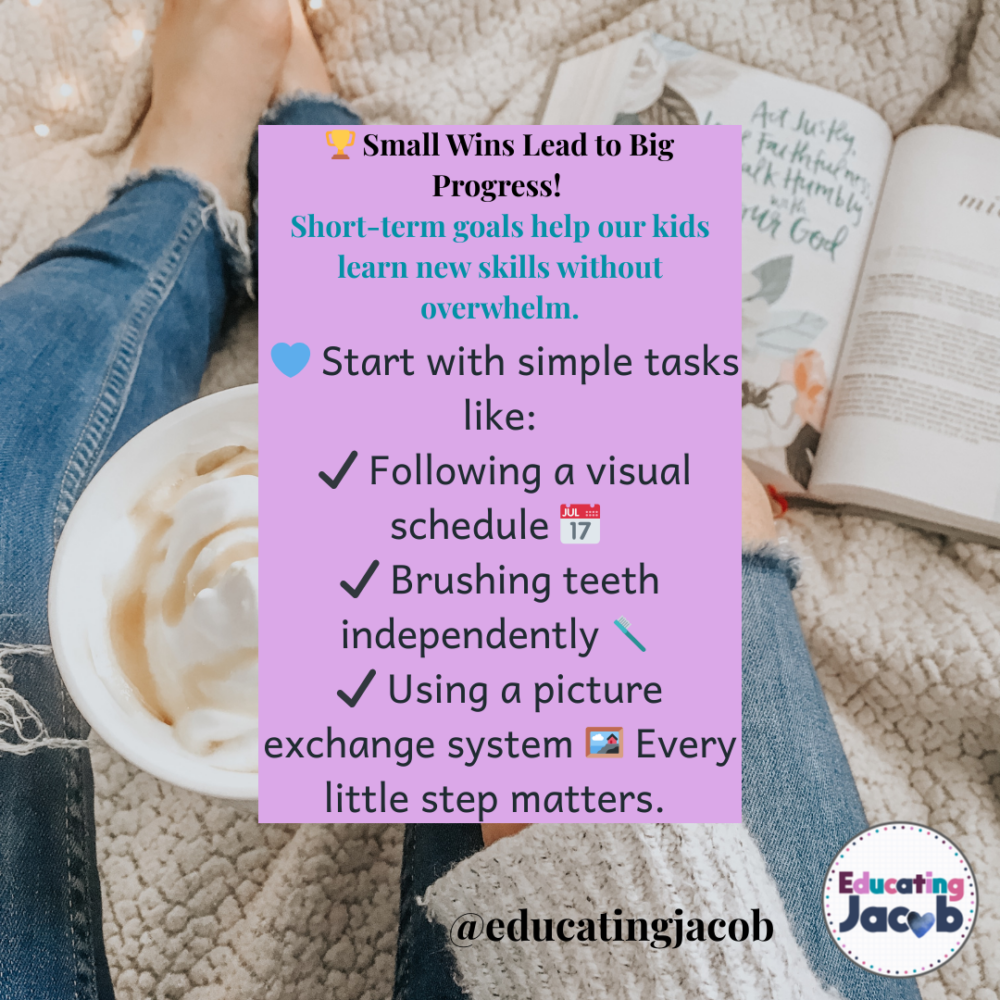
    Short-term goals are small, achievable tasks that help your child learn new skills. These can be as simple as:

    βœ” Following a visual schedule for the morning routine πŸ–ΌοΈπŸ“…
    βœ” Brushing teeth independently with step-by-step guidance πŸͺ₯
    βœ” Using a picture exchange system to communicate needs πŸ—£οΈπŸ–ΌοΈ

    πŸ“Œ Why Short-Term Goals Work:
    βœ… They build confidence πŸ’ͺ
    βœ… They create predictability πŸ”„
    βœ… They help reduce anxiety by showing what’s expected 😌

    πŸ’‘ Tip: Start with skills your child already knows to make following a schedule easier. Success builds confidence!


    Maintenance Goals: Keeping Progress Going πŸ”„πŸŽ―

    Once your child masters a skill, the next challenge is keeping that progress! If we don’t practice skills regularly, they fade. Maintenance goals help keep those hard-earned skills fresh over time. Some examples include:

    βœ” Continuing daily self-care routines without reminders 🚿
    βœ” Practicing learned words or phrases to improve communication πŸ—¨οΈ
    βœ” Keeping a structured daily routine to reduce anxiety πŸ“†

    πŸ“Œ Why Maintenance Goals Matter:
    βœ… They reinforce what’s been learned
    βœ… They promote independence πŸ™Œ
    βœ… They reduce setbacks and keep skills strong πŸ’ͺ

    πŸ’‘ Tip: Use rewards and positive reinforcement to encourage your child to keep up with their progress. πŸŽ‰πŸ‘

    Creating a Daily Life Plan for Your Autistic Son πŸ“–βœοΈ

    Want to see progress? Start simple! One of the biggest mistakes parents make is trying to change too much at once. Instead, pick one small goal and build from there.

    For Jacob, we started with a visual schedule. I gave him tasks he already knew how to doβ€”like brushing his teeth or putting his shoes on. This way, there was no pushback. He saw that he was capable, and that built his confidence. πŸ’™

    πŸ“Œ How to Start a Simple Plan:
    1️⃣ Decide on Your Goal – What do you want to improve? Reducing anxiety? Increasing independence? Start with one focus.
    2️⃣ Use Visual Supports – Pictures, checklists, and schedules help autistic children understand what’s expected. πŸ–ΌοΈπŸ“‹
    3️⃣ Keep Instructions Simple – Short phrases and modeling work better than long explanations. πŸ—£οΈ
    4️⃣ Provide Structure – A predictable routine helps reduce anxiety and builds confidence. πŸ”„βœ¨
    5️⃣ Celebrate Progress – Every small win builds momentum! πŸŽ‰πŸ†

    πŸ“– Looking for more guidance? Check out my CALM Frameworks, where L = Learning to Create Schedules πŸ“…

    The Power of Clear Expectations πŸŒŸπŸ”Ž

    When we set clear expectations for our children, they begin to believe in their ability to learn and do things on their own. Many children with autism struggle with learned helplessness, where they believe they can’t do things for themselves.

    πŸ‘©β€πŸ‘¦ Our goal isn’t perfectionβ€”it’s progress! Even if our children won’t reach full independence, they can still learn and grow. The goal is to help them gain as much independence as possible while reducing daily stress and frustration.

    Building a Calmer Daily Life with an Autistic Son πŸ’™βœ¨

    CALM-frameworks-@educatingjacob
    Jacob needs structure to thrive!

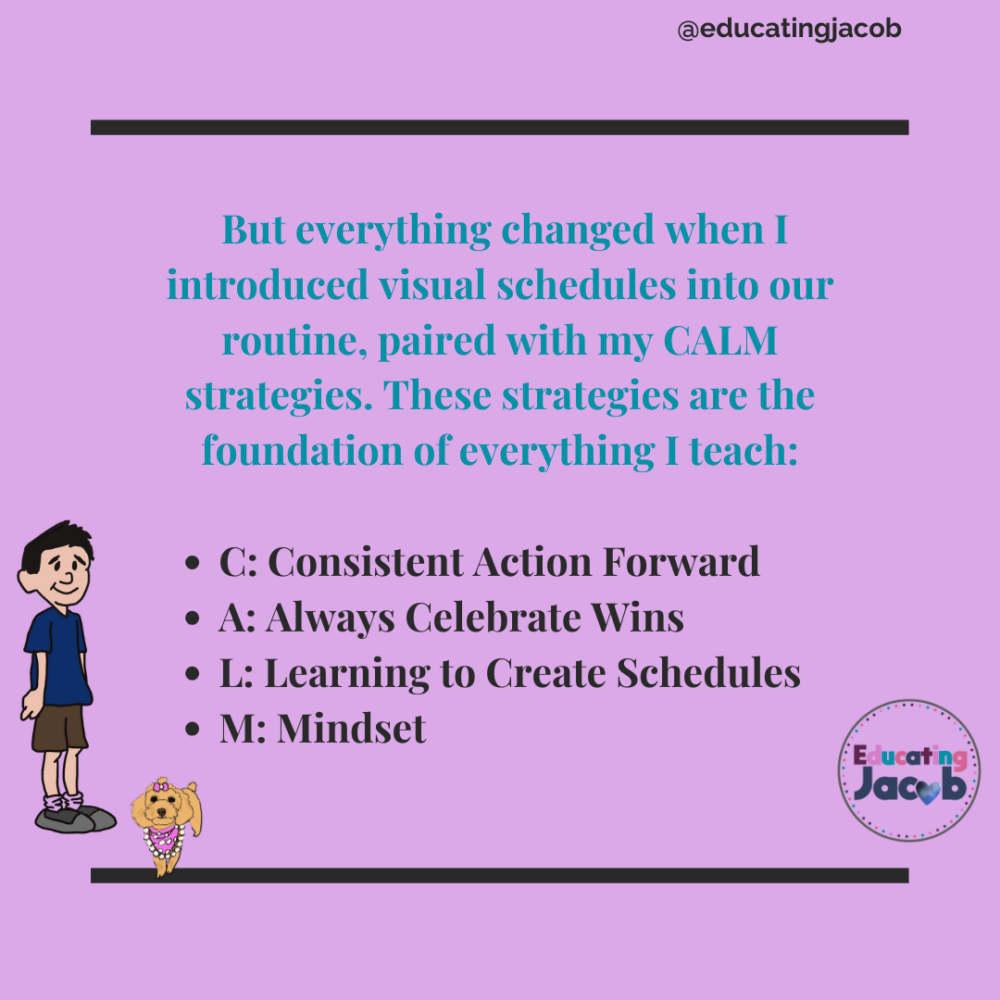
    Let’s talk a lot about my CALM Framework because it transformed my home. If you haven’t read about it yet, here’s a quick breakdown:

    βœ” C: Consistent Action Forward – Small daily efforts lead to progress. πŸš€
    βœ” A: Always Celebrate Wins – Focus on what your child CAN do. πŸŽ‰
    βœ” L: Learning to Create Schedules – Visual schedules create structure. πŸ“…
    βœ” M: Mindset – Believe that change is possible. 🧠


    Making It Work for Your Family πŸ‘πŸ’‘

    Overwhelmed? Start small. Choose one short-term goal and one maintenance goal. Write them down. Make them simple and clear.

    βœ” Example Short-Term Goal: Teach your child to follow a simple visual schedule.
    βœ” Example Maintenance Goal: Keep a consistent bedtime routine every night. πŸŒ™

    Over time, these small wins add up! You’ll start to see less chaos and more progress in daily life with your autistic son. πŸŽ‰

    πŸ“– Recommended Reading: Atomic Habits by James Clear – He talks about the power of committing to small actions, which is exactly what we need as autism parents! πŸ“š


    Final Thoughts: You Are Not Alone on This Journey πŸ’™πŸ€

    If you’re feeling overwhelmed, remember thisβ€”you are not alone. Every autism parent faces challenges, but with small, consistent efforts, you can create a structured, calm, and thriving home. πŸ’™

    Progress doesn’t happen overnight, but by setting clear short-term and maintenance goals, you’ll see your child gaining independence and confidence. Every little step forward is a win worth celebrating. πŸŽ‰πŸ‘

    Join the Autism Thrive Tribe! πŸŒŸπŸ‘©β€πŸ‘¦

    Want more support, practical strategies, and encouragement from parents who truly understand? πŸ’™ Join our Autism Thrive Tribeβ€”a community built for parents just like you!

    βœ… Connect with others who get it
    βœ… Learn practical, tested strategies
    βœ… Celebrate wins and get real-life advice

    πŸ”Ή Click here to join Autism Thrive Tribe today! πŸ”Ή

    Together, we can ditch the chaos and create a joyful home. Let’s take this journey together! πŸ’™βœ¨

    Let’s Reduce the Stress and Build a Happy Home! πŸ‘πŸ’™

    Parenting a child with autism is not easy, but with the right tools and mindset, it can be joyful!

    ✨ Let’s reduce the stress, bring more calm into your home, and help your child build the confidence to learn and grow.

    πŸ“’ What’s ONE small goal you’re setting for your child this week? Let me know in the comments! πŸ’¬πŸ‘‡

    πŸ“– Related Posts:
    πŸ“Œ The Magic of CommittingΒ  This post by James Clear on clarity, life lessons
    πŸ“Œ How to Achieve CALM on Autism IslandΒ  earlier blog post that may help!


    Read More